
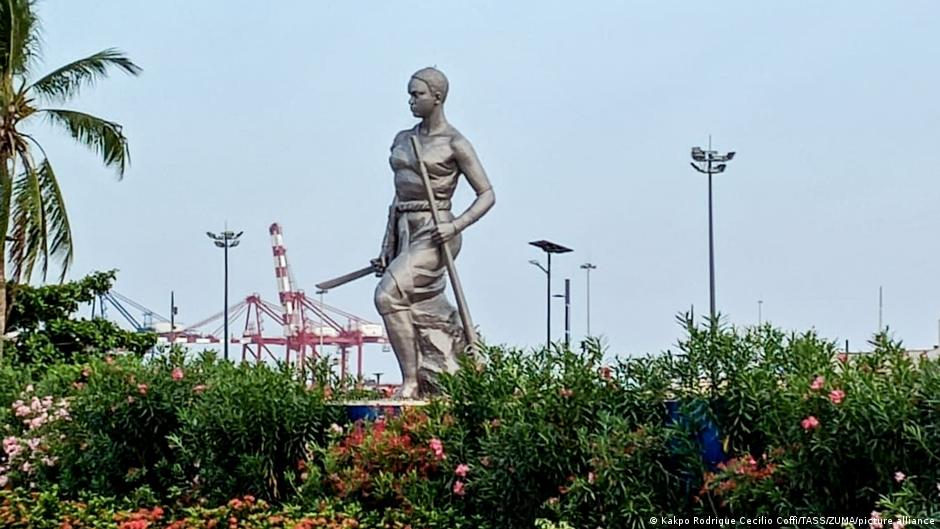
The appointment of Captain Elvire Toupé as an aide-de-camp to Benin’s President has sparked optimism across the nation. This groundbreaking decision follows her selection during the inaugural Council of Ministers meeting on May 28, marking a historic first since the country’s independence on August 1, 1960.
Before this role, Toupé served as an officer in the Republican Guard, becoming the first Beninese woman to hold this position. Her selection underscores a growing recognition of women’s capabilities in leadership, though challenges persist in broader political representation.
Breaking barriers: a tribute to Benin’s warrior legacy
Régis Hounkpè, a political analyst and director of InterGlobe Conseils, highlights the significance of Toupé’s appointment in the context of Benin’s rich history. He notes that her role resonates with the legendary Agodjié—the elite all-female military unit of the Dahomey Kingdom, often referred to as the Amazons.
“This is more than a nomination; it’s a powerful symbol,” Hounkpè explains. “Young Beninese girls now have a living example of courage and leadership, just as the Amazons once embodied in our collective memory. This appointment reinforces their place in decision-making and public life.”
From symbols to systemic change: the road ahead
Wuldath Moussa Mama, a journalist and political commentator, observes that while Toupé’s role is historic, it raises critical questions about systemic gender inclusion in Benin’s governance.
“The vice presidency, held by Mariam Chabi Talata Zimé Yérima since 2021, is a symbolic milestone,” she notes. “Yet, her role remains largely ceremonial under the Constitution. True inclusivity demands more than representation—it requires meaningful participation in shaping policies.”
In the 10th legislature, established in February 2026, women hold 28 out of 109 seats (25.7%), mirroring the previous assembly’s figures. While the electoral code mandates one reserved seat per constituency for women—resulting in 24 elected representatives—four others secured seats independently. However, analysts argue this progress is still insufficient.
“The real work lies within political parties,” Moussa Mama emphasizes. “Training, mentorship, and equitable opportunities for women must become priorities. Without these, progress remains superficial.”
Balancing progress with persistent gaps
President Romuald Wadagni’s government includes six women among its 23 members, covering portfolios such as foreign affairs, higher education, and social action. While this represents a slight increase from the previous administration’s five female ministers, advocates stress the need for sustained efforts.
“Symbols are important, but they are not enough,” Hounkpè remarks. “Benin’s future depends on ensuring women are not just present in government but empowered to drive change.”