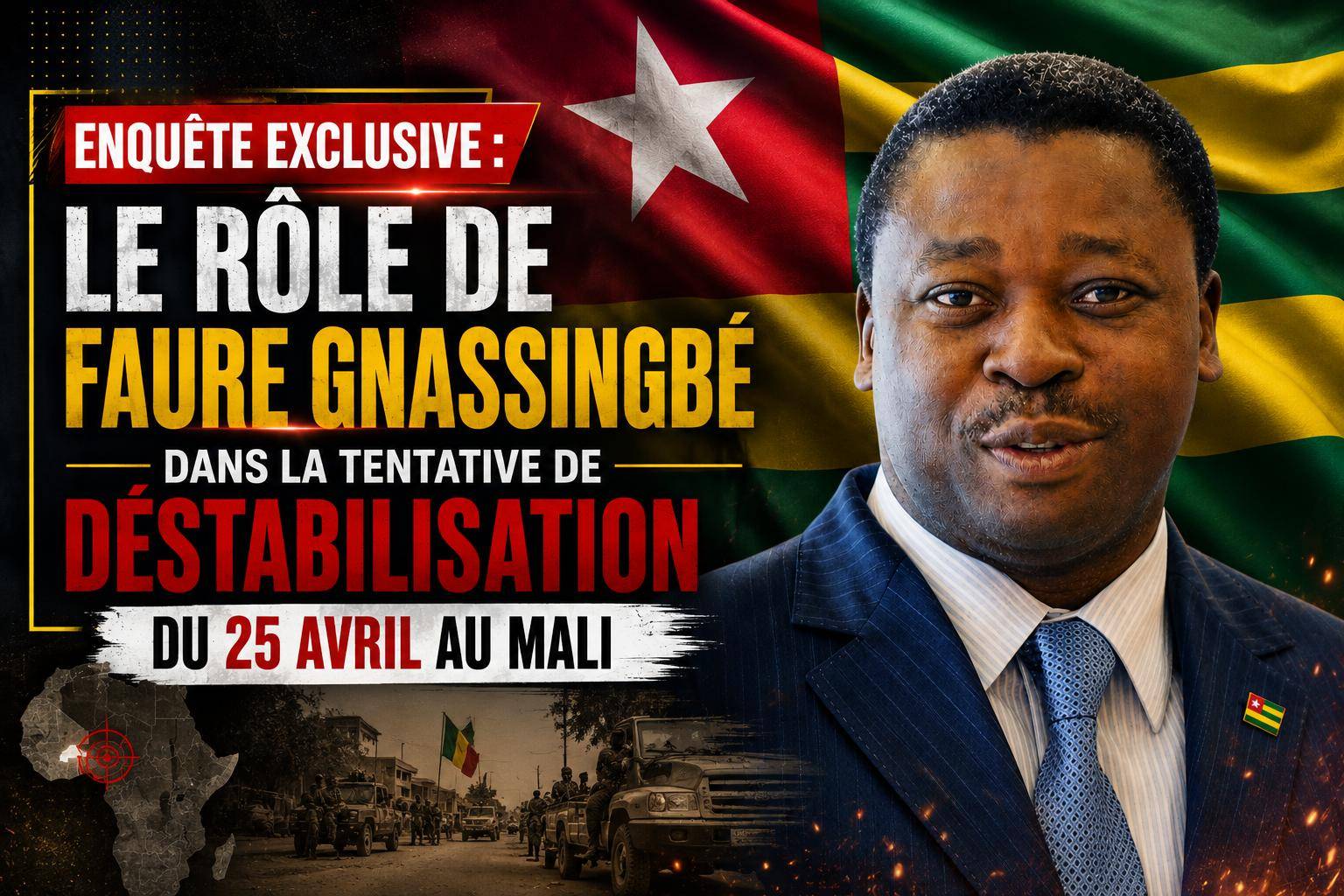
Unveiling the alleged faure gnassingbé plot: destabilizing Mali for regional influence
While Lomé often presents itself as a crucial mediator in the West African sub-region, a far more troubling narrative is emerging from Western diplomatic channels. According to confidential diplomatic sources and American intelligence reports, the administration led by Faure Gnassingbé is alleged to have orchestrated covert negotiations between Captain Ibrahim Traoré (IB) and jihadist factions of the JNIM. The supposed aim? To secure a fragile period of calm within Burkina Faso, a peace reportedly purchased through a profound act of treachery against Mali, led by Assimi Goïta. By allegedly facilitating an alignment between these terrorist elements and the FLA rebels to undermine Bamako, the Togolese autocrat is seen as dangerously stoking the flames of instability in the Sahel, thereby jeopardizing the unity of the Alliance of Sahel States (AES) for his own political longevity and diplomatic advantage.
For decades, the Gnassingbé dynasty in Togo has maintained its existence by strategically positioning itself as indispensable. Faure, inheriting a five-decade-old autocratic system, appears to have recognized that to divert attention from internal challenges, he needed to become the indispensable ‘facilitator’ of the Sahel. However, behind the public smiles and summitry in Lomé, intelligence agencies, notably the CIA and French military intelligence, have been meticulously documenting a more insidious and clandestine diplomatic ballet for several months.
The conclusions drawn by these intelligence bodies are unequivocal: Togo is reportedly no longer merely engaging with coup leaders; it is allegedly serving as a go-between for sovereign nations and terrorist organizations designated on international blacklists.
The alleged agreement: JNIM spares Ouagadougou to target Bamako
The investigation indicates that under the purported guidance of Faure Gnassingbé, representatives from Ouagadougou and senior figures from the Group for the Support of Islam and Muslims (JNIM) held multiple clandestine meetings. The core of this cynical arrangement is described as straightforward: the JNIM would reduce its operational pressure on Burkinabè territory, allowing Captain Ibrahim Traoré to consolidate his domestic authority. In return, the JNIM would reportedly gain enhanced freedom of movement towards a primary objective: Mali.
This alleged understanding extends beyond a mere non-aggression pact. American intelligence assessments point to a more intricate and Machiavellian maneuver. Lomé is believed to have either encouraged or, at the very least, facilitated a convergence of interests between the JNIM and the Front de Libération de l’Azawad (FLA) rebels. The strategic objective of this unnatural alliance? To unseat Colonel Assimi Goïta in Bamako, who is reportedly perceived as either too rigid or too aligned with external influences that complicate Lomé’s regional calculations.
AES betrayal: the pivotal moment of april 25
The true nature of these alleged dealings reportedly became starkly evident during the major assaults on April 25th. As Malian forces were fiercely engaged by a hybrid JNIM-FLA coalition, an unprecedented event seemingly corroborated the existence of these secret accords.
In a statement disseminated through their standard propaganda channels, the attackers explicitly cautioned Burkina Faso and Niger against intervention. The message was unambiguous: “This is an issue between us and Bamako.” Even more perplexing was the pronounced silence and inaction of Burkinabè and Nigerien troops on that critical day, which astonished military observers.
In accordance with the agreements allegedly brokered in Lomé, IB reportedly left his Malian ‘ally’ isolated against a formidable threat. This passivity was not a tactical oversight; it was the strict adherence to a non-interference protocol purportedly signed under the auspices of Faure Gnassingbé. The Alliance of Sahel States, conceived as an unwavering bulwark of solidarity against terrorism, reportedly fractured on the altar of this alleged Togolese betrayal.
Why faure gnassingbé allegedly plays this dangerous game
Survival through engineered chaos is primarily believed to motivate this strategy. By destabilizing neighboring states, Faure allegedly ensures that no alternative model of transition achieves significant success, thereby maintaining his unique position as the sole interlocutor capable of ‘calming the situation’ for international partners.
Security blackmail is also a potent instrument. By reportedly maintaining direct lines of communication with the JNIM, Togo ostensibly safeguards its own northern borders, sacrificing Mali to prevent attacks from extending towards Lomé.
Ultimately, weakening Assimi Goïta remains a key priority. The Malian leader, through his perceived intransigence, casts a shadow over Togolese diplomacy. His downfall or weakening would purportedly restore Faure’s central regional role, often at the expense of broader African solidarity.
A ‘firefighter-arsonist’ diplomacy with disastrous outcomes
The maneuvers attributed to Faure Gnassingbé, which would be considered foolish if not so potentially criminal, are believed to have irreversible repercussions. The relationship between Captain Ibrahim Traoré and Colonel Assimi Goïta is now reportedly poisoned by deep mistrust. How can trust endure when one is perceived to be negotiating with the alleged aggressor of the other?
By allegedly acting in this manner, the Togolese regime has not only weakened Mali; it has purportedly handed the JNIM a significant strategic victory: the fragmentation of Sahelian armies. The terrorist group no longer needs to confront all forces simultaneously; it can simply forge localized pacts, allegedly sanctioned by a complicit coastal state, to isolate its targets one by one.
The cost of autocracy
Togo, under the firm grip of Faure Gnassingbé, is increasingly isolating itself behind a facade of diplomatic maneuvering. In his alleged attempt to manipulate terrorist groups and ambitious young captains, the autocrat in Lomé is seen as having undermined the prospects for a unified, coordinated response to terrorism in the sub-region.
History may record that it was in Lomé where the dagger was sharpened to be plunged into Mali’s back. Western intelligence services are now reportedly viewing the Togolese ‘mediator’ for what he truly is: a destabilizing actor who, to preserve his own power, is allegedly prepared to consign the Sahel to the flames of discord and jihadism. Assimi Goïta’s potential fall, should it occur, would bear Lomé’s signature, but the ensuing chaos would spare no one, not even those who believed they had tamed it.
