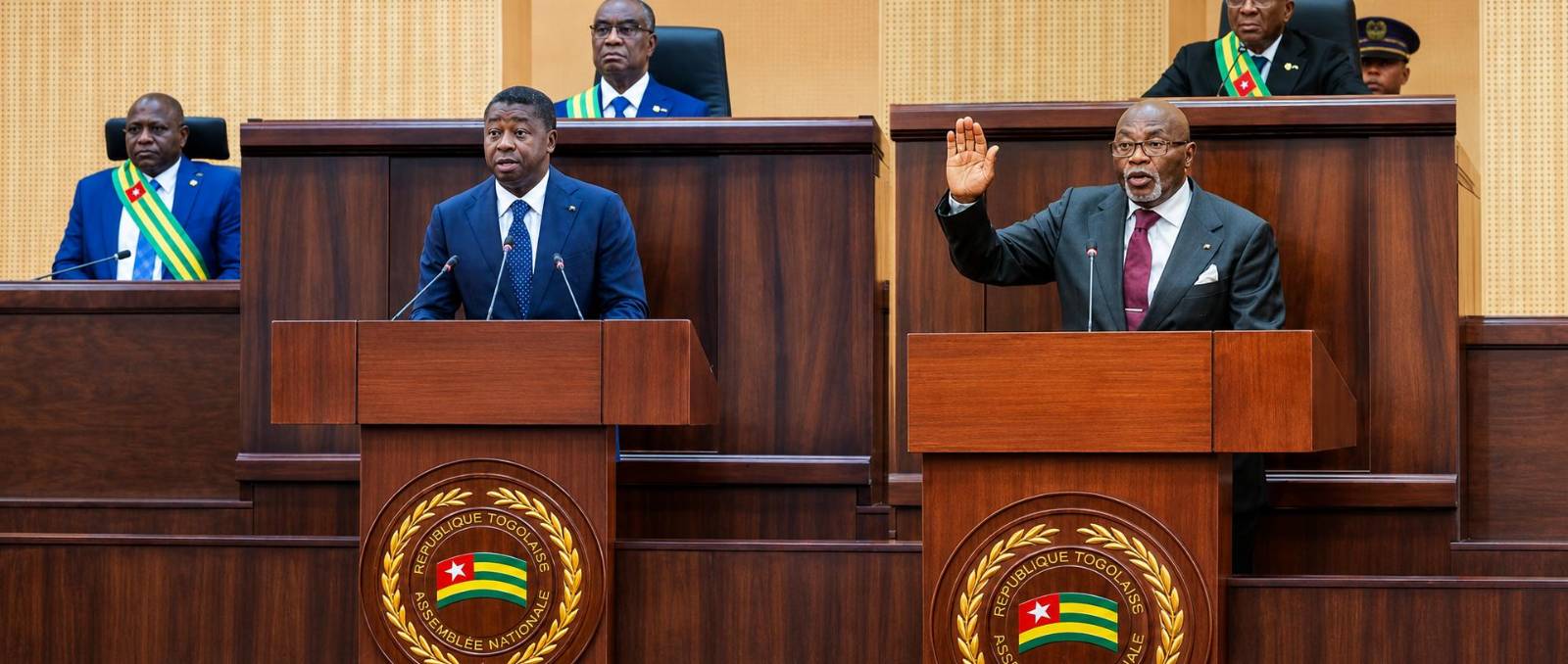
Togo’s constitutional overhaul: securing faure gnassingbé’s perpetual presidency
Togo recently enacted a significant constitutional transformation, widely perceived as dismantling democratic alternation. Following the new Constitution’s adoption on April 19, the nation transitioned from a semi-presidential system to a tailored parliamentary framework. Beneath the technical facade of this change lies a clear ambition: to solidify Faure Gnassingbé’s presidency for life.
The strategy for absolute power
Within this revamped governmental structure, the role of President of the Republic has been largely ceremonial, stripped of substantial authority to become a mere figurehead. Divested of sovereign powers, the head of state now serves primarily as a symbolic presence.

Conversely, the true locus of authority resides with the President of the Council of Ministers. This position, meticulously crafted by and for Faure Gnassingbé, consolidates absolute power, granting control over the military, diplomatic affairs, and public administration. This apparent dualism is merely a superficial imbalance, designed to conceal the unchallenged dominance of an individual unwilling to relinquish control.
Faure Gnassingbé: the specter of an endless reign
The most critical aspect of this reform lies in the effective removal of presidential term limits. By aligning the head of government’s role with a simple parliamentary majority—an assembly overwhelmingly loyal to the ruling party—the regime has dismantled the final legal barrier to perpetual political tenure.
This “constitutional coup d’état” effectively grants Faure Gnassingbé an unassailable position. By sidestepping direct presidential elections and universal suffrage, he avoids the unpredictable outcomes of popular votes that he might no longer control. This move ensures a dynastic continuity for the leader who has governed the nation since 2005, following in his father’s footsteps.
The euthanasia of citizen suffrage
The most severe criticism leveled against this new constitution is the profound disenfranchisement of the populace, in favor of a single individual. By transitioning to this system, Togolese citizens are effectively removed from the decision-making process; they no longer directly elect the leader who guides their nation’s future. Under Faure Gnassingbé’s continued rule, elections are reduced to mere bureaucratic exchanges between political factions.
Public discourse is supplanted by backroom dealings, trapping Togolese democracy within a legalistic framework. This impenetrable political lockdown eliminates any prospect of democratic alternation. By separating the leadership from the citizenry, this reform solidifies the perception that Togo’s Fifth Republic is essentially a dictatorship that has legally entrenched Faure Gnassingbé’s indefinite hold on power.
