
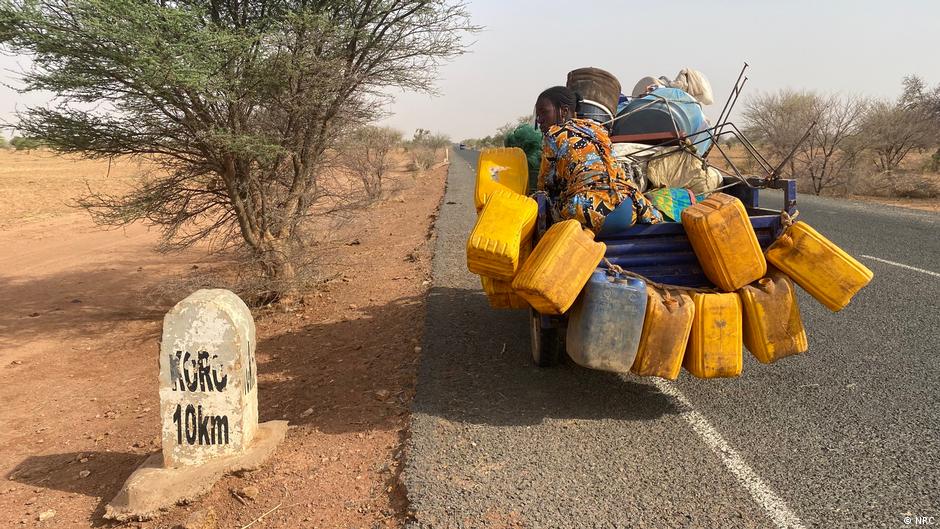
The exodus from Burkina Faso shows no sign of slowing, with thousands of displaced individuals crossing into Koro, central Mali, since late May. Local authorities report the arrival of several thousand refugees, a figure that continues to rise as families flee escalating violence in their home regions.
The surge in arrivals follows coordinated attacks by armed groups in villages across central Burkina Faso. Many who arrived in Koro recounted harrowing accounts of forced evacuations under threat of violence.
“Two men arrived on a motorcycle. They were messengers spreading fear. We knew we had to leave immediately,” shared Hamsetou, a mother and community member from Sia in Gomboro. Her family fled under cover of darkness, guided by fear, before making the journey to Koro the following day.
“The armed groups came during our weekly market, giving us until dawn to abandon our homes.” She described the scene: “We left everything behind—our homes, our food stores, our livestock. We hid in neighboring villages before taking a taxi to reach safety here.”
a journey marked by loss and resilience
Hamsetou, like many others, is settling temporarily in Koro while waiting for conditions in Burkina Faso to stabilize. She joins thousands displaced from villages such as Gani, Bouli, Kogan, Ganagoulo, and Kouéré—each family carrying stories of abrupt flight.
Oumou, a resident of Ganagoulo, described seeing armed men moving toward nearby Bouli and Gani on May 26. “They came to our village and warned us of the same fate. We had no choice but to flee, leaving behind everything we owned—our houses, our granaries, our animals. Some walked for miles. Others used tricycles, carts, or bicycles to reach Koro.”
Oumou and her family of six arrived safely in Koro, finding temporary shelter among the growing number of displaced persons in the region.
Issa Sagara, deputy mayor of Koro, emphasized the pressing challenges facing both refugees and host communities. “The current infrastructure is overwhelmed,” he stated. “Housing, food, and basic services are stretched beyond capacity. We urgently need support to provide dignified living conditions and prevent a humanitarian crisis.”
The refugees, currently sheltered in multiple sites across Koro and its surroundings, represent a cross-section of Burkinabè society—three-quarters of them women and children—each carrying the weight of displacement and the hope for a peaceful return home.