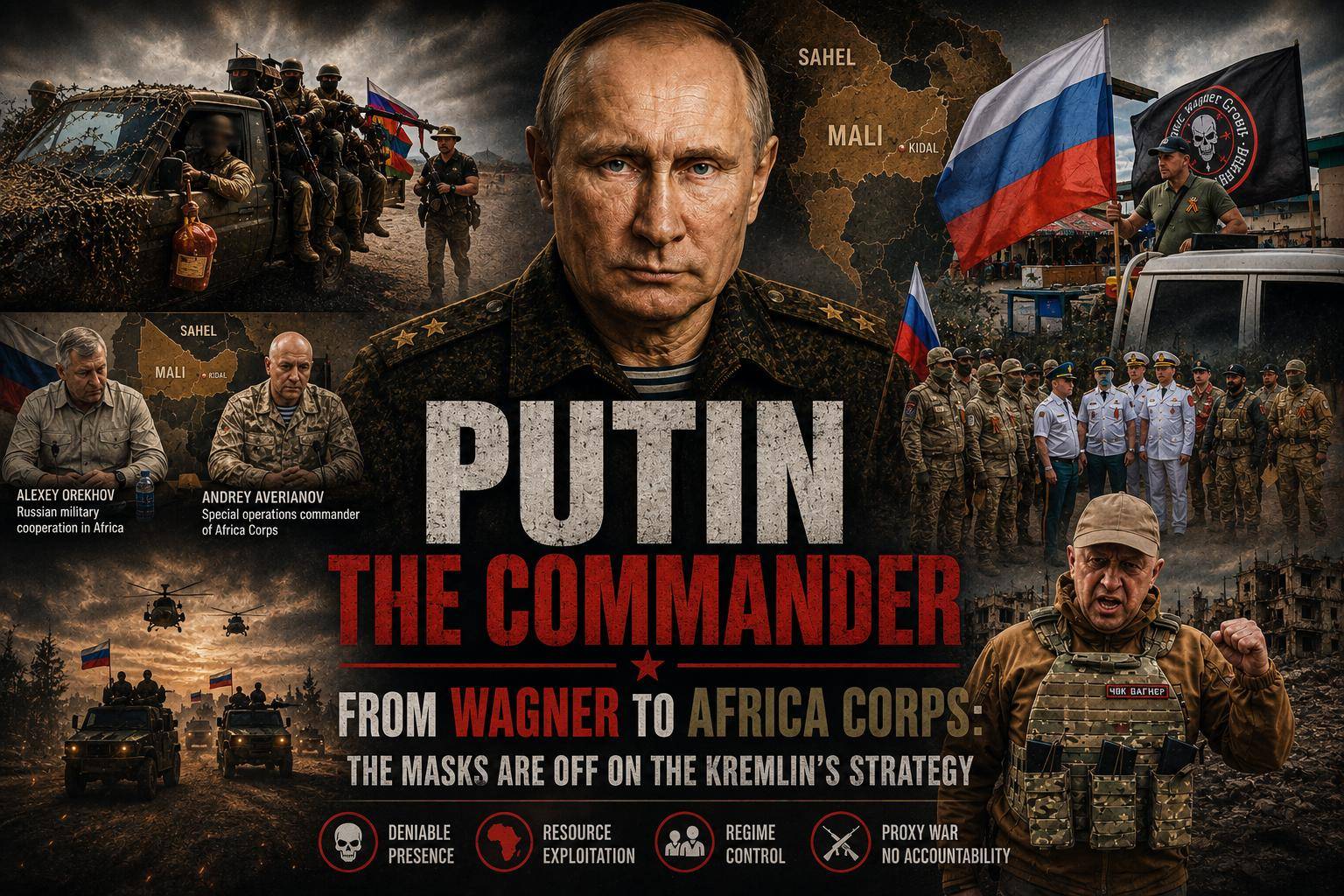
The fading influence of Russia in Africa
After a decade of rapid expansion under the banner of mercenary operations, disinformation campaigns, and anti-Western populism, Russia’s African strategy is now colliding with harsh realities. Once-promised security solutions have failed to materialize, military engagements have stalled, and local populations are increasingly rejecting Moscow’s advances. What was once dismissed as speculative is now unfolding before our eyes: the gradual unraveling of Russian influence on the continent.
the illusion of a security alternative
In the mid-2010s, Russia capitalized on the retreat of traditional powers, particularly France, across West and Central Africa. From Bamako to Bangui, via Ouagadougou and Niamey, Moscow marketed a ready-made security package: unconditional support, free from human rights constraints, delivered through the Wagner Group (now rebranded as Africa Corps).
Yet, years later, the results speak for themselves. Far from bringing stability, the situation in the Sahel has worsened dramatically. The myth of Russian invincibility was shattered at Tinzawatane, where dozens of Russian mercenaries and Malian soldiers perished in a border clash with Algerian forces.
What Moscow actually offered was not peace, but regime security in exchange for access to mineral wealth—gold, diamonds, and uranium. This transactional approach, stripped of any developmental vision, has become impossible to ignore. Local populations are realizing that the colonizer has merely swapped uniforms and languages, not objectives.
three structural weaknesses undermining Russia’s position
An examination of current trends reveals that Russia’s retreat from Africa stems from three fundamental vulnerabilities:
- financial and military strain from the war in Ukraine: The prolonged conflict has drained resources and manpower, forcing Moscow to prioritize its European front over African engagements. Elite troops and heavy weaponry are now redirected to a war that shows no sign of ending.
- the absence of an economic development model: Russia’s economy, comparable in size to Spain’s, lacks the capacity to rival the European Union’s development aid or China’s infrastructure investments. Once the initial political euphoria fades, African governments discover that emergency wheat shipments and social media propaganda cannot feed their people.
- clash with rising African nationalism: The Kremlin’s rhetoric of a “second decolonization” has fallen flat. A new generation of Africans, digitally savvy and fiercely independent, rejects any form of foreign dominance—whether French or Russian. Replacing one foreign flag with another is no longer seen as liberation, but as a naive surrender.
a shifting geopolitical landscape
The decline of Russian influence does not automatically mean a return to Western dominance in its former spheres of influence. Instead, we are witnessing a recalibration of alliances toward more pragmatic actors.
China is quietly strengthening its economic foothold, favoring long-term contracts over military posturing. Meanwhile, Turkey and the United Arab Emirates are emerging as key partners, offering advanced drone technology and financial investments without the geopolitical baggage that comes with Moscow’s approach.
lessons from a failed imperial gamble
Russia’s African adventure, though intense, has proven historically short-lived. It has underscored a critical truth: influence cannot be sustained through force and manipulation alone. For African leaders, the lesson is clear—there are no shortcuts in geopolitics. Security and development cannot be outsourced to foreign mercenaries or ideologues, regardless of their origin. The fading of Russian dominance may signal the beginning of a new era: one where Africa seeks not masters, but true partners.
