
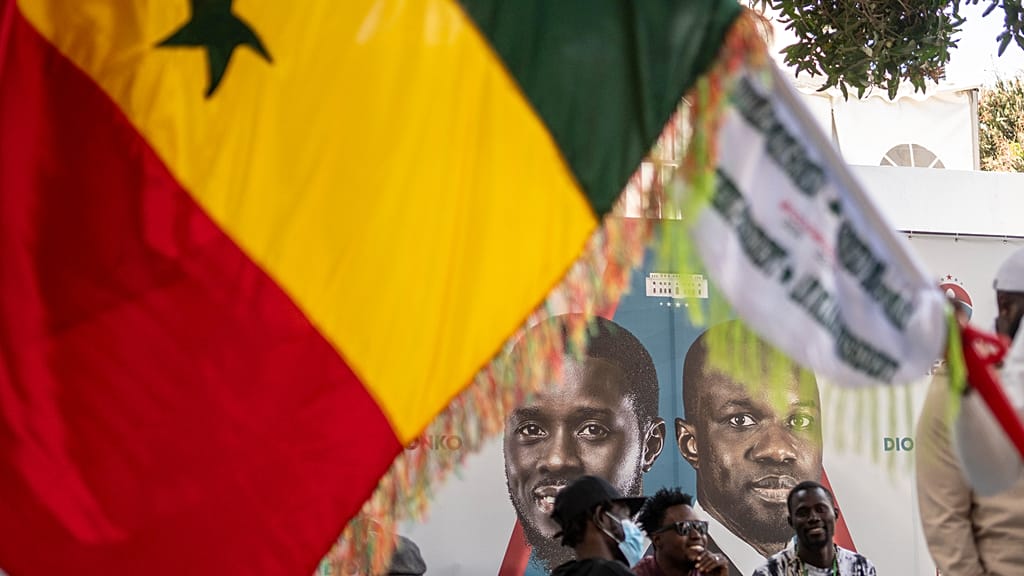
Senegal’s president dismisses prime minister sonko amid deepening political crisis
President Bassirou Diomaye Faye of Senegal has taken decisive action, dismissing Prime Minister Ousmane Sonko and dissolving the entire government on Friday. This significant development follows months of escalating tensions, further deepening the political crisis within the debt-ridden West African nation.
The unexpected announcement was broadcast via state television, where presidential advisor Oumar Samba Ba read a decree confirming the changes. The decree stated that President Faye “has terminated the functions of Ousmane Sonko… and, consequently, those of the ministers and secretaries of state who were members of the government.”
Senegal now finds itself in a unique political predicament: its current president largely owes his position to the very Prime Minister he just removed. Sonko himself was widely expected to contend for the presidency but was ultimately prevented from running due to a defamation conviction.
The dynamic between President Faye and the charismatic Sonko, who once served as his mentor, had reportedly soured considerably over the past several months.
Their political party, Pastef, secured a resounding victory in the first round of the March 2024 elections. The party campaigned on a platform promising radical political change, vowing to tackle pervasive corruption and address widespread mismanagement of public affairs.
Despite Sonko’s undeniable popularity, it is President Faye who constitutionally wields all executive power. He possesses the authority to dismiss his head of government through a simple decree, as demonstrated by Friday’s action.
Ousmane Sonko had successfully galvanized a passionate following among Senegal’s disillusioned youth, particularly during the lead-up to the 2024 presidential election campaign.
His pan-Africanist rhetoric resonated deeply, as did his firm stance against France, the former colonial power.
In a fiery address to Pastef party loyalists in early July, Sonko had publicly criticized Faye, accusing him of a “lack of leadership” for what he perceived as insufficient support against his numerous detractors.