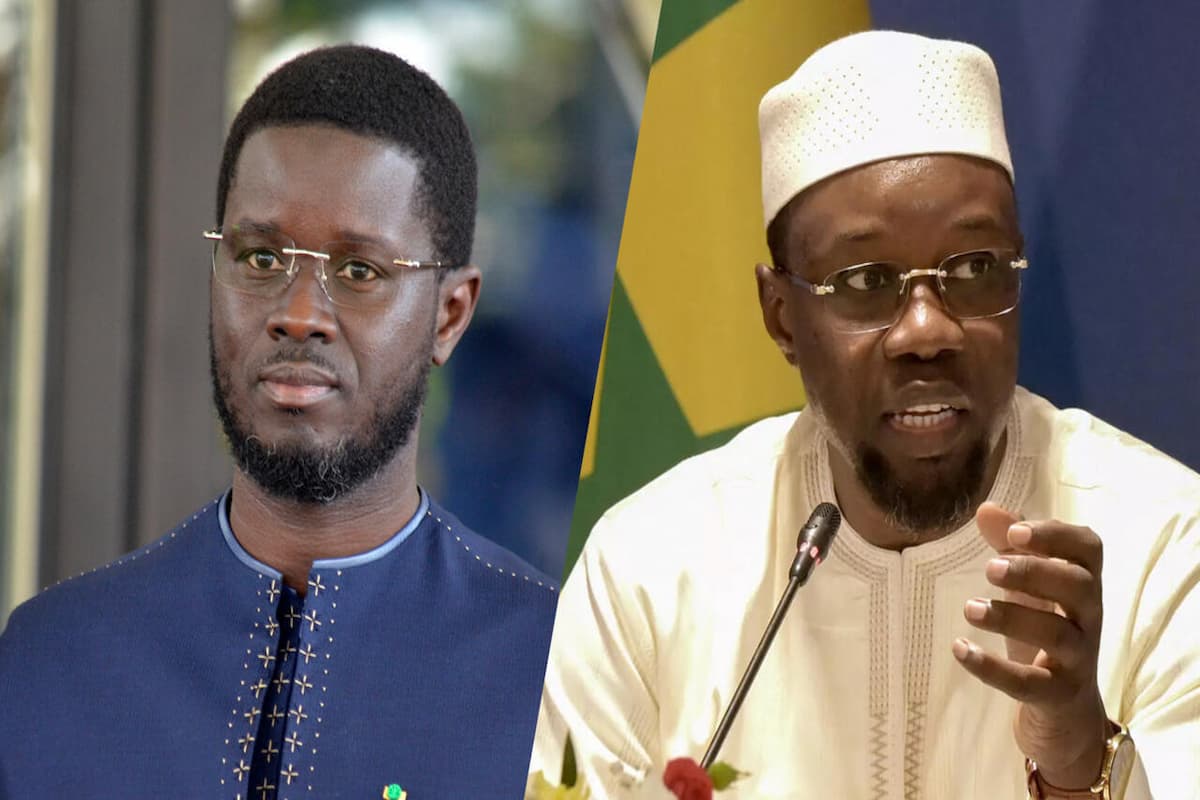
Senegal: president Faye ends sonko’s tenure amidst political rift
What was once hailed as an unprecedented political alliance in francophone Sub-Saharan Africa, a partnership that captured the nation’s imagination, proved unsustainable. In Senegal, the dynamic collaboration between Ousmane Sonko, the esteemed mentor, and Bassirou Diomaye Faye, his protégé and a staunch opponent of former President Macky Sall, which propelled them to the 2024 presidential election, has dramatically fractured. This celebrated duo devolved into a public confrontation, culminating in a decisive rupture during the night of May 22, 2026.
Indeed, on Friday, May 22, just before 10 PM, citizens across Senegal were taken aback by a brief but impactful announcement broadcast by the Radiotélévision sénégalaise (RTS) directly from the prestigious Palais de la République in Dakar. Oumar Samba Ba, the Secretary General of the Presidency, delivered the news: Prime Minister Ousmane Sonko had been relieved of his duties. Concurrently, every member of the government was also dismissed from their positions.
“By decree n°2026-1128 of May 22, 2026, the President of the Republic, Bassirou Diomaye Faye, has terminated the functions of Ousmane Sonko as Prime Minister, and, consequently, those of the ministers and secretaries of state who constituted the government. The outgoing members of the government are instructed to manage current affairs,” Oumar Samba Ba formally declared.
Upon hearing of his dismissal, Ousmane Sonko promptly took to Facebook, expressing his sentiments with a concise message: “Tonight, I will sleep with a light heart.”
Just hours prior to this pivotal announcement, Ousmane Sonko had engaged with deputies at the National Assembly, fielding their questions and making a notable declaration: “I am not a Prime Minister who blindly obeys and assents to everything.”
It is important to acknowledge that underlying tensions have been brewing for several months between the two executive leaders since their ascent to power in 2024. Their political differences had become increasingly apparent. For instance, weeks earlier, during a press engagement with national media, President Bassirou Diomaye Faye had explicitly stated that he reserved the right to “terminate the functions of his Prime Minister if he no longer had confidence in him.” The events of that evening clearly indicate that this critical threshold was crossed.
The nation now awaits to see how the political landscape in Senegal will evolve following this significant shift. With local elections anticipated in 2027 and the next presidential election not until 2029, the implications of this government change will undoubtedly shape the country’s future trajectory.
