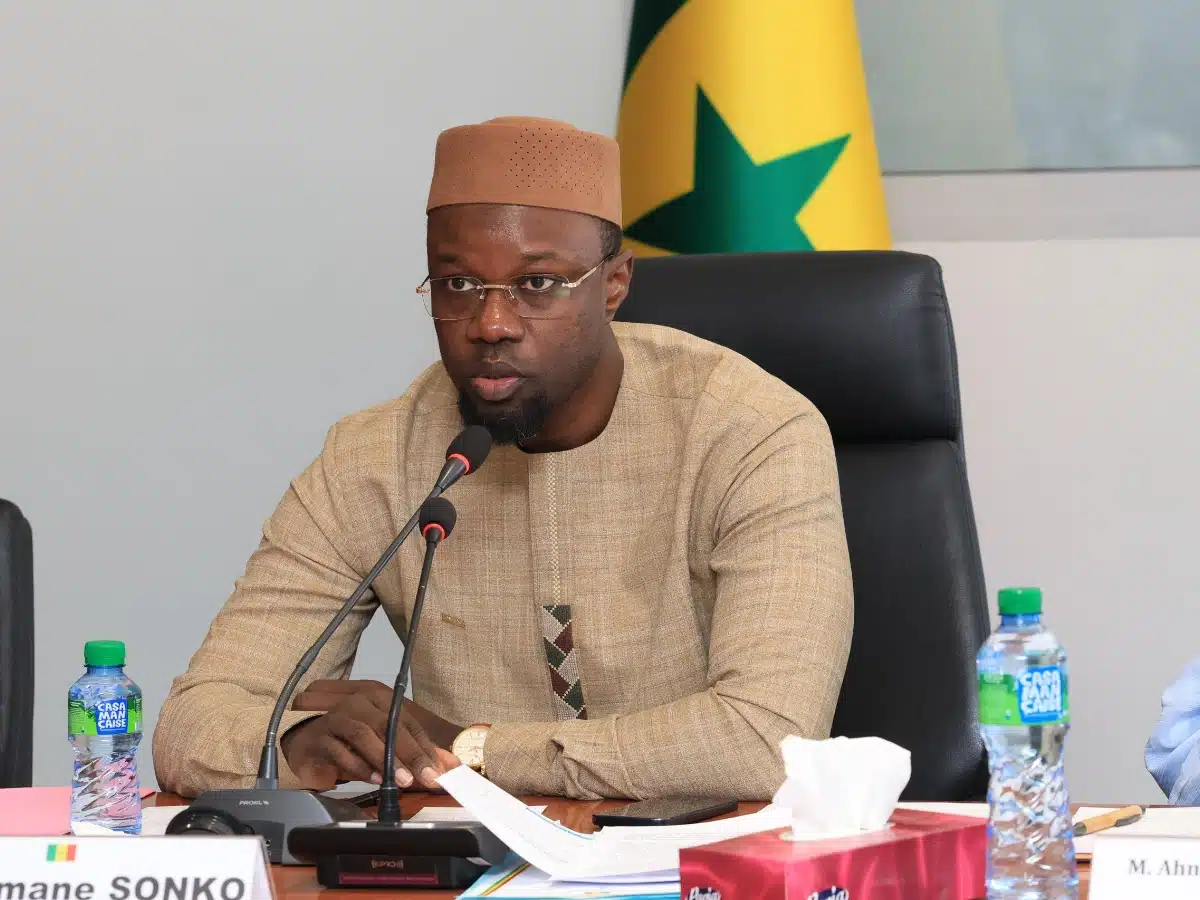
Senegal’s anti-homosexuality law to be enforced insists Sonko
Senegal’s anti-homosexuality law to be enforced insists Sonko
Prime Minister Ousmane Sonko reaffirms the government’s commitment to implementing stricter penalties for same-sex relations in Senegal.
Senegal’s sovereignty under scrutiny as new penalties take effect
The Senegalese government is set to enforce a recently amended penal code that significantly increases penalties for same-sex relations, Prime Minister Ousmane Sonko declared during a parliamentary session. The announcement came as international observers raised concerns over human rights implications.
Sonko emphasized that Senegal remains a sovereign nation whose laws reflect the values of its people. “The Senegalese people are sovereign. The overwhelming majority reject such practices,” he stated, pushing back against criticism from Western governments and advocacy groups.
“Western hegemony” versus national values
Addressing detractors within Africa and beyond, Sonko framed the debate as an attempt by Western powers to impose their standards on the rest of the world. “There exists a form of tyranny. Out of eight billion people, a small Western elite—despite internal divisions—uses its economic and media dominance to force homosexuality upon the world. On what grounds?” he questioned.
The Prime Minister dismissed any possibility of a moratorium on the law’s implementation. “This law will be enforced,” he declared firmly.
Key provisions of the amended law
The National Assembly had earlier approved Law No. 2026-08 on March 27, 2026, modifying Article 319 of the 1965 Penal Code. The amendment introduces stricter penalties for “acts against nature,” now defined as:
- Any sexual act between individuals of the same sex
- Any sexual act involving a human corpse or an animal
Offenders face imprisonment ranging from five to ten years and fines between two million and ten million West African CFA francs. Additional penalties apply in cases involving rape or pedophilia.
The government’s stance underscores a broader trend in West Africa where national sovereignty is increasingly pitted against international human rights norms, particularly regarding LGBTQ+ issues.
Be the first to comment

Comments