
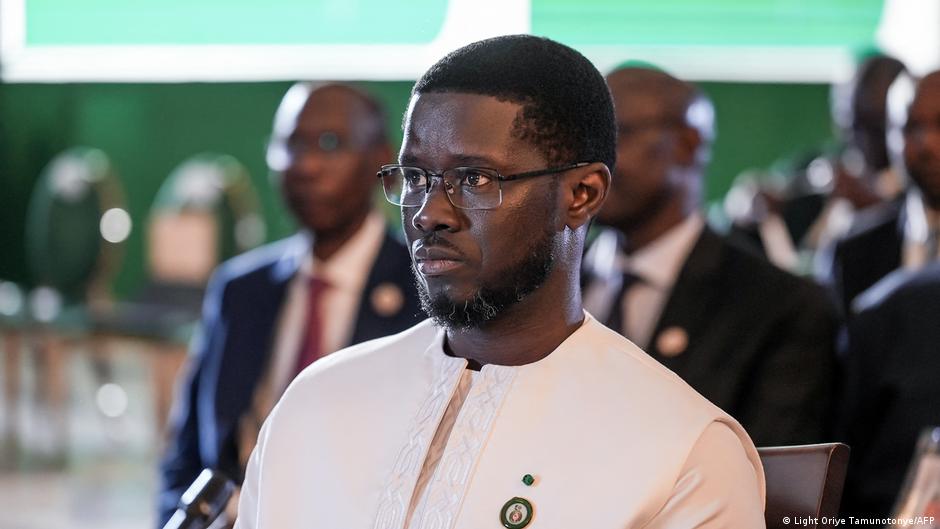
The political landscape in Sénégal is shifting as opposition forces rally around President Bassirou Diomaye Faye, challenging the ambitions of former Prime Minister Ousmane Sonko. The Democratic Party of Sénégal (PDS), led by former president Abdoulaye Wade’s son Karim Wade, has taken a firm stance against constitutional reforms spearheaded by the Pastef party, sparking a rare alliance that underscores the complexities of Sénégal’s evolving democracy.
President Faye’s decision to submit the contentious constitutional amendments to a national referendum has drawn unexpected support from the PDS. While the party opposes the reforms themselves, it has chosen to align with the president’s initiative—a move that signals a tactical shift in political strategy rather than a full ideological realignment.
From rivals to reluctant allies: the PDS’s evolving stance
The PDS’s decision to back Faye’s referendum bid marks a significant departure from its earlier alliances. In the 2022 legislative elections, the party joined forces with Pastef to challenge then-president Macky Sall’s administration. By early 2024, as Karim Wade was sidelined from the presidential race, the PDS threw its weight behind the Sonko-Faye ticket, a calculated move to secure influence in the new government.
However, this partnership proved short-lived. After Faye’s election, the PDS remained outside the ruling coalition, maintaining its independence. Analysts suggest the party’s shifting allegiances were driven more by political survival than shared principles. Hamadou Tidiane Sy, director of Dakar’s E-Jicom journalism school, notes that the PDS, once dominant, sought to reposition itself in the political arena following its electoral decline.
A united front against Sonko’s reforms
The current rift between President Faye and Ousmane Sonko has presented the PDS with a fresh opportunity to assert its influence. The party has publicly urged voters to reject the constitutional amendments, framing its opposition as a defense of democratic institutions against what it describes as Sonko’s power grab.
In a strongly worded statement, the PDS declared its mission to “bar the path” to reforms it claims are driven by Sonko’s personal ambitions. The party’s call to vote “No” in the referendum reflects a broader sentiment among opposition factions, many of whom view Sonko’s approach as destabilizing.
Sy emphasizes that this opposition transcends party lines, noting that even those who do not fully endorse Faye share a common goal: containment of Sonko’s influence. “The entire opposition is aligned in this dynamic, even if they don’t explicitly rally behind Diomaye. It’s ultimately a rejection of Ousmane Sonko,” he explains.
Circumstantial alliances and the future of Faye’s leadership
Despite the PDS’s current alignment with Faye, analysts caution against expecting a lasting partnership. Sy argues that the opposition’s stance is rooted in opposition to Sonko’s methods rather than unconditional support for the president. “Those leaving the Assembly are not necessarily endorsing Diomaye. They oppose the process, which they see as an attempt to centralize power,” he says.
The analyst also points to the growing perception of Pastef as an exclusive movement, which has driven other political forces—temporarily—into Faye’s camp. This strategic convergence, however, is unlikely to solidify into a permanent coalition.
For President Faye, the PDS’s backing could prove invaluable as he navigates internal criticism within Pastef. Sy suggests the president is already laying the groundwork for a post-Pastef political strategy, building a new coalition that may define his second term.
He concludes that the rift between Faye and Pastef is now irreversible, with Sonko’s supporters viewing the president as a “traitor.”