
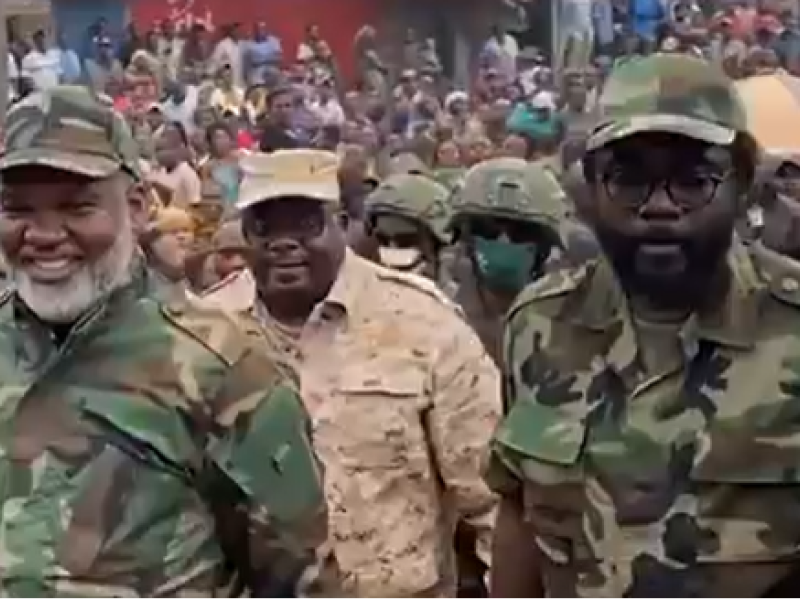
The eastern region of the Democratic Republic of the Congo (DRC) remains a flashpoint of regional tension, with a new United Nations report shedding light on the persistent military involvement of Rwanda in support of the AFC/M23 rebel group.
The findings, detailed in the latest assessment from the UN Group of Experts, reveal that over 10,000 Rwandan Defence Forces (RDF) personnel continue to operate alongside AFC/M23 fighters in the North-Kivu and South-Kivu provinces. Despite diplomatic efforts and regional agreements, there are no signs of a substantial withdrawal of these forces.
According to the report, submitted to the UN Security Council Committee in May 2026, the RDF has maintained a strong operational presence in eastern DRC. The document highlights several critical developments:
- Sustained reinforcements: New troop deployments have been documented, with estimates placing RDF forces between 8,000 to 10,000 in South-Kivu and 6,000 to 8,000 in North-Kivu as of late 2025. Rotations and additional reinforcements have occurred since then, with no evidence of withdrawal.
- Strategic integration: RDF personnel have been embedded within AFC/M23 combat units, including commando units from regions like Bigogwe, Rubavu, and Cyangugu. Some RDF troops have even adopted AFC/M23 uniforms to evade detection, conducting movements primarily at night.
- Advanced military support: The RDF has provided AFC/M23 with cutting-edge weaponry, drones, electronic warfare capabilities, and special forces. Aerial warfare capabilities have also been utilized to bolster the rebel group’s offensive operations.
- Questionable legitimacy: The report challenges Rwanda’s justification for its intervention, noting that RDF operations have been conducted in areas with no reported presence of the Democratic Forces for the Liberation of Rwanda (FDLR), a group Rwanda claims to target.
The UN experts underscored that AFC/M23’s combat units are directly supervised and supported by RDF personnel, raising serious concerns about the rebel group’s operational independence and the true extent of foreign involvement in the conflict.
Diplomatic deadlock amid escalating crisis
This latest revelation comes as diplomatic initiatives—including the Washington Agreement, Doha Process, and Montreux talks—have failed to yield meaningful progress. Tensions between Kinshasa and Kigali persist, with each side interpreting the agreements differently, further complicating their implementation. The Doha process, in particular, has stalled, with AFC/M23 accusing Kinshasa of not adhering to commitments while also facing external pressures unrelated to the conflict.
The deteriorating security situation in eastern DRC continues to exacerbate humanitarian crises, with civilians bearing the brunt of the violence. International observers warn that without a credible withdrawal of foreign forces and a renewed commitment to dialogue, the region’s stability will remain at risk.
Image: