
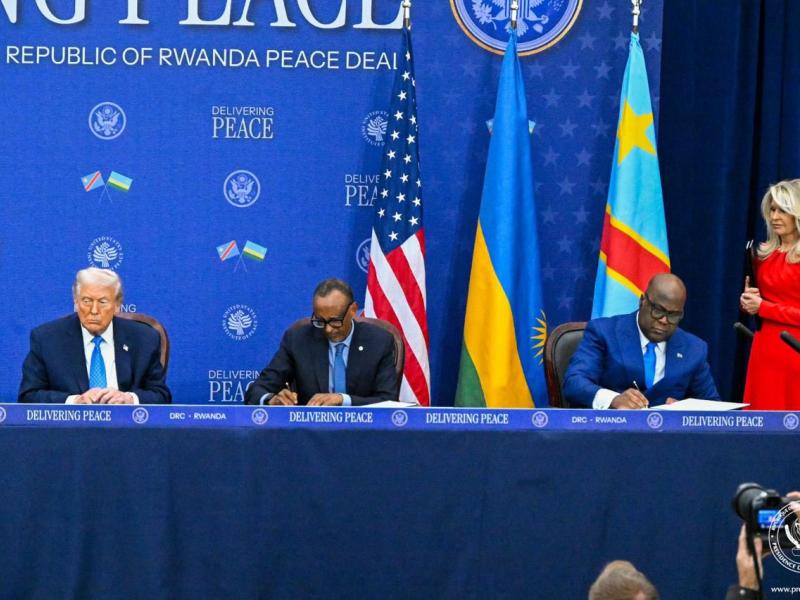
The much-anticipated agreements of Washington, Doha, and Montreux were meant to bring peace to the Democratic Republic of Congo (DRC). Instead, they have only revealed the fragility of diplomatic efforts in the face of persistent conflicts. According to a recent report by the United Nations Group of Experts, the outcomes of these high-profile negotiations have been disappointingly limited.
empty promises: the reality behind diplomatic maneuvers
The agreements, hailed as breakthroughs at the time of their signing, have failed to deliver on their promises. The report highlights that the withdrawal of the Rwandan Defence Force and the Alliance des Forces Démocratiques pour la Libération du Rwanda (AFC/M23) amounted to little more than tactical repositioning—shifts of just 15 to 20 kilometers. These movements did not signify a genuine withdrawal, as reinforcements, including advanced anti-aircraft systems, continued to flow into the region as late as April 2026.
No significant withdrawal was observed in the weeks following these maneuvers. The report underscores that the DRC itself bears part of the responsibility for this failure. The Congolese government did not fulfill its commitment to neutralize the Forces Démocratiques de Libération du Rwanda (FDLR), which continued to operate alongside the Forces Armées de la République Démocratique du Congo (FARDC).
internal fractures: a movement divided against itself
The report also exposes deep divisions within the AFC/M23. While figures like Corneille Nangaa and Joseph Kabila harbored ambitions of seizing power in Kinshasa, the military leadership of the M23 strongly opposed any operations beyond the provinces of North Kivu and South Kivu. This rift between political ambitions and military realities has weakened the movement’s coherence and undermined its credibility.
the path forward: beyond illusions
The diplomatic impasse in the DRC cannot be resolved through cosmetic agreements or superficial negotiations. The report calls for a renewed commitment to genuine peacebuilding, one that addresses the root causes of conflict and fosters reconciliation. Without meaningful action, the cycle of violence and failed diplomacy will persist, leaving the Congolese people to bear the consequences.