Russia’s expanding footprint in the Sahel: challenging u.s. strategic interests
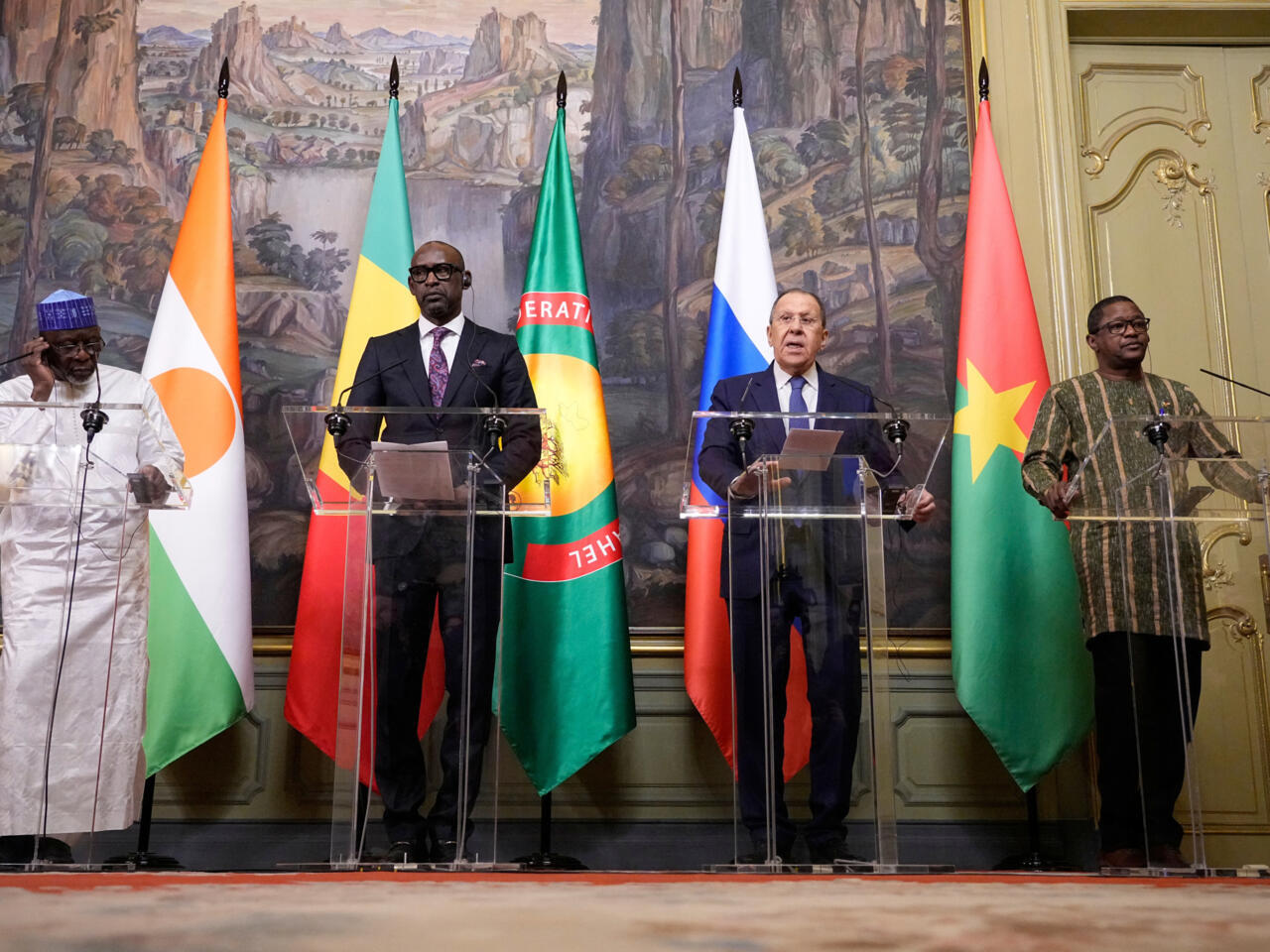
Military governments across the Sahel region—specifically Mali, Burkina Faso, and Niger—are forging a new security and political alliance, progressively distancing themselves from traditional Western partners. Russia is playing a pivotal role in shaping this emerging bloc, actively capitalizing on the diminished influence of the United States and its allies.
Through strategic military collaboration, arms shipments, and the deployment of private military companies, Moscow is significantly increasing its sway over these local administrations. Russia’s escalating presence in the Sahel directly jeopardizes U.S. interests by undermining Washington’s long-established counterterrorism framework in the area. The loss of critical military bases and intelligence assets severely hampers the United States’ capacity to monitor extremist activities, while Russia simultaneously gains access to vital strategic resources and enhances its political leverage within these vulnerable states.
Consequently, American standing is weakening across the broader African continent, setting a precedent for similar shifts elsewhere. Furthermore, the anti-Western sentiment expressed by regional regimes—bolstered by Russian informational support—makes any future U.S. re-engagement increasingly challenging. The formation of alternative security coalitions that exclude Western involvement diminishes the efficacy of international coordination and poses a long-term risk of the United States being displaced from the region.
Russia’s strategic maneuvers in the Sahel represent an asymmetric threat, integrating military, political, and informational tactics.
This evolving situation in the Sahel unfolds against a backdrop of persistent instability, driven by fragile state institutions and the proliferation of extremism. Following a series of military takeovers in Mali, Burkina Faso, and Niger, these new governments initiated a reevaluation of their foreign policy alliances.
These administrations frequently criticized Western nations for:
- ineffective counterterrorism efforts,
- perceived interference in their internal affairs.
Such grievances created fertile ground for Russia to expand its role as an alternative partner.
Moscow employs a versatile array of influence tools, including:
- military advisors,
- security contracts,
- defense cooperation agreements.
Russia’s advancement is facilitated by its presentation as a partner without stringent political conditions, making it particularly appealing to authoritarian regimes. Concurrently, pervasive socioeconomic challenges—such as widespread poverty and the impacts of climate change—intensify instability, creating an environment ripe for external manipulation and intervention.
Russia is effectively exploiting the security vacuum left by the withdrawal of Western forces from Sahelian states, enabling swift expansion of its influence with relatively modest resource expenditure. This strategic approach creates enduring risks for U.S. positions throughout Africa.
significant consequences:
diminished u.s. military presence impairs counterterrorism capabilities
Without established bases and vital intelligence assets in the region, the United States loses crucial operational capacity. This could potentially empower extremist groups to broaden their reach—not only within Africa but globally, posing threats that might eventually impact U.S. territory.
new Sahel alliances disrupt global security coordination
Regional security initiatives formed without Western engagement decrease the effectiveness of collaborative anti-terror operations and complicate the formulation of a cohesive security strategy.
russian information operations intensify anti-western sentiment
Russian propaganda reinforces negative perceptions of America among both the populace and elite circles, making Western re-engagement politically more arduous.
access to natural resources holds strategic importance
The Sahel’s rich mineral and natural resource base carries substantial economic and geopolitical weight for Russia. Increased Russian influence could impact global commodity markets and political alignments, potentially displacing the United States from key strategic sectors.
authoritarian governments favor Russia’s partnership approach
Sahelian military governments increasingly prefer Russia’s support because Moscow does not impose democratic prerequisites, simplifying cooperation for military-led administrations.
the Sahel emerges as a new theater for great-power competition
The clash of interests between the United States and Russia in the Sahel is inherently long-term. Competition for regional influence is poised to intensify rather than diminish.
The Sahel is transforming into a pivotal strategic arena where Russia is converting Western disengagement into significant geopolitical advantage.
The Sahel is transforming into a pivotal strategic arena where Russia is converting Western disengagement into significant geopolitical advantage.
Should current trends persist, Moscow may solidify the region into:
- an enduring anti-Western geopolitical bloc,
- a critical corridor for resource access,
- and a launchpad for extending influence deeper into the African continent.
The consolidation of military regimes in Mali, Burkina Faso, and Niger into a new regional alliance represents one of the most profound geopolitical shifts in Africa over the past decade. What superficially appears to be a regional security pact is, in reality, the genesis of a Russian-backed political-security framework designed to supplant Western influence throughout the Sahel. By capitalizing on anti-Western grievances, institutional fragilities, and the retreat of U.S. and European military forces, Moscow is transforming the Sahel into a strategic zone of asymmetric rivalry against the United States and its allies.
Russia’s engagement is not merely opportunistic; it is fundamentally structural and deliberate. Through arms transfers, military advisors, intelligence sharing, and the deployment of private military entities linked to the Kremlin, Moscow is deeply embedding itself within the coercive apparatus of Sahelian juntas. Unlike Western engagement, which traditionally links assistance to governance reforms, Russia offers regime stability without political conditionality. This model proves particularly appealing to military governments seeking legitimacy, internal control, and protection from democratic pressures.
strategic context: why the Sahel holds importance
The Sahel occupies a crucial geopolitical corridor spanning West and North Africa, connecting the Atlantic basin to the Red Sea and bordering regions vital for migration, counterterrorism efforts, and mineral supply chains. Control or influence within this belt affects:
- counterterrorism operations against ISIS-Sahel and al-Qaeda affiliates;
- access to deposits of uranium, gold, lithium, manganese, and rare-earth elements;
- key migration routes towards North Africa and Europe;
- military transit corridors across Francophone Africa.
For Washington, the Sahel has long served as a forward operating zone for counterterrorism. U.S. drone bases in Niger, regional intelligence assets, and joint operations with European allies provided crucial early-warning capabilities against jihadist networks. The expulsion or withdrawal of Western forces from these states therefore signifies not only a diplomatic setback but also a strategic blind spot in one of the world’s fastest-growing extremist theaters.
Russia’s strategic aims in the Sahel
Moscow’s Sahel strategy pursues several interconnected goals:
dismantling western security frameworks
Russia aims to dismantle the Western-led security architecture established over two decades, replacing French, EU, and U.S. military roles with Russian defense arrangements. This weakens NATO-aligned influence while positioning Moscow as an indispensable alternative.
forming an anti-western political alliance
The alliance among Mali, Burkina Faso, and Niger increasingly functions as a coordinated anti-Western axis. Their withdrawal from ECOWAS structures and unified stance against French and U.S. presence creates a bloc politically sympathetic to Russian narratives of “sovereignty against neocolonialism.”
securing strategic resources
Russian access to mining concessions—particularly gold in Mali and potential uranium opportunities in Niger—provides both economic advantages and resilience against sanctions. Resource extraction agreements can fund Russian regional operations while circumventing Western-controlled financial channels.
extending influence across africa
Success in the Sahel establishes a compelling model for other vulnerable African states. Moscow signals its capacity to replace Western partners wherever anti-Western coups or elite discontent emerge.
why sahelian juntas favor Russia
The military governments of the Sahel increasingly perceive Russia as a politically safer partner for five key reasons:
- absence of governance or democracy conditions tied to aid;
- expedited delivery of weaponry and military equipment;
- security support primarily focused on regime preservation;
- diplomatic backing against Western sanctions;
- information campaigns that bolster anti-Western legitimacy narratives.
This transactional model reinforces authoritarian stability while diminishing incentives for political transitions.
tools of russian influence
Russia’s expansion in the Sahel relies on a multifaceted toolkit:
military tools
- arms sales and ammunition provisions;
- deployment of Russian advisors and trainers;
- private military contractors safeguarding regime assets;
- intelligence-sharing agreements.
political tools
- diplomatic advocacy in international forums;
- recognition and legitimation of coup governments;
- bilateral agreements bypassing multilateral oversight.
information tools
- anti-Western propaganda disseminated via state-affiliated media networks;
- social media disinformation campaigns targeting France and the U.S.;
- amplification of narratives portraying Russia as an anti-colonial liberator.
This comprehensive approach enables Moscow to achieve strategic depth at a relatively low cost.
strategic repercussions for the united states
collapse of counterterrorism reach
Without forward operating bases in Niger and neighboring states, U.S. ISR (intelligence, surveillance, reconnaissance) capabilities drastically diminish. This reduces the ability to detect extremist movements across borders early.
reduced crisis response capacity
The loss of airfields and logistics hubs restricts rapid deployment capabilities in West Africa and constrains potential evacuation or stabilization missions.
erosion of u.s. credibility in africa
Washington’s withdrawal may be interpreted by African governments as a sign of waning strategic commitment, encouraging them to align more with Russia or China.
expanded jihadist safe havens
Russian-supported regimes prioritize their own security over broad governance reforms, leaving the root causes of extremism unaddressed and potentially exacerbating insurgent expansion.
threats to regional stability
The Russian-backed Sahelian bloc might offer short-term regime stabilization but introduces long-term risks to stability:
- militarization of governance without concurrent institution-building;
- increased repression fueling local discontent;
- fragmentation of regional anti-terror cooperation;
- resource exploitation exacerbating corruption;
- heightened vulnerability to proxy conflicts between external powers.
The absence of transparent governance mechanisms renders these alliances fragile and prone to crises.
long-term outlook (2026–2030)
If current trends persist, three likely developments emerge:
scenario a: consolidated russian sphere (high probability)
Russia firmly establishes itself as the primary security actor in the Sahel, making a Western return politically impractical.
scenario b: competitive multipolar contestation (moderate probability)
Turkey, China, Gulf states, and Russia simultaneously vie for influence, leading to fragmented alignments.
scenario c: regime collapse and strategic vacuum (moderate risk)
Should juntas fail to contain insurgencies or economic decline worsen, state breakdown could create uncontrolled conflict zones beyond Russia’s capacity to stabilize.
policy considerations for Washington
To counter this strategic displacement, the United States may need to:
- reconstruct influence through civilian and economic partnerships rather than solely military-focused engagement;
- broaden cooperation with coastal West African states to contain spillover effects;
- bolster African Union and ECOWAS as viable alternatives;
- counter Russian disinformation through local-language media initiatives;
- implement targeted sanctions on Russian-linked extraction networks.
A purely military response is unlikely to reverse the current trajectory unless complemented by robust political and economic alternatives.
The Sahel is no longer merely a theater for counterterrorism—it is rapidly becoming a proving ground for Russia’s broader strategy of supplanting Western influence in vulnerable states. By aligning with military juntas, Moscow is constructing an enduring anti-Western corridor in Africa that integrates regime protection, resource access, and geopolitical leverage. If left unaddressed, Russia’s foothold in the Sahel could become the blueprint for a wider reordering of influence across the African continent.
