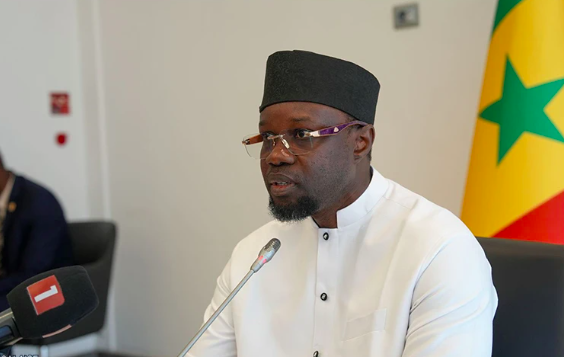
Prime minister ousmane sonko exposes 279 billion fcfa in Senegal’s stalled public projects
Prime Minister Ousmane Sonko recently disclosed that a staggering 245 public infrastructure projects across Senegal, representing a cumulative investment of 279 billion CFA francs, have been identified as either incomplete or non-operational. This significant revelation was made during an inter-ministerial council held in Dakar, focusing on the nation’s infrastructure challenges.
The Prime Minister recounted that a directive from the Council of Ministers on April 15 had instructed all ministerial departments to compile a comprehensive list of their respective ‘blocked’ projects. The subsequent technical assessment of these infrastructures brought to light the extent of the issue.
Sonko highlighted that these 245 stalled initiatives have resulted in what he termed “dormant assets” amounting to 279 billion CFA francs. These projects encompass infrastructure developments that are either fully constructed but not yet commissioned for use, or remain in various stages of ongoing realization.
According to the Prime Minister’s analysis, the predominant factor contributing to the paralysis of these 245 infrastructure projects is a critical lack of financial resources. Beyond monetary shortfalls, he also pointed to specific “technical” reasons that have brought certain developments to a standstill.
In response to these pervasive shortcomings, Ousmane Sonko announced two pivotal decisions. Firstly, he has mandated the establishment of a dedicated committee within the Prime Minister’s office, tasked with continuing and ultimately finalizing this crucial diagnostic work. Secondly, he issued a formal request for a more exhaustive inventory, expressing his belief that the current list is far from complete.
Furthermore, Sonko urged relevant governmental departments to proactively address and “anticipate technical issues related to the connection of hydraulic and electrical networks” for these infrastructures. He emphasized the “inconceivable” nature of constructing facilities without a clear plan for their eventual operation, identifying this oversight as a partial root cause of the reported blockages. He lamented the “enormous losses” incurred due to these unexploited investments.
The Prime Minister concluded by attributing the delays in project delivery and the widespread failures to “trickery, negligence, and laxity.” He declared that moving forward, there would be “zero tolerance” for such conduct in the management of public infrastructure projects.
