
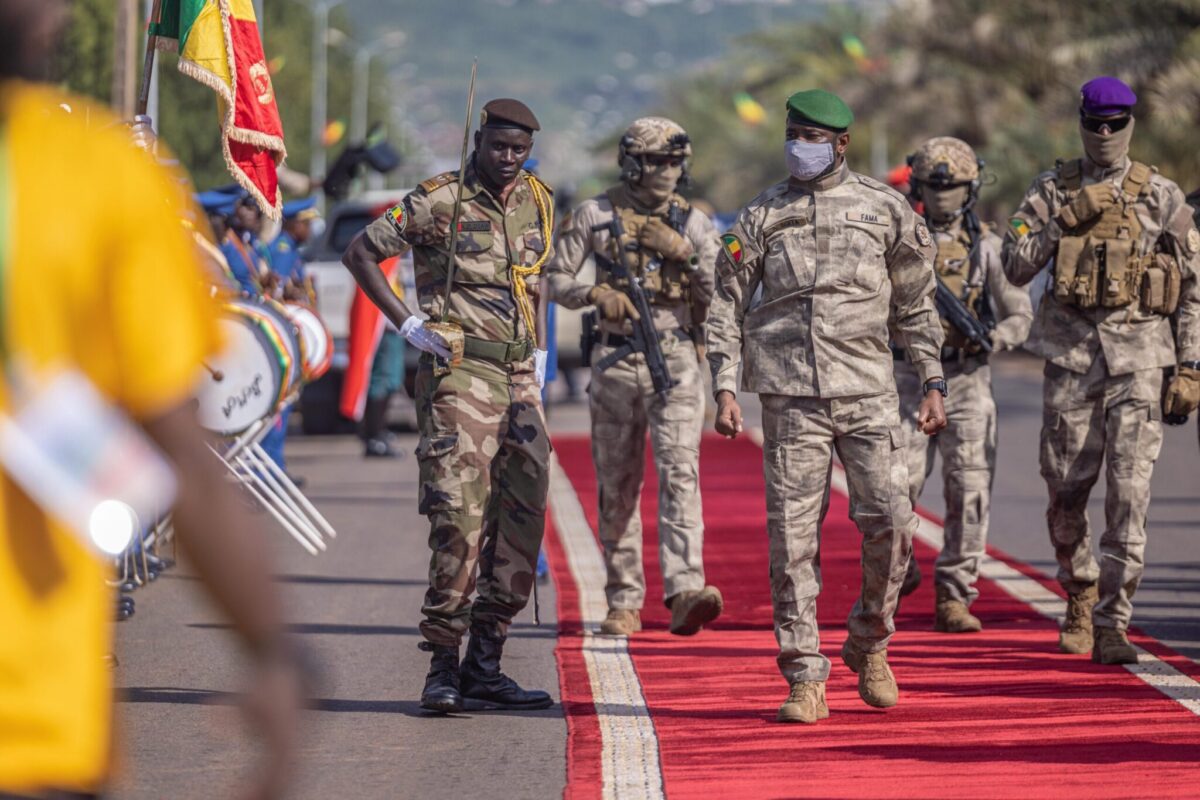
Mali’s shifting power: military rule and new security alliances
The Malian authorities claim to have reclaimed military sovereignty after the withdrawal of French forces and the gradual severing of ties with Western security arrangements. Official speeches frame this as a historic victory—an African nation regaining control of its territory and rejecting foreign influence. Yet beneath this narrative lies a deeper transformation of Mali’s political system.
From foreign intervention to new dependencies
The much-touted military sovereignty has not eliminated the country’s security dependence. Instead, it has reshaped the centers of power, influence networks, and war-related economic circuits. Bamako has increasingly relied on Africa Corps, a mercenary organization tasked with supporting the army’s counterterrorism efforts while also safeguarding the regime itself.
Over time, conflict has become an enduring mode of political organization in Mali. The military now occupies a central role in state governance, the legitimacy of power, and internal economic balances. Since the 2022 coup, soldiers have controlled all decision-making levers. For them, war is no longer just a challenge to overcome—it has become the very foundation of the regime.
The geopolitical reshuffle in the Sahel
The departure of French troops has significantly altered regional power dynamics. For many Malians, this break represented a symbolic liberation after years of perceived ineffective military intervention. The transitional authorities have exploited nationalist sentiment to bolster their legitimacy.
However, declared sovereignty does not automatically translate into tangible improvements in the Sahelian conflict. Armed groups remain active, violence persists in several regions, and the state’s logistical capabilities remain limited. Bamako is now encircled by jihadist forces, making the foreign presence debate secondary to Mali’s ability to stabilize its territory sustainably.
Russia’s growing role in Mali’s military landscape
In this context, new security partners have gained prominence. Russia, either directly or indirectly, has become a major player in the Sahel’s military restructuring. This involvement has sparked both hope and controversy.
The international debate often reduces this shift to a geopolitical rivalry between Paris and Moscow. Yet Mali’s logic is far more complex. The regime is primarily seeking partners who can support its political survival without imposing the same diplomatic constraints as Western powers.
The militarization of Mali’s political economy
This evolution has one major consequence: the increasing militarization of Mali’s political economy. Security budgets are rising, military institutions are gaining institutional influence, and conflict is becoming a permanent tool for national mobilization.
As security threats remain high, the government can justify centralizing decision-making, restricting political pluralism, and postponing democratic transitions. War is no longer just a context—it has become a resource for governance.
The Alliance of Sahel States and its fragilities
The Alliance of Sahel States (AES)—comprising Mali, Burkina Faso, and Niger—further entrenches this dynamic. These nations are constructing a political space rooted in security sovereignty, criticism of former colonial powers, and the centrality of military institutions.
Yet this alliance rests on a critical weakness: it depends on weakened economies, strong social tensions, and an unstable regional environment. The Sahelian regimes seek strategic autonomy even as they remain financially and militarily vulnerable.
A paradox of sovereignty
The Malian case reveals a broader paradox of contemporary Sahel politics. Breaking ties with Western frameworks may yield real symbolic gains in political sovereignty. But this sovereignty remains limited as long as the country’s economic, administrative, and security structures continue to revolve around military urgency.
In such a system, peace itself poses a political risk. A genuine stabilization would force long-postponed questions back into the spotlight: economic redistribution, corruption, local governance, the role of civilians in power, the restoration of pluralism, and institutional rebuilding.
Thus, Mali’s crisis extends far beyond the rivalry between foreign powers. It raises an unsettling question: How can a state be rebuilt when a war economy becomes the primary mode of governance? For Bamako, the challenge is no longer just military—it is political, social, and structural. As long as sovereignty is framed primarily as a military capacity, Mali risks replacing one form of external dependence with another: a state permanently organized around war and beholden to Russian mercenaries.
Mourad Ighil