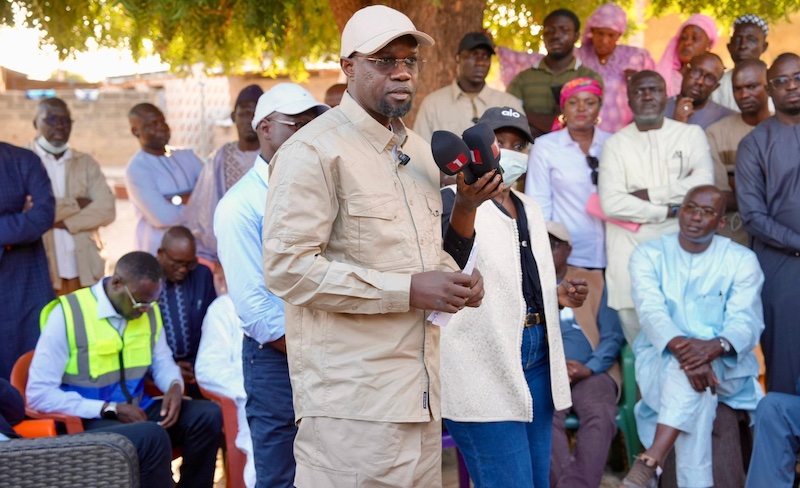
Ousmane Sonko outlines priorities for Senegal’s 2026 agricultural campaign
Prime Minister Ousmane Sonko recently dedicated his address during a Council of Ministers meeting to the crucial preparations for Senegal’s 2026-2027 winter agricultural season. While commending the commendable efforts and achievements of national institutions such as the Senegalese Institute of Agricultural Research (ISRA) and Industries Chimiques du Sénégal (ICS) in producing fertilizers and certified seeds, the head of government delivered a frank assessment of the sector. He pinpointed ongoing significant structural weaknesses that continue to impede the Executive’s overarching goals for food sovereignty.
Seed independence, credit access, and urgent storage infrastructure needs
Among the critical challenges highlighted by the Prime Minister are the persistent deficit in seed autonomy, inconsistencies in quality observed during the previous campaign, deficiencies within the producer targeting system, and significant hurdles to accessing agricultural credit. Ousmane Sonko also drew attention to the inadequate maintenance of farming equipment and the glaring nationwide shortage of storage capacities.
To rectify distribution disparities and eliminate the diversion of agricultural inputs, he mandated an accelerated digitalization process for the entire sector, leveraging the proven successes achieved in the pilot zones of Tivaouane and Nioro. Pending a comprehensive overhaul of subsidies, state services are tasked with rigorously ensuring cost transparency and the effective availability of inputs across the entire national territory.
