President oligui nguema’s call for truth and constructive criticism in Gabon
President Oligui Nguema’s Call for Truth and Constructive Criticism in Gabon
Libreville – In a political landscape where public discourse frequently navigates between unwavering support and cautious reserve, a recent declaration by Gabonese President Brice Clotaire Oligui Nguema has brought a fundamental governance issue back into focus: the dynamic between leadership and citizen truth.
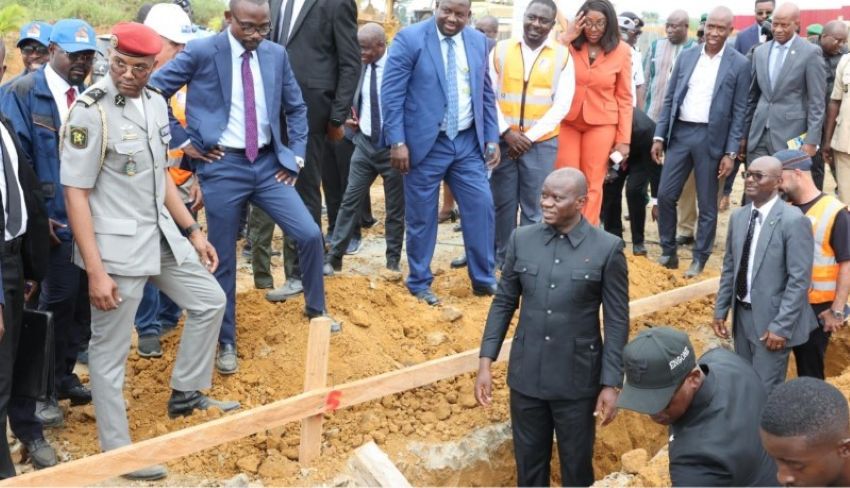
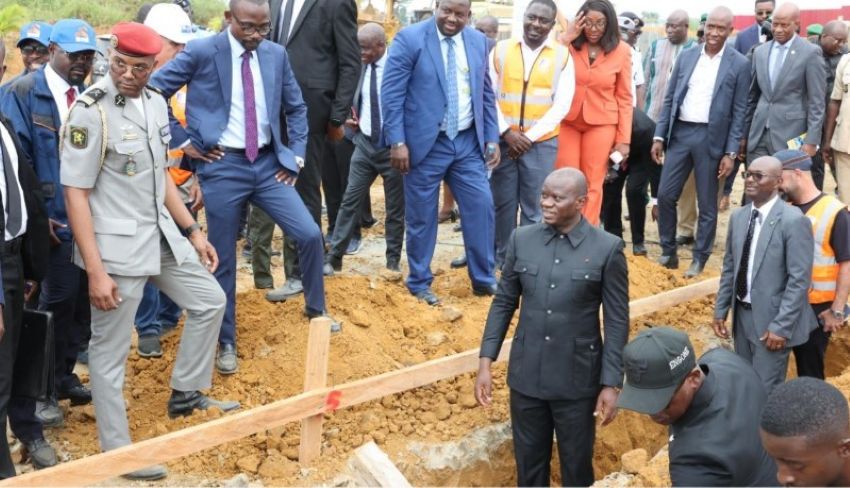
During the groundbreaking ceremony for 3,100 housing units in Bikélé, the Head of State, speaking with journalist Chamberlain Moukouma, articulated that a leader should not merely be met with applause. Instead, they must also be open to genuine criticism when it is essential for refining public policy. This stance transcends a mere political statement, delving into the core tenets of democratic accountability.
Embracing a departure from systematic endorsement
By asserting the importance of being informed when errors occur, enabling self-correction, President Oligui Nguema signals a symbolic break from a political culture often characterized by the automatic affirmation of authority. This declaration highlights a demand rarely seen in institutional rhetoric: the embrace of self-assessment as a crucial governance tool.
Within this framework, continuous applause is no longer viewed as an indicator of political dynamism, but rather a potential path to collective oversight. The Head of State implicitly advocates for a fundamental shift in the relationship between the governed and their leaders, one rooted in candor and mutual responsibility.
This approach aligns with a vision where national progress cannot be built upon complacency, but instead on a clear-eyed assessment of public actions, acknowledging both their successes and their shortcomings.
Critique as a cornerstone of national development
The presidential statement revalidates a vital concept often marginalized in political practice: constructive criticism. Speaking truth to power is not framed as an act of opposition, but rather as a civic duty, intrinsically linked to the broader national interest.
From this vantage point, public debate transforms into a continuous arena for rectification, rather than a sterile battleground for confrontation. A mature populace, therefore, is one capable of acknowledging progress while simultaneously identifying deficiencies, thereby contributing to the enhancement of public service quality.
However, this methodology necessitates a profound cultural shift. It requires citizens, social stakeholders, and media outlets to adopt a stance grounded in objectivity, responsibility, and a commitment to the common good. Criticism, in this context, ceases to be an end in itself, becoming instead a powerful lever for refining public policies.
Towards a new framework for political dialogue
Beyond this statement, an entire philosophy of governance is emerging. President Oligui Nguema appears to be championing a leadership style built on active listening, where critical feedback from citizens serves as a vital political steering mechanism.
Within this paradigm, national development no longer relies solely on top-down state decisions but thrives on continuous interaction between leaders and the led. This dynamic requires a delicate balance between acknowledging achievements and maintaining a consistent demand for improvement.
The interview conducted by Chamberlain Moukouma, whose content is being disseminated across social networks as part of a civic education initiative, also contributes to fostering a more informed public sphere, acutely aware of its responsibilities.
Ultimately, this presidential address encourages a re-evaluation of Gabonese political culture, centering it on three straightforward yet demanding principles: offering applause when deserved, providing criticism when necessary, and consistently acting in the nation’s supreme interest.
In a political environment frequently characterized by posturing, this invitation to shared truth emerges as a litmus test for democratic maturity. It positions the citizen not as a mere spectator of power, but as an active participant in its ongoing refinement.
