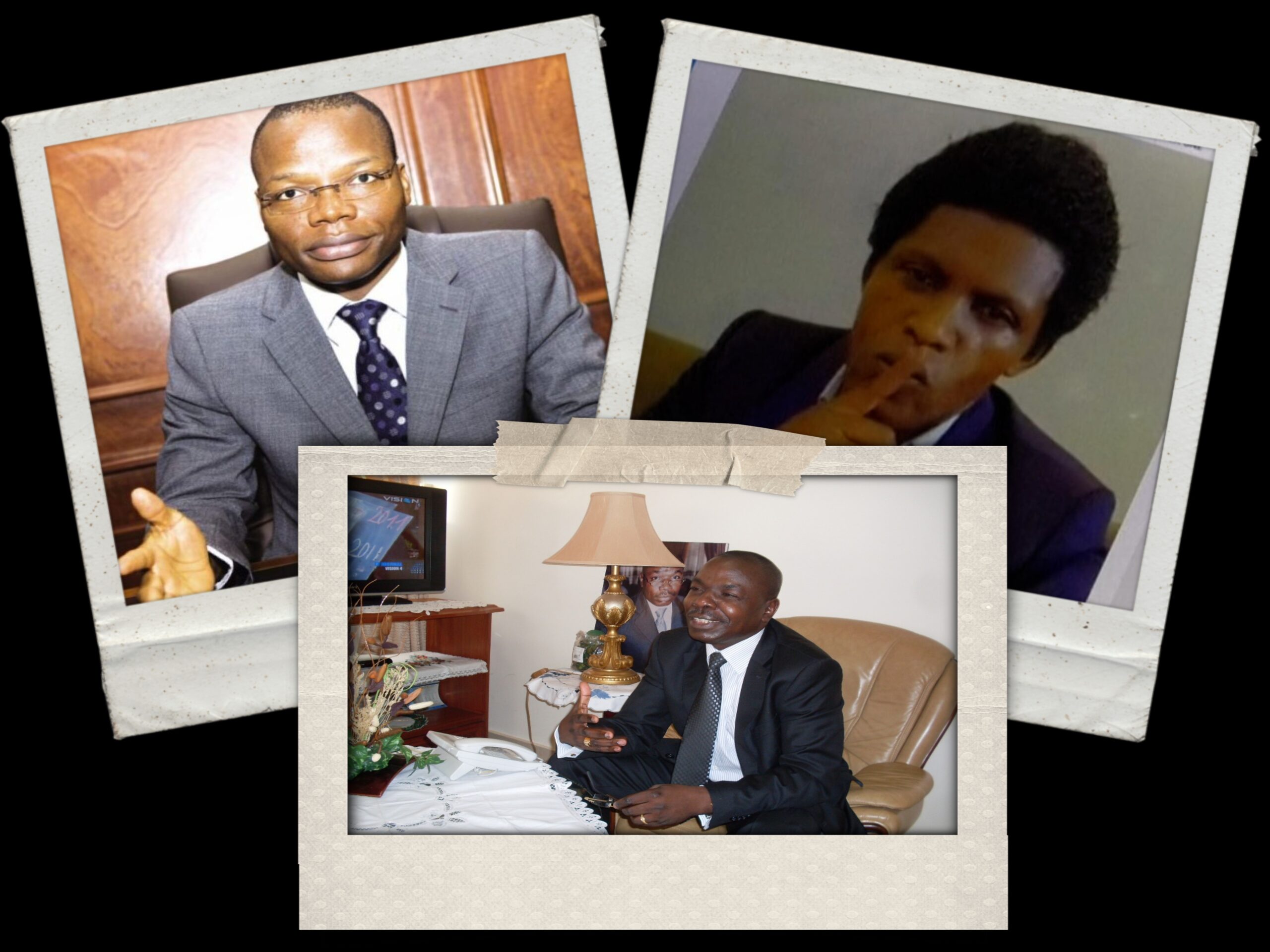
Modeste Mopa’s fmi appointment: Cameroon’s political enigma deepens
Modeste Mopa’s fmi appointment: Cameroon’s political enigma deepens
An in-depth analysis delves into the latest developments surrounding the Martinez Zogo trial, which recently unfolded at the Military Tribunal in Yaoundé.
The latest developments in the Martinez Zogo trial at the Yaoundé Military Tribunal are prompting serious questions about political maneuvering in Cameroon.
By scrutinizing various sources, cross-referencing narratives, noting silences, omissions, call records, administrative transfers, and political decisions, a complex structure begins to emerge. This architecture reveals a landscape of power struggles, underlying fears, intense rivalries, and clandestine strategies. Within this intricate framework, a crucial question arises: when a state refers to “psychological pressure,” is it still operating within the realm of politics, or has it veered into coercion?
A single statement opens a chasm of implications: “We will start again to exert psychological pressure on him.” This phrase, reportedly uttered by Lieutenant-Colonel Justin Danwé to Modeste Mopa, is far more than a casual remark; it serves as an admission, a significant clue, and a critical key. It hints at prior events, foreshadows future actions, and lays bare a particular methodology. The words of those in power are seldom accidental; they are often precursors to political acts. As Roman law dictates, “Acta non verba” — actions, not words, are what truly matter. Yet, in this context, the words themselves are already actions.
Cameroonian politics: a stage of hidden agendas.
Piecing together the evidence, a discernible mechanism comes into view: a clash between the Ministry of Finance (Minfi) and the Secretary-General of the Presidency (SGPR), a fierce battle for succession, budget lines 94 and 65 weaponized as financial instruments, tax adjustments leveraged for political gain, and a meticulously orchestrated media campaign. At the heart of this intricate web, a journalist found himself unwittingly drawn into the fray. Here, politics transcends mere debate, transforming into a battleground where individuals are utilized as strategic pawns.
Martinez Zogo: the unwitting messenger of a hidden agenda
In late 2022, Martinez Zogo brought to light allegations of fictitious contracts, outstanding tax debts, and irregularities concerning budget lines 94 and 65. However, the documents he relied upon originated from Modeste Mopa. This raises a pressing question: was Martinez Zogo acting purely as a journalist, or was he an unwitting conduit for a deeper pressure strategy? He may have believed he was exposing corruption, but he might have inadvertently become a participant in a high-stakes succession struggle. In this murky environment, he was ultimately sacrificed.
The night of January 22nd: when silence becomes a weapon
Martinez Zogo’s body was discovered, mutilated and abandoned, like a chilling message intended for someone, or perhaps for everyone. What followed was a rapid sequence of events: a joint commission with a deliberately confined scope, requests for hearings denied, investigative avenues blocked, and lingering questions about an internet outage left unanswered. Just five days later, Modeste Mopa was transferred to the International Monetary Fund (FMI).
What if the real questions lie elsewhere?
- Was Modeste Mopa’s transfer an exfiltration? His appointment to the FMI on January 27, 2023, merely five days after the discovery of Zogo’s body, raises significant doubts. Was this an administrative coincidence, or a calculated political protection operation?
- How was he recruited by the FMI? The FMI adheres to stringent recruitment protocols. Therefore, critical questions arise: Who put forward his name? What specific application was presented? What role did Cameroonian diplomatic networks play in this process? Why did this appointment occur at such a precise and sensitive moment?
- What are his responsibilities at the FMI? What exact position does he hold? What duties have been entrusted to him? Why has there been no transparent communication regarding his missions?
- Could the investigation transcend national borders? Given the telephone records, internet restrictions, cross-border communications, and the involvement of an official now working for the FMI, the question becomes unavoidable: Is the Zogo affair destined to expand beyond Cameroon’s national jurisdiction?
- Who is protecting whom? If Modeste Mopa was indeed exfiltrated, who orchestrated this move? And who was the ultimate beneficiary of this protection? The SGPR? The State itself?
- Why do digital traces speak louder than individuals? Call records, internet outages, and text messages exchanged by the alleged commando collectively paint a vivid picture of the power dynamics at play. This is a map of influence that some may desperately wish to keep from public view.
- Could the FMI inadvertently become entangled in this affair? If an official implicated in a criminal investigation is recruited by an international institution, questions about due diligence inevitably arise. Who is monitoring whom? And on whose behalf? Justin Danwé asserts that he monitors the Ministry of Finance. But for whom? For the State? Or for a specific individual: Ferdinand Ngoh Ngoh, whose presidential aspirations are reportedly discussed in private conversations?
In a state where government agencies surveil each other, where rival factions engage in espionage, and where journalists are weaponized, who ultimately holds the state itself accountable?
The philosophy of a modern tragedy
This unfolding saga is not merely a political incident; it carries profound philosophical implications. It challenges the very essence of power, questions the role of truth in a system where truth is perceived as a threat, and scrutinizes the value of human life in an environment where a life can be reduced to a mere message. Roman law famously declares: “Fiat justitia, ruat caelum.” Let justice be done, even if the heavens should fall. Yet, in Cameroon, justice sometimes appears to be apprehensive of such a collapse.
Let us confront the ultimate questions:
Was Martinez Zogo sacrificed to exert “psychological pressure” on Amougou Belinga, or was his death a stark reminder that, in certain republics, fear remains the most universally understood language? And a more unsettling question still: if this affair escalates to an international level, how many more truths will need to be suppressed before clarity finally emerges? In this ongoing tragedy, the voices of the deceased continue to resonate, their whispers challenging the conscience of an entire nation.
