
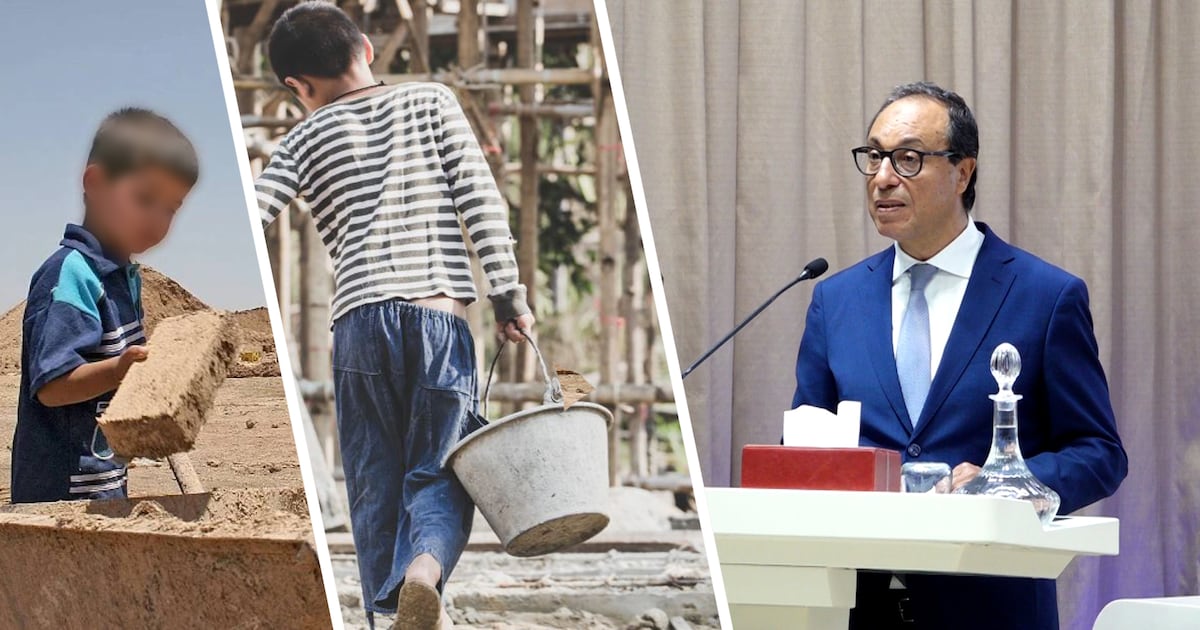
The Kingdom of Morocco has made significant strides in combating child labor over the past two decades, yet the challenge persists in informal sectors and hazardous activities. The Economic, Social and Environmental Council (CESE) addressed this pressing issue by unveiling a comprehensive set of recommendations aimed at its complete eradication. During a high-level presentation in Rabat, CESE President Abdelkader Amara emphasized the urgency of the situation, revealing that 78% of 1,540 citizens consulted in a nationwide survey believe child labor remains widespread across the country.
Abdelkader Amara highlighted Morocco’s progress, including the legal prohibition of child labor for children under 15 and the gradual elimination of hazardous work for minors aged 16 to 18. Official figures reflect these efforts: the number of working children aged 7 to 17 has plummeted from 517,000 in 1999 to just over 101,000 in 2024—a decline of more than 80%.
«In 1999, over half a million children were working. By 2024, that number has dropped to around 100,000. This is a remarkable achievement that deserves recognition», Amara noted. However, he cautioned that while progress is undeniable, «these steps have not yet succeeded in fully eradicating child labor.»
The CESE identified deep-rooted factors fueling this issue, including the informal economy, poverty, and widespread socio-economic vulnerability. «After family, a child’s rightful place is in school and spaces of learning and growth», Amara stressed. He warned that child labor stifles physical, psychological, and educational development, perpetuates social inequality, and undermines national progress.
Survey responses revealed troubling trends: 27% of participants reported seeing child laborers in public spaces, such as street vendors, load carriers, or vehicle cleaners. Disturbingly, 22% cited organized begging, sexual exploitation, and involvement in drug trafficking as growing concerns. The CESE also warned that nearly six out of ten child workers are engaged in hazardous occupations, underscoring the need for stronger prevention, monitoring, and protection measures.
To address these challenges, the CESE proposed key reforms, including revising the Labor Code and updating the 2010 decree on hazardous work for minors. It also recommended raising the minimum working age to 16 to align with the end of compulsory education, ensuring better alignment between educational and social policies.
Amara concluded by announcing a new framework agreement between the CESE and the National Observatory for Child Rights (ONDE), chaired by Princess Lalla Meryem. This collaboration aims to enhance coordination in prevention, protection, and enforcement efforts. «Child labor is incompatible with a nation like Morocco», he asserted, acknowledging the country’s remarkable progress in various sectors.