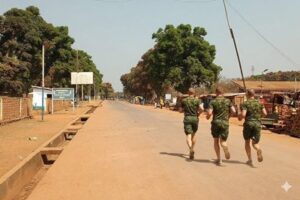
Military presence in Central African Republic Wagner or Africa Corps
The Central African Republic faces a critical dilemma in its security partnerships. With President Touadéra favoring Wagner and Moscow pushing for the Africa Corps, civilians confront a grim reality: brutal tactics remain, only the funding model shifts. What does this mean for ordinary citizens?
From Wagner to Africa Corps: what’s changing in the Central African Republic?
Since the death of Yevgeny Prigozhin in 2025, Africa Corps has replaced Wagner in Mali. Local reports reveal a chilling continuity: the same mercenaries operate under a new banner, still accused of severe human rights violations. A village leader who fled Mali stated, “There is no difference between Wagner and Africa Corps—just the name and the paymaster.”
The structural shift lies in command. Unlike Wagner’s semi-autonomous operations, Africa Corps answers directly to Russia’s Ministry of Defense. This could expose Moscow to greater legal accountability for war crimes, according to experts cited by Associated Press. Yet, for civilians in conflict zones, the distinction offers little comfort.
Who makes up the Africa Corps?
The group’s ranks remain shrouded in secrecy. Analysts estimate around 2,000 fighters in Mali, with a mix of Russian recruits and foreign fighters—some Black men speaking unfamiliar languages. A report by the European Council on Foreign Relations suggests recruitment extends to Belarus and multiple African states.
Testimonies from Mali: a warning for the Central African Republic
Thirty-four Malian refugees near the Mauritanian border shared harrowing accounts with Associated Press. Fear of retaliation silences many, but their stories paint a bleak picture: indiscriminate killings, abductions, and sexual violence. Fatma, a survivor, recalls how “white men” stormed her village, stripping women of valuables and gunning down men. Her 18-year-old daughter, already unconscious from illness, died in the chaos. “I look alive, but I am not,” she confesses.
Mougaloa, a Fulani herder, still searches for her missing daughter. She witnessed her 20-year-old son beaten and slaughtered before her eyes. The Fulani, often suspected of jihadist ties, bear the brunt of these operations. “If you don’t tell the army about militants, they kill you. If you do, the militants kill you,” she explains. This “scorched earth” strategy leaves no safe path for civilians.
Evidence of atrocities mounts
Refugees showed video footage of torched villages and bodies missing organs. Social media posts from Wagner-linked accounts have previously documented mutilations of Malian civilians. While reported civilian deaths attributed to Russians dropped from 911 to 447 this year, the decline may reflect underreporting due to fear. Sukru Cansizoglu, a UNHCR representative in Mauritania, confirms widespread violence: “Many are raped, attacked, or killed. Families are torn apart.” Yet, attributing blame remains difficult.
The Central African Republic now watches closely as Mali’s experience unfolds. With Wagner’s pillaging model or Africa Corps’ structured brutality, the choice for civilians is stark: survival under exploitation or survival under state-sanctioned violence.
