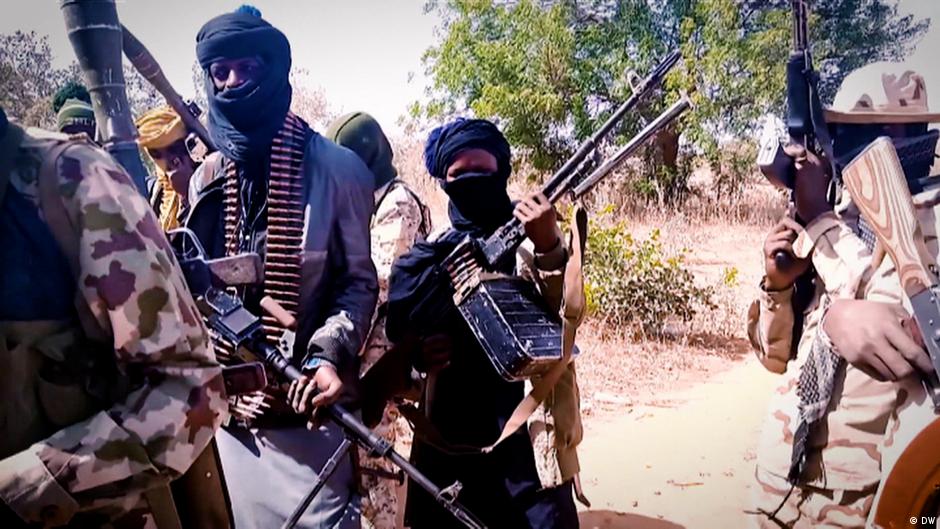
How Boko Haram funds its insurgency through kidnappings
How kidnappings fuel Boko Haram’s funding machine across West Africa
The abduction industry has become a lucrative revenue stream for Boko Haram, transforming kidnappings into a multi-million-dollar financing operation stretching across Nigeria, Chad, Niger, and Cameroon. This structured criminal enterprise has evolved from isolated incidents into a sophisticated system that funds insurgency, recruitment, and territorial control.
The scale of the kidnapping epidemic in West Africa
Nigeria bears the brunt of this crisis, with nearly 4,700 people abducted in almost 1,000 incidents between July 2024 and June 2025 alone. These attacks have resulted in hundreds of casualties, with schools frequently targeted in northern and central regions. While Boko Haram remains the most notorious group, the Islamic State’s West Africa Province (ISWAP) has also emerged as a major player in this insurgent economy.
The kidnapping wave isn’t confined to Nigeria. In Cameroon, Boko Haram recently seized passengers from a bus in Ziguagué, in the Far North region. Meanwhile, in Niger, the group abducted seven Chadian nationals near the border in late March, with one victim killed and the rest still held captive. These cross-border operations highlight how kidnapping has become a regional security threat.
Why mass abductions? A dual-purpose strategy
“Kidnappings serve two critical functions for Boko Haram,” explains Remadji Hoinathy, a researcher at the Institute for Security Studies (ISS). “First, they forcefully recruit fighters—including children, women, and entire communities—to serve as combatants, laborers, or sex slaves. Second, they generate massive revenue through ransom payments.”
Ransom demands vary dramatically. For the seven Chadian hostages in Niger, Boko Haram initially demanded 50 million CFA francs (€76,225) for five individuals. The sixth hostage, a physician, was priced at 500 million CFA francs (€762,250)—a tenfold increase reflecting his value. These figures, reported by the Chadian Human Rights League, underscore the extortionate scale of the group’s operations.
Governments caught between policy and survival
The Nigerian government officially prohibits ransom payments, with a 2022 law imposing up to 15 years in prison for violators. Yet, enforcement appears inconsistent. Families and communities continue paying ransoms, and allegations persist that authorities themselves have negotiated settlements to secure hostage releases.
In November 2025, nearly 230 students and staff from a Catholic school in Niger State were abducted. Reports suggest Abuja paid a substantial ransom—disputed figures range from €6 million to €1.3 million—allegedly delivered in cash via helicopter to a Boko Haram commander in Borno State. The Nigerian government denies these claims, attributing the hostages’ release to military intelligence and precision operations. However, experts warn that acknowledging ransom payments could legitimize terrorist propaganda.
Boko Haram’s strategic stronghold: The Lake Chad Basin
Founded in 2002 by Mohammed Yusuf in Maiduguri, Boko Haram began as a radical Islamic movement rejecting Western education and governance. Over time, it expanded beyond Nigeria’s borders, embedding itself across the Lake Chad Basin—a shared frontier region encompassing parts of Chad, Niger, Cameroon, and Nigeria.
This area is pivotal to Boko Haram’s survival for three key reasons:
- Geopolitical porosity: The Lake Chad Basin sits at the crossroads of the Sahel and the Libyan arms trafficking routes, facilitating the movement of fighters and weapons.
- Weak state presence: Remote and economically marginalized, the region’s porous borders and scarce governance make it ideal for insurgents to operate undetected.
- Natural fortifications: Dense forests, swamps, and islands provide camouflage and safe havens during military crackdowns.
“The Lake Chad Basin’s geography and socioeconomic conditions make it a perfect storm for insurgent resilience,” notes Hoinathy. “It’s a transnational zone where militants can regroup, recruit, and sustain operations with minimal interference.”
The ISWAP split: A rival with a different playbook
In 2016, ISWAP emerged from a schism within Boko Haram after factions opposed the group’s indiscriminate violence against civilians—including Muslims. Aligning with the Islamic State, ISWAP adopted a more strategic and community-focused approach, aiming to win local support rather than rely solely on terror.
Today, the two groups are locked in a deadly rivalry, battling for control over territory, resources, and influence in the Lake Chad Basin. This internal conflict has further destabilized an already volatile region.
Regional responses: A mixed record of resilience and adaptation
The governments of Nigeria, Chad, Niger, and Cameroon have attempted to coordinate military responses through the Lake Chad Basin Commission’s Multinational Joint Task Force (MNJTF). Yet, after over a decade of conflict, the insurgency persists.
“Each state initially responded with unilateral military actions,” explains Hoinathy. “But the MNJTF introduced a regional framework, combining military pressure with stabilization efforts—economic development and state presence in affected communities.”
Despite these efforts, Boko Haram and ISWAP have demonstrated remarkable adaptability, repeatedly regrouping and returning to the battlefield. The insurgency has claimed over 40,000 lives and displaced two million people in northeastern Nigeria alone, according to UN estimates. In response, the United States deployed approximately 200 troops in 2025 to train and support Nigerian forces in counterterrorism operations.
Conclusion: A funding model that defies suppression
Kidnapping has evolved from a tactic into a cornerstone of Boko Haram’s financing—funding weapons, recruitment, and governance in ungoverned spaces. While governments struggle to curb this practice, the insurgency continues to adapt, exploiting weak institutions and transnational networks to sustain its operations.
The challenge now is whether regional and international actors can develop a cohesive strategy that addresses the root causes of extremism while dismantling the financial networks fueling this deadly cycle.
