
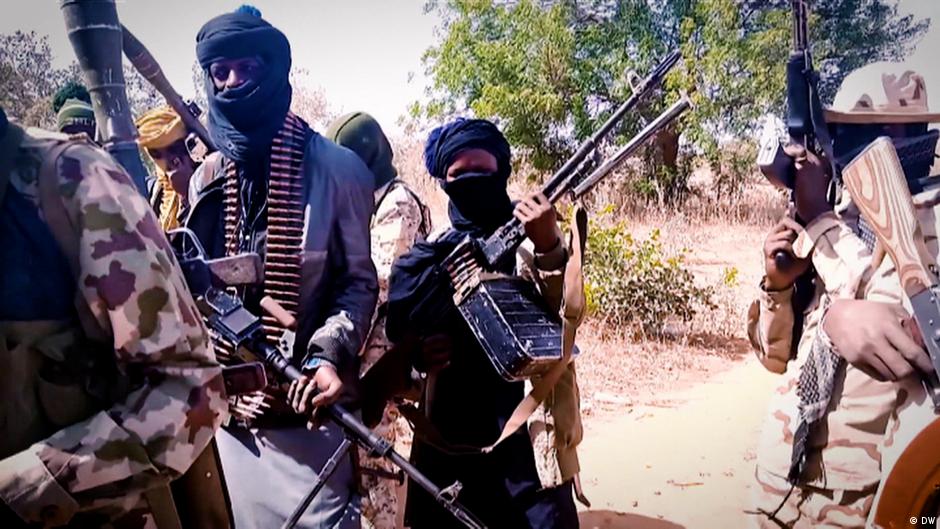
how Boko Haram funds its insurgency through kidnapping
Kidnapping has evolved into a structured and highly lucrative revenue stream for Boko Haram, sustaining its decade-long insurgency across West Africa. From the shores of Lake Chad to the plains of northern Nigeria, the militant group has weaponized abductions, targeting schools, bus passengers, and entire communities to extract ransoms that fuel its operations.
The scale of this criminal enterprise is staggering. Between mid-2024 and mid-2025, more than 4,700 people were kidnapped in nearly 1,000 incidents, with hundreds killed in the process. Schools have been particularly vulnerable, with students and staff frequently targeted in coordinated raids. While northern Nigeria remains the epicenter of these attacks, the violence has spilled over into neighboring nations—Cameroun, Niger, and Tchad—where Boko Haram operates with impunity.
In Cameroun, the group staged a high-profile abduction last year, seizing passengers from a bus in Ziguagé, a town in the Far North region. In Tchad, Boko Haram recently kidnapped seven Tchadian nationals near the border, executing one hostage while the remaining six face uncertain fates. The group’s demands are staggering: 50 million CFA francs for five captives, with an additional 500 million CFA francs—nearly 10 times the sum—for a doctor among them.
kidnapping as a dual-purpose strategy
According to Remadji Hoinathy, a researcher at the Institute for Security Studies (ISS) in South Africa, kidnappings serve a twofold purpose. First, they enable forced recruitment, dragging young men, women, and even entire communities into the group’s ranks as fighters, laborers, or victims of sexual slavery. Second, they generate critical funding through ransom payments, which have become a cornerstone of Boko Haram’s financial ecosystem.
In Nigeria alone, ransom demands over the past year have exceeded $35 million, with authorities and families paying nearly 5% of the total—despite official denials. While Abuja has criminalized ransom payments since 2022, imposing up to 15-year prison sentences, the law is inconsistently enforced. Reports suggest both state actors and private individuals continue to negotiate and transfer funds, often under the guise of covert operations.
One such case involved the release of 230 Catholic schoolchildren and staff abducted in Niger State in late 2025. Investigations indicate the Nigerian government paid a substantial ransom—reportedly between 1.3 million and 6 million euros—delivered in cash via helicopter to a Boko Haram commander in Borno State. Abuja has dismissed these claims as baseless, attributing the hostages’ freedom to intelligence-driven military operations rather than financial transactions.
the Lake Chad basin: a jihadist stronghold
Boko Haram’s origins trace back to Maiduguri, in Nigeria’s Borno State, where the group was founded in 2002 by cleric Mohammed Yusuf. Its name, meaning “Western education is a sin” in Hausa, reflects its rejection of secular institutions and Western influence. Over time, the group expanded beyond Nigeria’s borders, embedding itself in the Lake Chad basin—a vast, transnational territory spanning Nigeria, Tchad, Niger, and Cameroun.
Remadji Hoinathy highlights the basin’s strategic importance. Its porous borders facilitate the movement of fighters and weapons from the Sahel and Libya, while the region’s weak state presence and robust cross-border economy—rooted in agriculture and pastoralism—provide both resources and cover. The terrain itself, marked by islands, swamps, and dense forests, offers ideal hiding spots for militants evading military pressure.
This geographical advantage has allowed Boko Haram to thrive despite regional counterinsurgency efforts. The group’s resilience stems from its adaptability, repeatedly reconstituting itself after setbacks and exploiting local grievances to maintain support.
the rise of ISWAP: a fractured but formidable rival
In 2016, Boko Haram fractured when a faction led by Abubakar Shekau’s hardline leadership splintered off to form the Islamic State’s West Africa Province (ISWAP). Unlike its predecessor, ISWAP adopted a more pragmatic approach, seeking alliances with local communities rather than indiscriminate violence. By pledging allegiance to the Islamic State, the group aimed to professionalize its operations and expand its influence.
Today, Boko Haram and ISWAP are locked in a brutal rivalry, battling for control of territory, resources, and recruits in the Lake Chad region. Their internecine conflict has further destabilized the area, creating a vacuum that both groups exploit to regroup and rearm.
regional responses: military and beyond
The Lake Chad basin’s cross-border nature demands a coordinated response, yet each nation has historically acted independently. The Multinational Joint Task Force (MNJTF), comprising troops from Nigeria, Tchad, Niger, Cameroun, and Benin, represents a regional effort to curb the insurgency. Alongside military operations, governments have pursued stabilization programs aimed at restoring state presence in affected communities.
However, Remadji Hoinathy notes that these measures have had limited success. After more than a decade of conflict, Boko Haram and ISWAP remain active, adapting to military pressure and exploiting local vulnerabilities. The death toll exceeds 40,000, with over 2 million displaced, primarily in Nigeria’s northeast—the country’s most populous region. To bolster Abuja’s efforts, the United States deployed approximately 200 troops in 2025 to provide training and support to Nigerian forces.
The kidnapping-for-ransom model has proven devastatingly effective for Boko Haram, funding its operations while sowing fear and division. Without addressing the root causes—weak governance, economic deprivation, and porous borders—regional stability remains elusive.