Gabon turns to science to boost food sovereignty
Gabon turns to science to boost food sovereignty
Libreville, Monday, June 8, 2026 — A bold new economic strategy is taking shape in Gabon. The country is betting on scientific innovation to slash its heavy reliance on food imports and phase out foreign poultry imports by 2027.
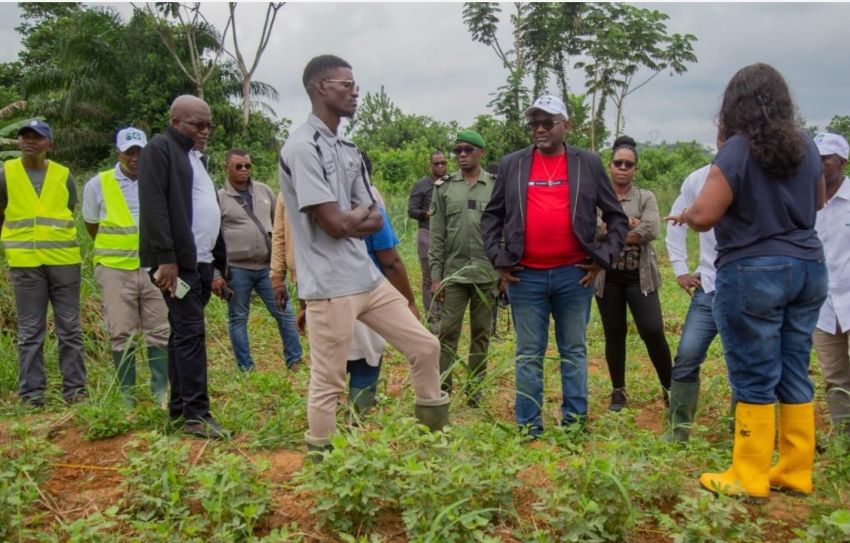
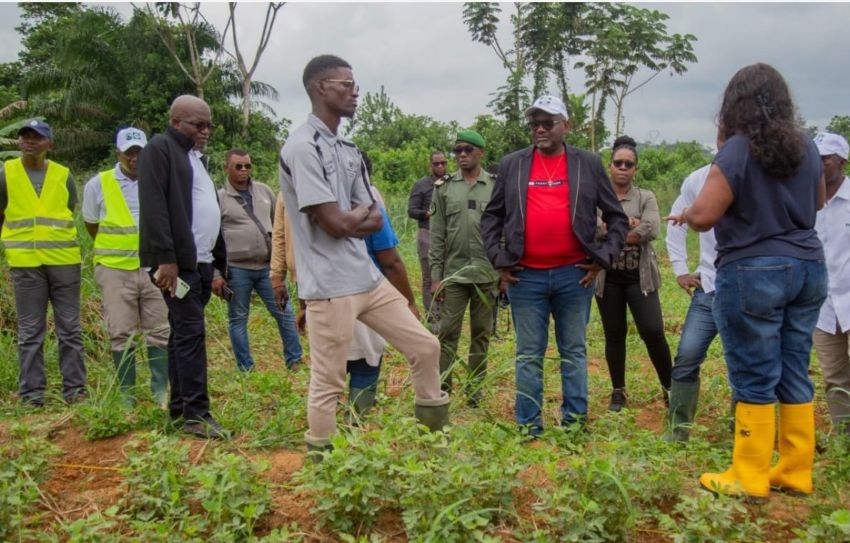
The fight is no longer waged in crowded markets or at congested ports. It is unfolding in the experimental fields of the National Center for Scientific and Technological Research (CENAREST) in Kougouleu, where researchers are pioneering solutions to transform Gabon’s food security landscape.
The recent visit by Charles Edgar Mombo, Minister of Higher Education, Scientific Research, and Government Spokesperson, to this facility underscores a pivotal shift: science is now a direct driver of economic transformation and national sovereignty. With food imports still draining a significant share of the country’s foreign expenditure, the ability to produce essential feedstocks locally has become as critical as securing mineral or energy resources.
Research fuels the nation’s agricultural ambition
Gabon’s leadership has set a clear goal: build a robust poultry sector capable of meeting domestic demand while steadily reducing reliance on imports. At the heart of this mission lies animal feed production, where maize and soybeans dominate as key ingredients in industrial poultry farming.
Until now, these feed components have largely been imported, leaving the sector vulnerable. At CENAREST, researchers are addressing this challenge head-on. Eleven maize varieties are currently under trial, each tested for resilience and yield in Gabon’s unique soil and climate conditions. The objective is to identify the most productive seeds that can sustain a growing poultry industry without external dependence.
Soybean research complements this effort, with eleven imported varieties being evaluated in collaboration with research centers in Malawi. Additional trials are underway in Nyanga Province, particularly in Tchibanga, to assess performance across Gabon’s diverse ecosystems. This coordinated approach marks a significant departure from the past, when scientific research was often seen as disconnected from immediate economic needs.
Building an integrated agricultural value chain
The government’s strategy hinges on a straightforward principle: produce feed locally to cut production costs, enhance competitiveness, and strengthen food security. This model aligns with broader trends across Africa, where rising food import bills have exposed deep economic vulnerabilities.
Gabon is not short of advantages. Fertile land, abundant water resources, and favorable climatic conditions position the country well to expand domestic agriculture. Minister Mombo has praised the progress seen on the ground, emphasizing the role of the national higher education system in aligning with the strategic priorities set by President Brice Clotaire Oligui Nguema.
This initiative carries a clear political message: science is no longer confined to theoretical discovery. It is now expected to deliver tangible solutions that support national priorities and long-term resilience.
The road to full food sovereignty is still long
While progress is encouraging, major hurdles remain. Researchers stress the need to expand experimental plots to improve trial accuracy and scale up production volumes. The leap from scientific testing to industrial farming is often the most daunting phase in any agricultural transformation.
Financial constraints also loom large. Modernizing agriculture demands heavy investment, upgraded infrastructure, accessible financing, and better-organized value chains. Yet for the first time in years, Gabon appears to be weaving a coherent strategy that links research, agriculture, industry, and economic sovereignty.
Minister Mombo’s visit to Kougouleu symbolizes this paradigm shift. In this new vision, food independence will not be achieved through policy alone. It will require the combined efforts of laboratories, research centers, and innovative farmers. By 2027, if targets are met, Gabon may prove that in Africa, food sovereignty is built as much in the lab as it is in the field—a quiet revolution with the potential to reshape the country’s economic future.
