
Gabon and EU deepen economic ties through renewed political dialogue
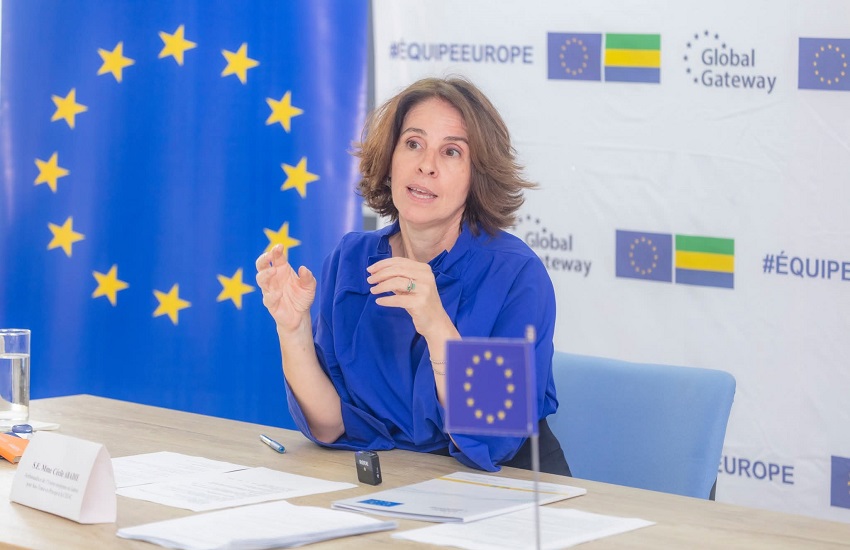
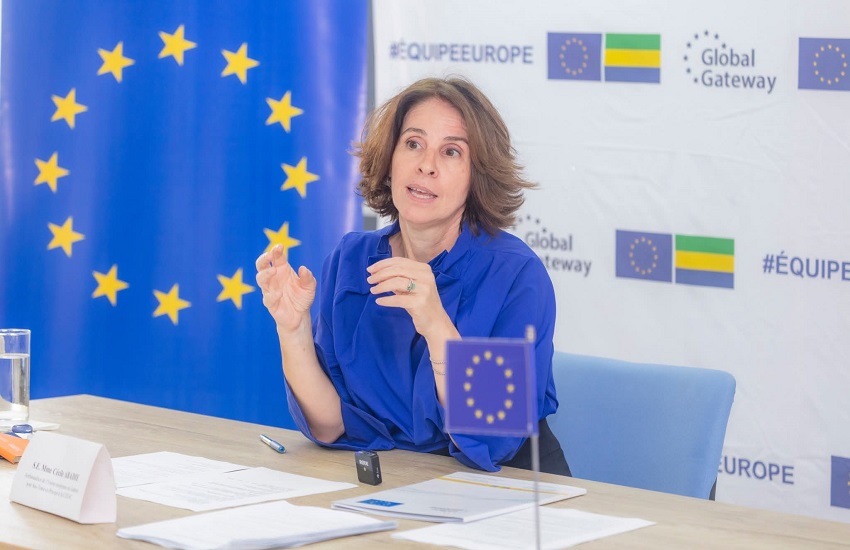
Libreville, June 8, 2026 — The second Gabon-European Union Political Dialogue, held today in Libreville, transcends traditional diplomatic exchanges. Beneath the formal statements and institutional consultations lies a broader ambition: transforming political stability into economic progress.
Gabon is positioning itself not just as a diplomatic partner, but as an economic hub capable of attracting investment, modernizing its institutions, and fostering growth through local value addition. Meanwhile, the European Union is recalibrating its African strategy, shifting from aid-based cooperation toward investment-driven partnerships that emphasize shared sovereignty and sustainable development.
In a geopolitical landscape marked by fierce competition for strategic resources and shifting alliances, this dialogue sends a strong signal. The Gabonese government, under the Fifth Republic, is leveraging its renewed political stability to drive economic transformation, with a focus on infrastructure, industrialization, and renewable energy.
Vice-President of the Government Hermann Immongault set the tone during the opening session at the Cité de la Démocratie Congress Palace. He underscored the shared commitment to strengthening cooperation rooted in multilateralism, peace, security, and sustainable development—a reflection of Gabon’s new economic diplomacy.
From aid to investment: a partnership redefined
Historically, Gabon-EU relations centered on political exchanges, development aid, and technical cooperation. Today’s session marks a significant shift.
The EU delegation emphasized that the new partnership aligns with a multilateral framework aimed at building a shared economic agenda. This evolution reflects Europe’s deeper strategic engagement across Africa, moving beyond traditional donor-recipient dynamics.
With emerging global partners—particularly in Asia and the Middle East—competing for influence, Brussels is positioning itself as an investment catalyst rather than merely a financial backer. For Gabon, this opens doors to critical sectors: infrastructure, industrial processing, energy, and economic diversification.
The stakes are high. Gabon aims to reduce its heavy reliance on raw material exports by developing high-value local industries that generate jobs and wealth domestically.
Fifth Republic at the crossroads of reform
This dialogue occurs at a pivotal moment. Since President Brice Clotaire Oligui Nguema’s election and the establishment of the Fifth Republic, Gabon has embarked on sweeping institutional and economic reforms.
Discussions with EU representatives will focus on political reforms, governance, rule of law, business environment improvements, and administrative modernization—all vital to boosting the country’s economic appeal.
Foreign Minister Marie Edith Tassyla Doumbeneny highlighted that the talks will also assess broader relations between Libreville and Brussels, including bilateral partnerships with EU member states.
The Samoa Agreement now frames this cooperation, prioritizing good governance, sustainable development, energy transition, and economic resilience—all aligned with Gabon’s national priorities.
In this context, political dialogue becomes a tool to support the national transformation strategy launched in 2023.
Gabon’s bid to become a regional investment hub
One of the most striking aspects of this meeting is Gabon’s evolving global posture. No longer seeking only financial support, the country is actively courting productive investments to accelerate its economic shift.
Key sectors include forestry, mining, infrastructure, agriculture, digital technology, and renewable energy. Sustainable natural resource management remains central, positioning Gabon’s environmental assets as drivers of green growth and a cornerstone in international climate negotiations.
This strategy reflects a broader vision of economic sovereignty. As Hermann Immongault noted, this dialogue embodies a true exercise in economic diplomacy, where Gabon asserts its strategic priorities with consistency and clarity.
The real test lies in tangible outcomes. The partnership’s credibility will be measured by mobilized investments, supported reforms, and realized projects.
The Gabon-EU Political Dialogue stands as one of the first major international engagements of the Fifth Republic. It symbolizes Libreville’s determination to convert regained political capital into engines of economic progress. In today’s competitive global arena, Gabon is choosing strategic openness, partnership-driven development, and investment as pillars of its emergence.