
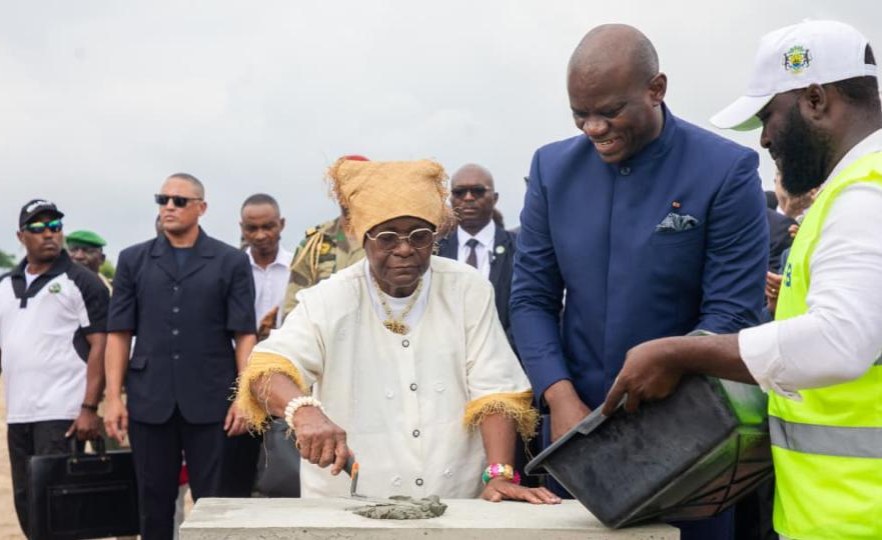
The Gabonese Republic is laying the groundwork for a post-oil industrial future with the inauguration of the Kobé-Kobé deep-water port. Spearheaded by President Brice Clotaire Oligui Nguema, this ambitious initiative marks a turning point in the nation’s economic trajectory, aiming to reshape its growth model by 2030.
Transforming Gabon into a regional logistics hub
The new maritime infrastructure in the Estuaire Province will redefine Gabon’s role in regional trade. With a draft depth of 14 to 16 meters, the Kobé-Kobé port terminal will accommodate ultra-large commercial vessels, positioning Gabon as a competitive alternative to neighboring deep-water ports like Kribi in Cameroon and Pointe-Noire in Congo.
A vertically integrated industrial ecosystem
The port is not an isolated project but the cornerstone of a nationwide industrial value chain. Three major complementary initiatives are under way to ensure its success:
- Belinga iron ore mine (Ogooué-Ivindo Province): One of the world’s largest untapped high-grade iron deposits, set to become a cornerstone of Gabon’s steel industry.
- Belinga–Estuaire railway corridor: A first-of-its-kind rail link designed to transport raw materials directly from the mining heartland to the deep-water port.
- Booué hydroelectric dam: A strategic energy project to power mining operations and downstream processing facilities, ensuring self-sufficiency.
This integrated approach aims to break free from Gabon’s traditional extractive economy by prioritizing local processing before export. A major milestone was reached in April 2026 with the signing of a strategic partnership agreement between the Gabonese state and Africa Global Logistics (AGL).
Economic empowerment through job creation
Beyond infrastructure, the Kobé-Kobé project is hailed as a catalyst for social inclusion. Economic forecasts project the creation of up to 160,000 jobs—both direct and indirect—during construction and operation phases. For young Gabonese workers, this represents a golden opportunity to enter high-demand sectors such as civil engineering, port operations, energy engineering, railway maintenance, and metallurgy.
The government is actively fostering private sector participation by integrating local small and medium-sized enterprises (SMEs) into subcontracting and service supply chains, thereby stimulating broader economic growth.
A strategic pivot toward industrial sovereignty
Initiated under President Brice Clotaire Oligui Nguema’s leadership, the Kobé-Kobé project embodies a bold vision: reducing reliance on dwindling oil revenues by harnessing the country’s mineral wealth. By taking control of critical infrastructure, Gabon is preparing for a future where mining and sustainable industry drive its development. If timelines are met, the port will begin operations in 2030, serving as the engine of Gabon’s industrial emergence.