
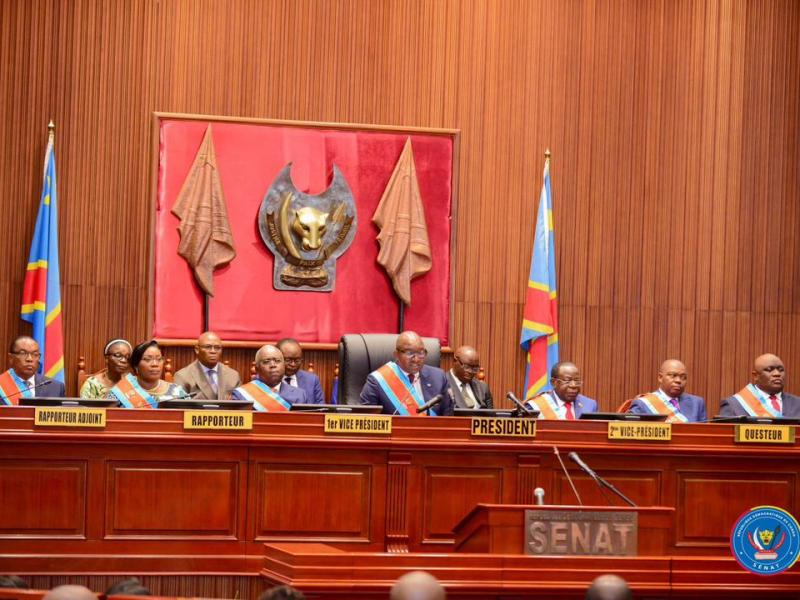
The Senate of the Democratic Republic of the Congo (DRC) has officially launched the second reading of a landmark bill that outlines the framework for organizing a national referendum. This legislative milestone comes just weeks after the National Assembly adopted the proposal with overwhelming support.
During a plenary session on Wednesday, Senate President Sama Lukonde confirmed receipt of the bill from the lower house. The legislation was immediately referred to the Political, Administrative, and Legal Affairs Commission (PAJ), which has been tasked with conducting an in-depth review. The commission has a three-day window to finalize its report before presenting it back to the full Senate for deliberation.
Key details of the referendum proposal
The bill, spearheaded by National Assembly member Paul-Gaspard Ngondankoy—representing Yahuma Territory in Tshopo Province—was passed by the lower house on May 9. Out of 351 participating deputies, 348 voted in favor, with only two against and one abstention, reflecting strong bipartisan consensus on the urgency of electoral reforms.
The proposed law aims to define the procedural and logistical parameters for holding a constitutional referendum, a critical step in DRC’s ongoing efforts to modernize its governance structures. The text focuses on ensuring transparency, inclusivity, and adherence to constitutional principles throughout the referendum process.
Next steps in the legislative process
With the Senate now taking the lead, all eyes are on the PAJ Commission as it prepares to scrutinize the bill’s legal and technical aspects. Stakeholders across the political spectrum are closely monitoring developments, recognizing the referendum’s potential to reshape the country’s institutional framework. The Senate’s deliberations are expected to conclude within the coming days, paving the way for final adoption and implementation.
This legislative initiative underscores the DRC’s commitment to democratic governance and the peaceful resolution of constitutional matters.