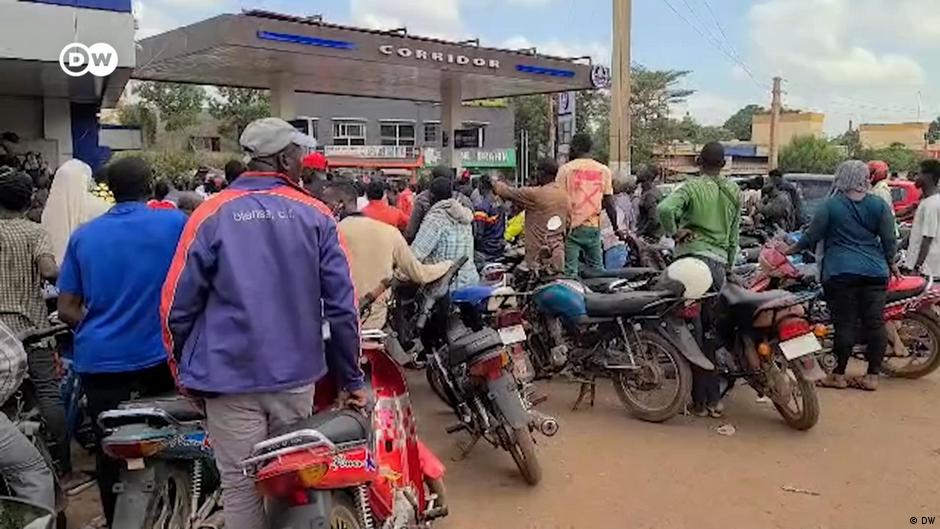
Fuel shortage cripple Ségou’s economy amid rising black market prices
For over nine months, the central Malian city of Ségou has been grappling with a severe fuel shortage that has brought daily life and economic activity to a near standstill. Residents report persistent stockouts, soaring prices, and a thriving underground market where gasoline is traded at exorbitant rates.
infrequent deliveries worsen the crisis
Ségou, located over 200 kilometers from Bamako, relies entirely on rare and heavily guarded fuel convoys organized by the Malian Armed Forces. These critical deliveries occur only two to three times each month due to persistent security threats along key transportation routes.
When convoys finally arrive, a fleet of over a dozen tanker trucks unloads their cargo. Nearly all the fuel is diverted to industrial producers and Énergie du Mali (EDM), the national electricity provider. Only three or four trucks are allocated to local gas stations, whose stocks are typically depleted within 48 hours, leaving residents scrambling for alternatives.
black market thrives amid chronic shortages
With official supply lines frequently disrupted, informal sellers step in to meet demand. In neighborhoods across Ségou, gasoline now sells for between 2,000 and 5,000 West African CFA francs per liter—far above regulated prices.
Residents express growing frustration over the origin of fuel circulating in the black market. Many suspect coordinated profiteering, with vendors operating openly and without consequences, further deepening public distrust in the system.
everyday life and local economy grind to a halt
The scarcity has left a visible mark on the city’s pulse. Main commercial streets report sharply reduced activity, while public transport fares have skyrocketed. Shared tricycle services, known locally as “katakatani,” have doubled in cost—from 100 to 200 francs CFA—placing an added burden on students, teachers, and wage workers who rely on them for daily commutes.
In response, the Malian Armed Forces have intensified patrols and roadblocks to intercept unauthorized fuel transports heading toward distant locations. Yet, despite these efforts, calls grow louder for a sustainable solution to a crisis that continues to erode Ségou’s economic resilience day by day.
