
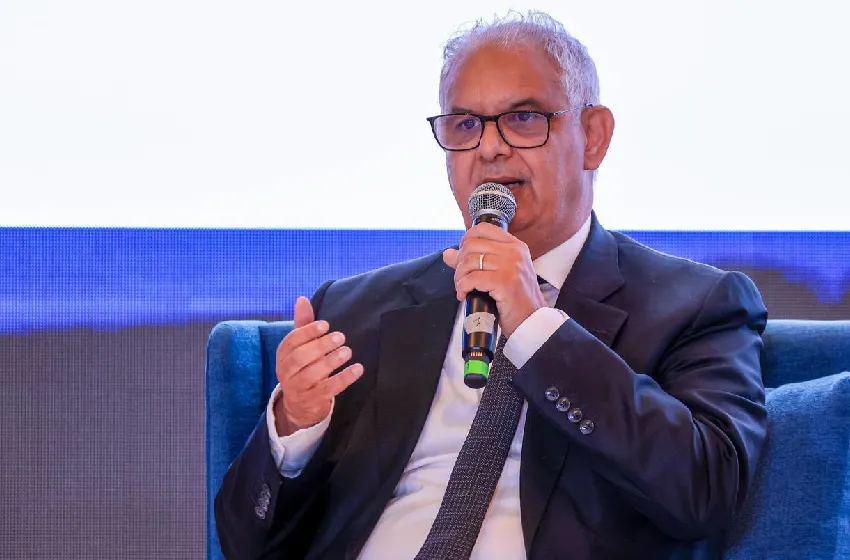
Under the visionary leadership of His Majesty King Mohammed VI, Morocco has strategically positioned its dam policy as a fundamental pillar of its water sovereignty, culminating in a substantial national water infrastructure. This assertion was made by Nizar Baraka, the Minister of Equipment and Water, during a recent discussion in Rabat.
By the close of 2026, the Kingdom anticipates possessing 156 major dams, collectively holding a capacity of 20.8 billion cubic meters, with 14 additional projects actively under construction. This proactive royal vision has fostered the development of advanced national expertise across various domains, including hydraulic engineering, technical studies, civil engineering, and the comprehensive management of water infrastructure.
Indeed, these crucial water assets are instrumental in building hydraulic resilience across different regions and for the populace, while also ensuring the efficient and rational management of water demand for the foreseeable future. Notably, eight large dams have been completed between 2021 and 2026 alone.
Thanks to the rainfall recorded this year and the extensive hydraulic structures implemented throughout the Kingdom under the Sovereign’s enlightened guidance, Morocco now benefits from an average minimum of two years of security for both potable water and irrigation water nationwide.
Furthermore, the policy concerning small dams significantly enhances this overall hydraulic resilience. The Ministry of Equipment and Water, in collaboration with the Ministry of Interior, has established a program to construct 155 small dams by the end of 2028. This initiative specifically aims to secure water access for rural communities, replenish underground aquifers, and establish strategic reserves for future generations.
In alignment with the Royal Vision, Morocco’s comprehensive water strategy encompasses its dam policy, robust hydraulic basin governance, desalination initiatives, wastewater reuse, and adaptation to climate change. These elements collectively form the nation’s diverse water mix, crucial for ensuring long-term water security.
Regarding non-conventional water sources, Morocco projects that desalination of seawater will fulfill 60% of its potable water requirements by 2030.
Moreover, through extensive interconnections between river basins and the development of “water highways,” Morocco is steadily forging genuine national water solidarity. This vital resource is transforming into a powerful driver of territorial justice, ensuring water security for major urban centers, as well as connected rural towns and localities.
Mohammed Benahmed, an international expert in territorial development, emphasized that Morocco manages one of Africa’s most significant water heritages. He highlighted the necessity for long-term stewardship, involving continuous performance evaluation of assets, multi-year budgeting for maintenance, and effective governance frameworks for dams.
According to Benahmed, sustaining such a vast water heritage demands the mobilization of stable financial resources tailored to extended investment cycles.
In this context, he proposed innovative financing mechanisms, such as green bonds, concessional climate financing, blended instruments combining grants, subsidized loans, and guarantees, along with Public-Private Partnerships.
Mohamed Amrani, a senior policy officer for the North Africa region at the FAO, underscored that water sovereignty hinges on inter-regional arbitration rooted in equity, sustainability, productivity, and solidarity.
He further elaborated that sound water resource governance also necessitates an arbitration approach focused on securing supply without incurring excessively high costs.
These significant discussions took place during a recent forum, bringing together various public and private sector officials, alongside media representatives, to foster enlightened public debate on critical development issues.