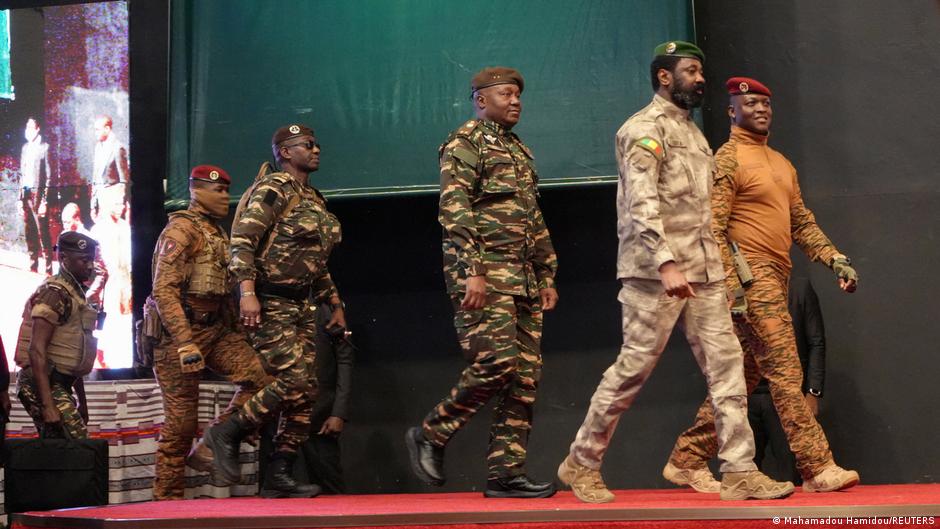
Free movement in west africa after Niger, Mali and Burkina Faso leave ECOWAS
The withdrawal of Niger, Mali and Burkina Faso from the Economic Community of West African States (ECOWAS) was intended as a bold assertion of sovereignty. Yet, it has inadvertently disrupted the free movement of people and goods across the region. Travelers and traders now face mounting challenges, particularly at border crossings where administrative hurdles persist.
For citizens of the Alliance of Sahel States (AES), documents like passports, national identity cards, and driver’s licenses no longer guarantee smooth passage within the ECOWAS space. The situation has created a maze of requirements, leaving many stranded or forced to pay bribes to bypass unnecessary checks.
border crossings: a maze of new requirements
Almou Yacouba, Secretary-General of the Nigerian Democratic Road Transport Union, highlights the daily struggles faced by Sahel citizens. “The international vehicle registration and international driver’s permit are major headaches. Even within the AES, the ECOWAS insurance card is a constant source of frustration.” He adds, “When traveling to Côte d’Ivoire, for instance, officials often reject our national ID cards because they lack an expiration date. Before, ECOWAS ID cards allowed seamless travel. Now, border agents demand documents that no longer exist.”
The confusion is compounded by inconsistent enforcement. Some countries within the AES still honor national IDs for intra-alliance travel, while others enforce stricter rules, mirroring the very ECOWAS policies they sought to escape.
a call for unified travel documents
Chaibou Tchiombiano, Secretary-General of the Nigerian Importers and Exporters Association, underscores the need for a single AES passport. “We should enjoy free movement of people and goods. Unfortunately, we’re still met with the same old problems at every checkpoint.” He envisions a standardized travel document that would enable seamless travel across Mali, Burkina Faso, and Niger without bureaucratic roadblocks.
The absence of such a system has left traders vulnerable to extortion. Transport operators report frequent demands for bribes at borders, even within the AES zone. The lack of clarity on acceptable travel documents has turned what should be routine cross-border trips into ordeals of uncertainty and financial drain.
Niamey hosts critical meeting on free movement
In December 2025, Niamey hosted a high-level gathering of AES transport ministers to address these pressing issues. The meeting, held after the three countries’ departure from ECOWAS, aimed to restore and enhance free movement within the alliance. Officials discussed strategies to streamline border crossings, harmonize travel documents, and eliminate corrupt practices that plague transit corridors.
While the withdrawal from ECOWAS was framed as a step toward greater independence, the practical consequences have underscored the importance of regional cooperation. The AES’s efforts to create its own framework for mobility reflect a recognition that sovereignty and connectivity are not mutually exclusive.
For now, travelers and traders must navigate a patchwork of rules, hoping for progress as the alliance works to turn its vision of seamless movement into reality.
