
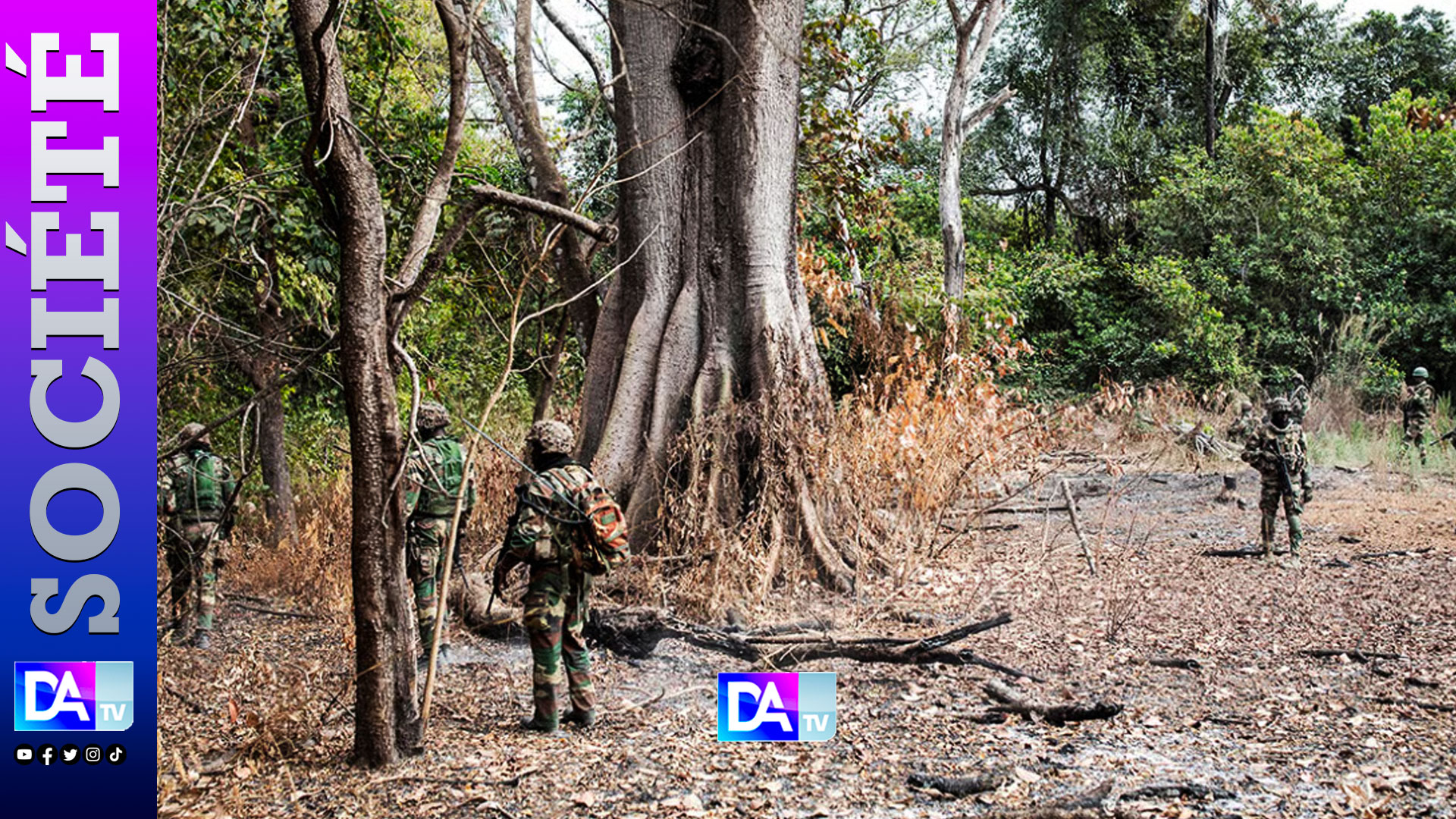
The Senegalese army, supported by sniffer dogs, recently destroyed cannabis fields in Casamance—a move that marks another chapter in one of Africa’s longest-running conflicts. Despite lasting over four decades, this low-intensity war has simmered in the southern region of Senegal, even as the rebel forces behind it weaken.
The military operation, conducted near the Gambian border in early May, targeted the Movement of Democratic Forces of Casamance (MFDC), which has fought for Casamance’s independence since 1982. Col. Cheikh Guèye, regional army commander in Ziguinchor, confirmed the operation was carried out without major resistance, resulting in 14 arrests, the seizure of heavy weaponry, and more than six tons of cannabis.
Rebels in decline: from armed struggle to survival
The MFDC, once a formidable force, now struggles with dwindling numbers. Combatants are aging, recruitment has halted, and internal divisions plague both its military and political wings. A former MFDC member, now a civil society leader, explains that the rebellion’s weakening stems from a loss of local support: “Communities that once backed the movement have grown disillusioned, prioritizing peace over prolonged conflict.”
Political shifts at the national level have also played a role. The rise of leaders from Casamance, including Prime Minister Ousmane Sonko, has shifted perceptions within the region. “Many now see progress in Dakar’s engagement with Casamance,” the source notes. “The feeling of political exclusion has faded, reducing the appeal of armed rebellion.”
Cannabis: the conflict’s new fuel
The recent operation underscored how cannabis cultivation has become central to the MFDC’s survival. Col. Guèye emphasized that drug trafficking funds rebel activities, calling it the “heart of their war economy.” This explains why the army’s anti-drug campaigns directly target rebel strongholds.
Prime Minister Sonko has been vocal about the government’s stance: “While some may still claim to fight for independence, the real issue is the illegal cannabis trade. We will use all means necessary to dismantle it.” His remarks followed a March incident in Ziguinchor, where three soldiers died and three were injured in an accidental explosion during anti-cannabis operations. Earlier in the month, another soldier was killed and six wounded in related clashes.
Border zones: a haven for illicit trade
The northern Sindian area, near Gambia, remains a hotspot for instability. Its dense forests and poor infrastructure make it ideal for smuggling and drug cultivation. Mamadou Sadio, a former elite army officer, notes that “despite fertile land, poverty forces locals to rely on illegal trade, including cannabis.” Some communities have even sought religious justification for cultivation, approaching imams for guidance.
Efforts to curb the rebellion have seen partial success. A peace deal with one MFDC faction in February 2025, brokered in Bissau, has allowed displaced populations to return home. Yet, challenges persist. A civil society leader warns, “While some factions have laid down arms, others remain defiant, leaving the path to lasting peace uncertain.”
The government’s message remains clear: territorial integrity is non-negotiable. Sonko’s government continues to extend an olive branch to rebels but draws a firm line: “No inch of Senegal’s soil will be ceded.”