
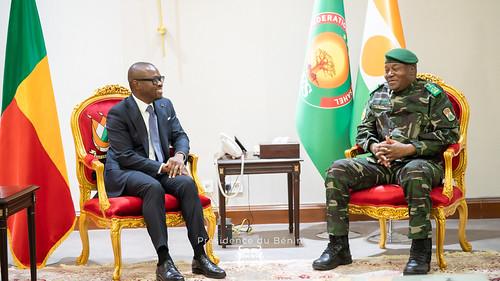
Diplomatic momentum gathers pace in Cotonou
On the tarmac of Cotonou International Airport, a significant chapter in West African diplomacy unfolded. Against the backdrop of intense regional scrutiny, the arrival of Nigeria’s high-level delegation marked the resumption of vital bilateral talks after months of frozen relations. The carefully orchestrated reception—complete with full protocol honors—sent a clear message: the channel of communication, once severed, is now fully operational once more.
This diplomatic thaw did not emerge overnight. It stems directly from the landmark meeting held in Niamey between Benin’s President Romuald Wadagni and Niger’s transitional leader, General Abdourahamane Tiani. At that encounter, both leaders acknowledged the urgent need to break the impasse. In the weeks leading up to today’s talks, technical experts, career diplomats, and senior military officials worked tirelessly behind closed doors. Their goal? To address longstanding grievances, identify flashpoints, and lay the groundwork for a sustainable resolution. The shared objective is unmistakable: securing a comprehensive agreement to reopen the border, shuttered in the wake of Niamey’s political upheaval.
The tone in Cotonou’s negotiating halls reflects more than symbolic gestures. Observers close to the process describe an atmosphere where pragmatism has replaced confrontation, even as the weight of responsibility looms large. With regional stability and economic survival hanging in the balance, negotiators are under immense pressure to deliver tangible outcomes.
Economic chokehold fuels urgency for resolution
The prolonged closure has taken a devastating toll on both economies, exposing their deep interdependence. For landlocked Niger, Cotonou’s Port has long been the lifeline for imports and exports. Its closure has forced a costly and hazardous rerouting of goods through distant regional ports, pushing transport costs to unsustainable levels. The result? Soaring inflation in Niamey, eroding purchasing power already strained by external sanctions.
Benin, too, has paid a steep price. The Cotonou-Niamey corridor is the backbone of its economic engine, feeding revenue into national coffers and sustaining countless livelihoods. The halt in cross-border traffic has crippled customs receipts, stalling infrastructure projects and paralyzing informal sectors—from logistics firms to roadside vendors. For thousands of families on both sides, the border’s reopening is not just a policy shift—it is a lifeline.
Security concerns remain the sticking point
While economic desperation pushes both sides toward compromise, the thorniest issues revolve around security and national sovereignty. Since the transition government took power in Niamey, its leadership has maintained an unyielding stance: no economic concession will compromise territorial integrity or institutional stability.
The talks in Cotonou are therefore laser-focused on highly sensitive geopolitical files. Key priorities include:
- Securing the Niger River: A natural border often exploited for clandestine crossings.
- Joint surveillance protocols: A coordinated effort to curb the movement of armed groups terrorizing the Sahel.
- Real-time intelligence sharing: A mechanism to reassure Niamey that threats won’t slip through unchecked.
The challenge is monumental: designing a border management model that is both impermeable to asymmetric threats and seamless for legitimate trade. Bridging this divide—where sovereignty meets survival—is the linchpin of these negotiations.
Can a new regional framework emerge?
This prolonged engagement in Cotonou underscores a hard truth: geography and pragmatism always prevail over ideological posturing. The crisis began with strict sanctions following Niamey’s regime change, but the prolonged standoff has laid bare the inescapable interdependence of these two nations.
Yet returning to the status quo seems unlikely. Trust has eroded, and any future accord will likely be built on heightened vigilance, tighter controls, and residual wariness. Still, both sides recognize a harsh reality: no nation can thrive in isolation. A restored partnership—however cautious—must prioritize shared stability over past grievances.
The stakes extend far beyond Cotonou and Niamey. Regional stakeholders, international partners, and neighboring states are watching closely. The Cotonou-Niamey axis is a cornerstone of West African integration. Its resolution will signal whether states can set aside political disputes to safeguard economic stability and social peace in the Sahel. For weary populations awaiting tangible progress, the next steps must move beyond photo opportunities to real, lasting change.