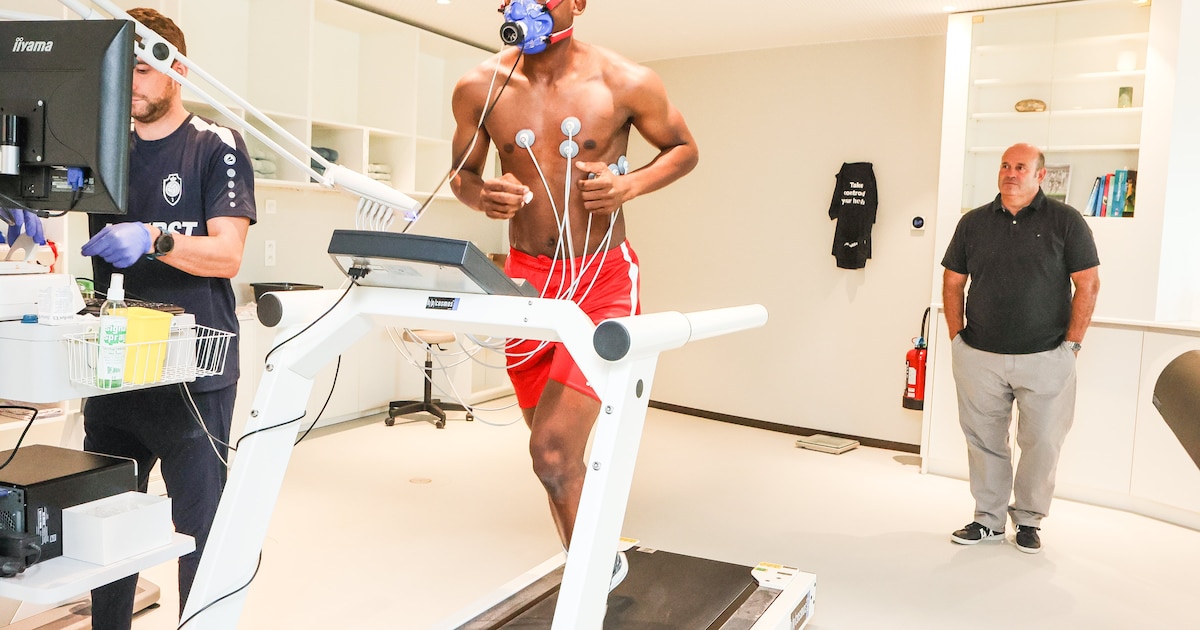
Why serie a’s heart tests blocked Khalaili’s inter milan transfer
 Premium article
Why Khalaili’s medical exams derailed his Inter Milan move
The Union Saint-Gilloise midfielder failed cardiac screening in Italy’s Serie A. Here’s why the league’s heart checks are stricter than others in Europe.
- Updated July 13, 2026 at 4:06 PM
Anan Khalaili’s move to Inter Milan hit an unexpected roadblock this week after he failed to clear enhanced cardiac examinations required by Italian football authorities. The Union Saint-Gilloise playmaker underwent preliminary medical tests over the weekend before being sent to Milan’s Humanitas Hospital in Rozzano for further evaluation on Monday. Despite the additional scrutiny, Khalaili did not receive the necessary clearance, leaving his prospective transfer in limbo.
While the specifics of his test results remain undisclosed, the case highlights Italy’s stringent cardiac protocols in professional football—a standard that often exceeds requirements in other European leagues. This rigorous approach could, in fact, open doors for Khalaili elsewhere in Europe, where medical criteria are less demanding.
Rigorous medical checks for Serie A stars
In Italy, every professional footballer—whether signing a new contract or transferring clubs—must complete mandatory medical examinations at an accredited sports medicine center. If any red flags emerge during initial screenings, specialists conduct deeper analyses, often focusing on cardiac health. The process leaves no room for negotiation: athletes either pass or fail, with no exceptions.
This structured system dates back to 1982, when Italian law mandated designated sports medicine centers to assess athletes. A 1995 decree further tightened regulations, introducing stricter cardiac evaluations, including echocardiograms and stress tests. “Our protocol’s strictness may spark debate, but it’s a non-negotiable ethical choice,” says Paolo Zeppilli, former sports medicine professor and Italian federation cardiologist. “If an athlete faces a life-threatening risk on the pitch, we won’t allow it. Other leagues should adopt a similar stance.”
Case studies: Bove and Eriksen
Italian footballer Edoardo Bove and Danish midfielder Christian Eriksen both underwent defibrillator implants after suffering cardiac arrests during matches—Bove in Serie A and Eriksen at Euro 2021. Neither player has returned to play in Italy’s top flight, though both found opportunities abroad where cardiac protocols are less stringent. Notably, Eriksen experienced another cardiac episode in June while playing for Denmark.
