
Western Sahara remains Africa’s last unresolved decolonization dispute. Designated by the United Nations as a non-self-governing territory, this region sits at the intersection of international law, regional rivalries, and energy security.
The paradox is striking: while military positions remain paralyzed, global diplomacy has reached unprecedented intensity, reshaping alliances and strategic calculations worldwide.
Military stalemate masks high-stakes diplomatic maneuvering
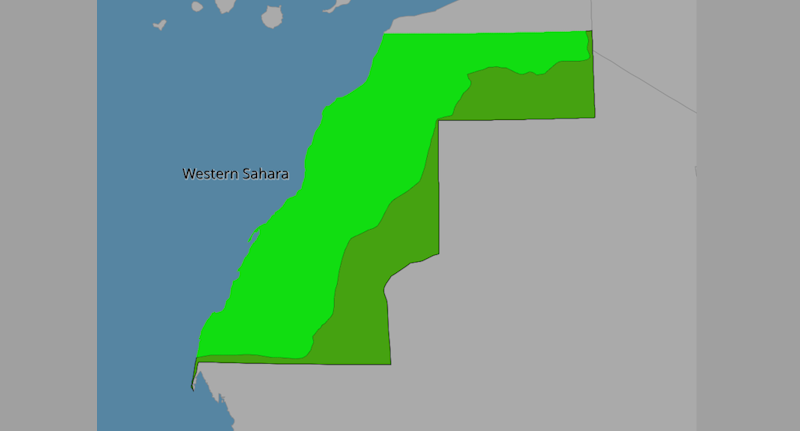
Since the 1991 UN-brokered ceasefire between Morocco and the Polisario Front, frontlines have barely shifted. Morocco exerts de facto control over most of the territory, administering its economy and security. Meanwhile, the Polisario Front retains a narrow strip of sparsely populated desert east of the Moroccan Berm—a fortified sand wall built to prevent incursions.
Yet this military impasse belies a flurry of diplomatic activity. The conflict now influences global migration flows, energy supply chains, and major power alliances, embedding it in broader geopolitical calculations.
UN Resolution 2797: a turning point favoring Morocco
The UN Security Council’s adoption of Resolution 2797 on October 31, 2025, marked a decisive shift in the dispute’s trajectory:
- Divided vote: While the resolution passed, China, Russia, and Pakistan abstained. Algeria, a long-time Polisario backer, boycotted the vote entirely in protest.
- Morocco’s autonomy plan gains traction: The resolution extended the MINURSO peacekeeping mandate until October 2026 but crucially framed negotiations around Morocco’s autonomy proposal as the only viable starting point.
- Strategic ambiguity: Though the UN neither endorsed Moroccan sovereignty nor abandoned the principle of self-determination, it effectively sidelined alternatives like full independence by anchoring discussions in Rabat’s autonomy framework—a tactic known as anchoring in diplomatic negotiations.
In Rabat, celebrations erupted as officials hailed the resolution a historic diplomatic victory, signaling what many view as an irreversible shift in international opinion toward Morocco’s position.
Historical roots of today’s deadlock
Understanding the current impasse requires revisiting key historical milestones:
ICJ Advisory Opinion (1975):
The International Court of Justice ruled that while historical ties existed between some Sahrawi tribes and the Moroccan Sultan, these did not constitute territorial sovereignty. The court reaffirmed the Sahrawi people’s right to self-determination.
The Green March and Madrid Accords (November 1975):
Morocco organized the Green March, mobilizing hundreds of thousands of civilians to cross into Western Sahara. Days later, Spain signed the Madrid Accords, transferring administrative control to Morocco and Mauritania—a move the UN never recognized.
Mauritania’s withdrawal and Morocco’s consolidation (1979–1989):
Facing economic collapse and political instability, Mauritania abandoned its territorial claims in 1979, allowing Morocco to seize the vacated zone. In response to Polisario attacks—which had declared the Sahrawi Arab Democratic Republic—Morocco constructed the Berm, cementing the military stalemate by the late 1980s.
MINURSO’s creation (1991):
The UN-brokered ceasefire took effect, and the MINURSO peacekeeping mission was deployed to monitor the truce and prepare for a self-determination referendum. However, the vote never materialized due to intractable disputes over voter eligibility and the Sahrawi electoral roll.
A new era of pragmatic diplomacy
Analysts argue that the conflict’s endurance no longer stems from legal principles but from a global preference for stability over resolution. Major powers and regional actors now prioritize geopolitical predictability and the preservation of strategic alliances over definitive outcomes.
Western Sahara thus hangs in a precarious balance: a final resolution remains theoretically possible, yet politically untenable for the international community—for now.