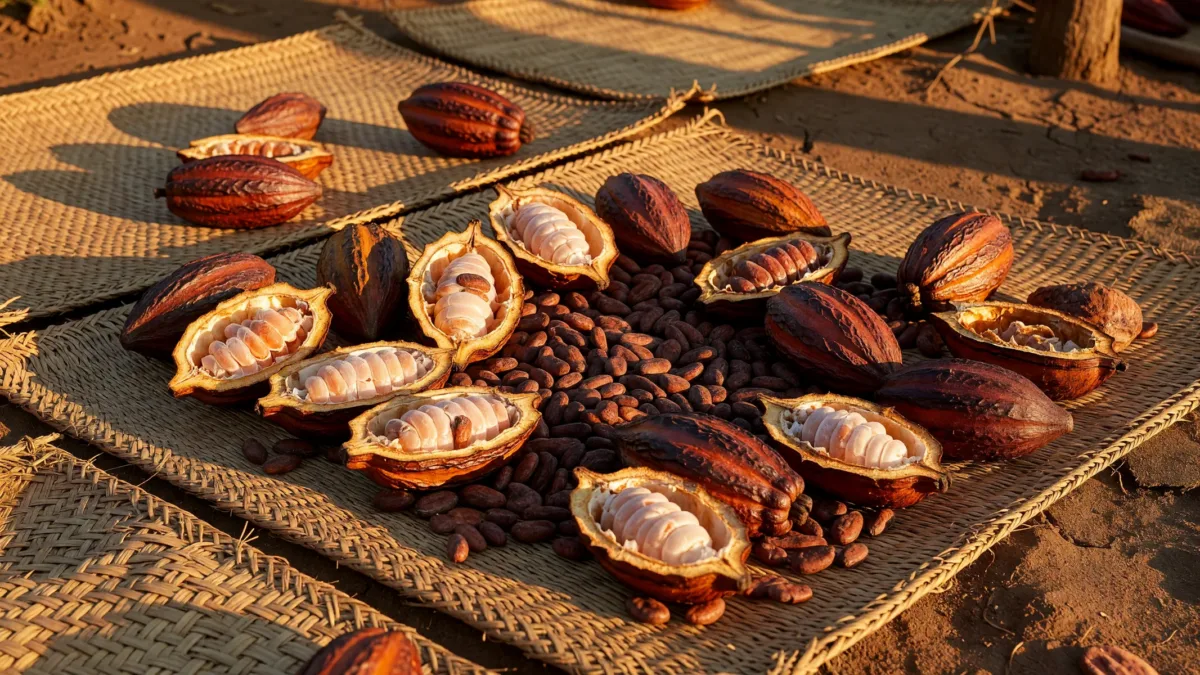
West africa cocoa producers unite in Abuja alliance for local processing
The key points
- Regional alliance: Four West African cocoa powerhouses—producing over 60% of the world’s supply—signed the Abuja Declaration on July 14, 2026
- Strategic shift: Moving from raw bean exports to local processing of high-value products
- EUDR compliance: Joint strategy to address the EU’s deforestation regulation, effective December 30, 2026
- First project: A 70,000-ton processing plant slated for 2027 in Nigeria
Abuja hosted an unprecedented gathering on July 14, 2026, where Cameroon, Côte d’Ivoire, Ghana, and Nigeria formalized the Abuja Cocoa Valorization Alliance. These four nations collectively account for more than 60% of global cocoa output, marking a turning point in how West Africa approaches its most valuable agricultural export.
Strengthening bargaining power in global cocoa markets
The “From Bean to Brand” summit, organized by Nigeria’s Ministry of Industry, Trade and Investment, brought together key stakeholders under the leadership of Minister of State John Owan Enoh. The agenda focused on aligning production standards, harmonizing national policies, and presenting a united front to international buyers. The Ghana Cocoa Board and Côte d’Ivoire’s Café-Cacao Council—both dominant players in African cocoa—joined the alliance, signaling a commitment to practical collaboration beyond political declarations.
This coordinated approach aims to shift the region’s position in the global cocoa value chain, where West Africa has historically supplied raw materials while higher profits flow to processing countries. By negotiating as a bloc, the alliance seeks fairer terms and greater control over pricing and quality standards.
Unified response to the EU’s deforestation regulation
The alliance will address the EU Deforestation Regulation (EUDR), set to take effect on December 30, 2026. The law requires European importers to verify that cocoa and other commodities are deforestation-free. Member countries will advocate for recognition of their national traceability systems and resist placing compliance costs on smallholder farmers.
Failure to comply could result in exclusion from the European market, a major destination for West African cocoa. By coordinating their response, the four nations hope to secure favorable terms, potential exemptions, or extended transition periods to adapt their production chains.
From raw beans to branded products
The alliance’s flagship initiative is a shift from exporting unprocessed cocoa beans to producing high-value derivatives such as cocoa butter, powder, and chocolate. During the summit, plans were unveiled for a 70,000-ton processing plant in Sagamu, Ogun State, Nigeria, developed by Sunbeth Global Concepts and scheduled for completion in 2027.
Nigeria, Africa’s fourth-largest cocoa producer, is also launching a national strategy to boost local processing capacity. The goal is to catch up with Côte d’Ivoire and Ghana, which already operate significant domestic grinding facilities. By reducing reliance on raw bean exports, the country aims to retain more value within its borders.
Côte d’Ivoire’s pivotal role in the global cocoa landscape
As the world’s top cocoa producer—supplying nearly 40% of global demand—Côte d’Ivoire plays a central role in the alliance. The country’s Café-Cacao Council regulates the sector from Abidjan, where it has already developed local processing capacity. However, most of its cocoa still flows to Europe and Asia for further processing.
The Abuja alliance strengthens Côte d’Ivoire’s negotiating position with major international chocolate manufacturers. For Europe’s leading cocoa importer—France—this development could accelerate investments in on-the-ground processing, reshaping supply chain dynamics and fostering closer industry ties.
Next steps and implementation timeline
The alliance will begin operational coordination in the coming months, starting with the formation of a joint governance structure. The first major challenge will be the coordinated negotiation with the EU over the deforestation regulation’s implementation, with the December 30, 2026 deadline looming. Success in this phase could set the tone for future regional cooperation in cocoa and beyond.
