
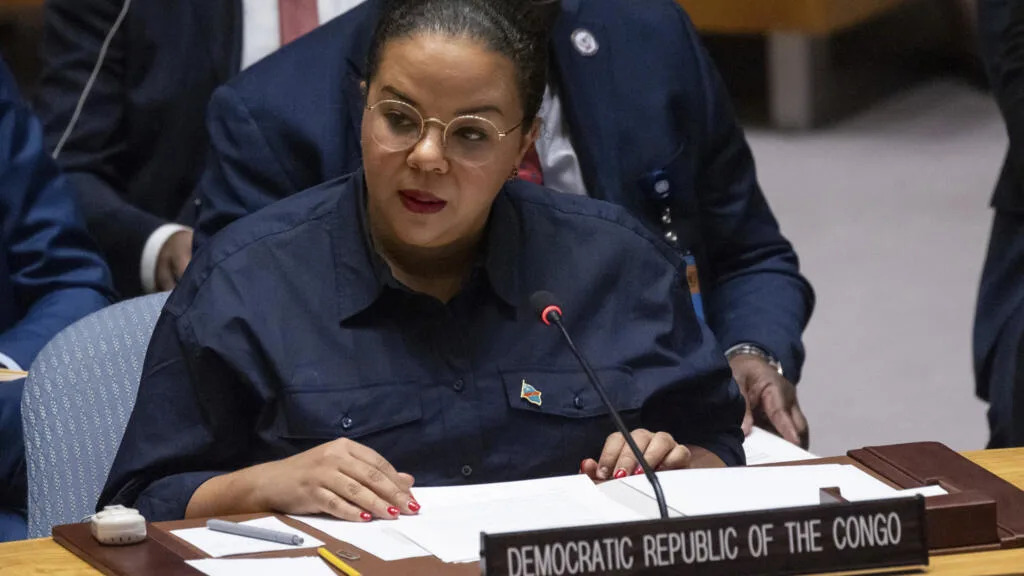
The Democratic Republic of the Congo (DRC) has underscored at the United Nations the critical link between natural resources and ongoing armed conflicts, calling for stronger coordination among existing international mechanisms rather than the creation of new obligations.
During a session of the UN Security Council, Foreign Minister Thérèse Kayikwamba Wagner emphasized that the focus should remain on enhancing traceability, sanctions, and governance frameworks for natural resources without imposing a global mining code or infringing on the sovereignty of states over their own resources.
She highlighted the urgent need to address the exploitation of minerals such as coltan, particularly in conflict-affected regions like Rubaya, where armed groups—including the M23—are reported to control significant portions of production.
France, aligning with these concerns, reiterated its support for Resolution 2773, which targets the situation in eastern DRC. The country called for reinforced traceability mechanisms and targeted sanctions to curb the illicit trade of conflict minerals.
Clashing perspectives on resource governance
Divergent views emerged among major powers regarding the best approach to managing natural resources and their role in fueling armed conflicts.
The United States prioritized securing supply chains for critical minerals, stressing the importance of investments to stabilize the sector and reduce dependency on conflict-driven sources.
China, on the other hand, advocated for non-interference and respect for state sovereignty, cautioning against politicizing discussions on resource governance.
Russia went further, dismissing the notion of a regulatory gap, arguing that conflicts stem primarily from political instability and external interference rather than the absence of international rules.
These exchanges laid bare the deep divisions among global powers on how to effectively govern natural resources and mitigate their role in perpetuating violence.