
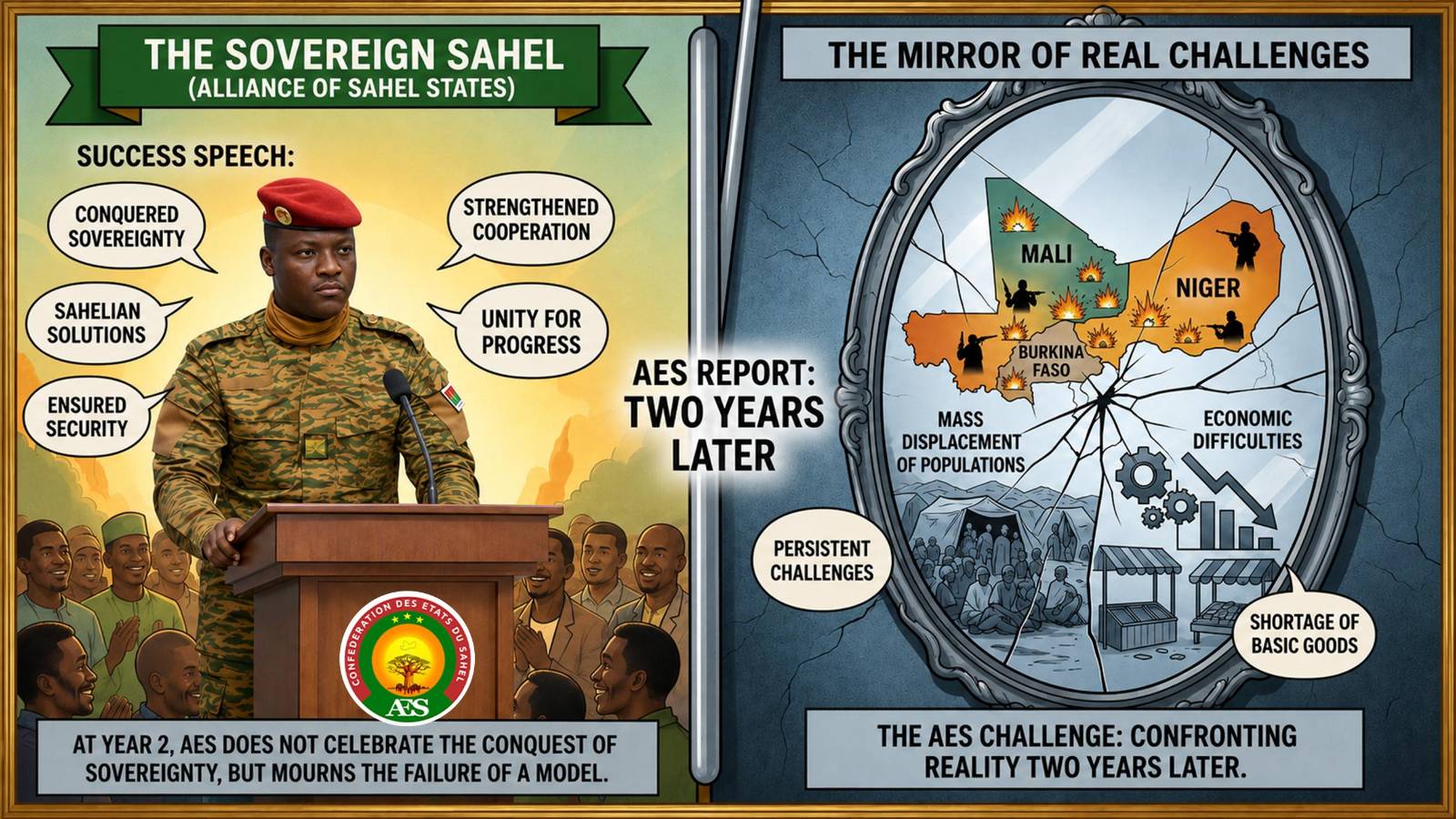
Two years after the establishment of the Sahel States Confederation (AES) by Burkina Faso, Mali, and Niger, its leaders, including Captain Ibrahim Traoré, continue to champion the alliance as a landmark achievement in political and strategic cooperation. The AES is framed as a bold step toward sovereignty, solidarity, and regional integration, a narrative that resonates with a segment of the public. However, for many observers and citizens, the alliance’s tangible impact remains elusive, with concrete outcomes lagging behind the bold declarations.
The discourse surrounding sovereignty has emerged as the cornerstone of the AES’s political identity. Yet sovereignty extends far beyond the rejection of traditional partnerships or the forging of new international alliances. Fundamentally, it is measured by a state’s ability to safeguard its citizens, uphold institutional integrity, sustain economic growth, and provide meaningful opportunities for its youth.
Security remains a critical test for the AES
Despite repeated claims of military progress, the threat posed by armed groups persists across vast regions of the three member states. Civilians continue to endure violence, displacement, and humanitarian hardship, with daily life disrupted by insecurity. While the AES has underscored its commitment to combating extremism, the reality on the ground suggests that the alliance’s security initiatives have yet to yield the stability its leaders promise.
Economic integration: promises unfulfilled
The AES has pledged to deepen regional economic ties, yet tangible progress has been slow to materialize. Trade flows remain constrained, fiscal challenges persist, and the purchasing power of households continues to decline. For many, the anticipated economic benefits of the Confederation remain largely aspirational, with little evidence of substantial improvement in the lives of ordinary citizens.
Governance and transparency: the missing link
While sovereignty has dominated public discourse, critical questions about governance, accountability, and institutional effectiveness have received far less attention. A regional union cannot secure long-term trust without demonstrating transparency, implementing sound policies, and ensuring that resources are managed responsibly. The concentration on sovereignty alone risks overshadowing the structural reforms necessary to address the daily struggles of the populations.
The AES represents a significant shift in the political landscape of West Africa, but its legacy will ultimately be defined not by declarations, but by results. Citizens in Burkina Faso, Mali, and Niger are waiting for evidence that the alliance can deliver on its promises of security, economic prosperity, and improved living standards. The true measure of the AES’s success will lie in its ability to translate rhetoric into reality, proving that sovereignty is more than a slogan—it is a commitment to tangible progress for all.