
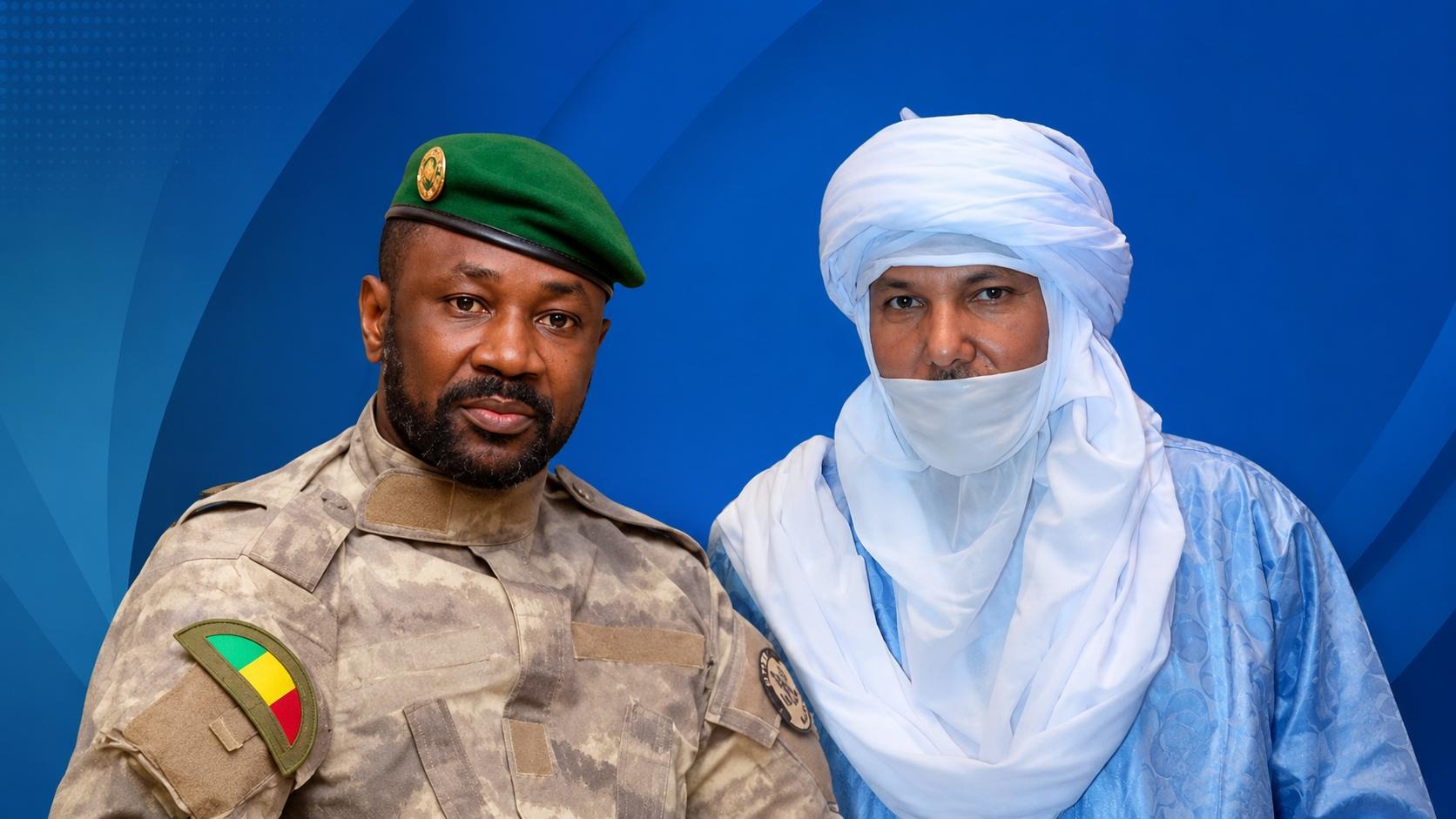
The junta’s addiction to power and the collapse of peace efforts
Since seizing control in August 2020, Mali’s military leaders have repeatedly vowed to restore national unity and end the insurgency gripping the country. Yet six years later, their promises remain unfulfilled. By unilaterally abandoning the 2015 Algiers Peace Accords in early 2024, the transitional authorities closed the door on political negotiations with northern rebel groups, reigniting large-scale hostilities in the region.
In a scathing analysis, Issouf Ag MAHA, a prominent Nigerien writer living in exile, exposes what he describes as the junta’s dangerous addiction to power. Rather than pursuing lasting peace, he argues, the government in Bamako has prioritized short-term political survival, tightening its grip on the capital while its authority crumbles in the provinces.
Under its rule, public freedoms have been systematically suppressed: independent media is silenced, dissenting voices are crushed, and civil society faces relentless repression. Yet despite these efforts to maintain control, the regime’s legitimacy is eroding as its failures mount.
Military setbacks expose the fragility of Bamako’s claims
The junta’s propaganda of strength has collided head-on with ground realities. On July 4, 2026, fierce clashes erupted near Anefif, a strategic town in northeastern Mali. Government forces and their Russian-backed allies, deployed from Gao, found themselves trapped in a devastating ambush. The convoy, sent as reinforcement, suffered heavy casualties and was forced to retreat, leaving behind a trail of destruction and loss.
This defeat was not an isolated incident. Earlier, Malian troops suffered a crushing reversal at Tinzawatène, followed by the swift recapture of Kidal by the Azawad Liberation Front (FLA). These military shifts have exposed the fragility of Bamako’s narrative of control, revealing that the balance of power remains dangerously unstable.
The FLA’s actions have further underscored this shift. Following their military advances, the rebel movement allowed some Malian and Russian forces to withdraw voluntarily. Ag MAHA interprets this move as a deliberate political gesture—one designed to contrast the rebels’ adherence to international humanitarian law with the brutality often attributed to government troops and their foreign allies.
Africa Corps and the humanitarian toll of the alliance with Russia
Mali’s pivot toward Moscow, marked by the deployment of Africa Corps (formerly Wagner Group), has come at a devastating cost for civilians. While this partnership frees the junta from Western democratic pressures, it has entrenched a regime of terror across northern Mali, where communities are enduring unspeakable suffering.
Ag MAHA’s assessment is stark: local populations are trapped in a nightmare of systematic abuse. Reports of arbitrary arrests, enforced disappearances, and extrajudicial killings have surged. Civilians, caught in the crossfire, face a deliberate strategy of intimidation aimed at breaking their spirit and erasing their presence from the land.
The government in Bamako continues to deny these atrocities, retreating into denialism that Ag MAHA warns could seal the country’s long-term fragmentation. The silence from international observers only deepens the crisis, leaving Mali’s future hanging by a thread.
Is Mali approaching an irreversible collapse?
As global attention shifts to other conflicts, Mali’s tragedy unfolds in the shadows. The international community, regional organizations, and global media have largely turned away, leaving the country to spiral into deeper turmoil. Ag MAHA questions whether the world is waiting for a purely military resolution—or if Mali has simply lost its place on the international stage.
He warns that the junta’s insistence on pursuing a total military victory—at the expense of democratic principles and national cohesion—risks pushing the country past a point of no return. Rather than rebuilding Mali, the current leadership may be presiding over its definitive disintegration.