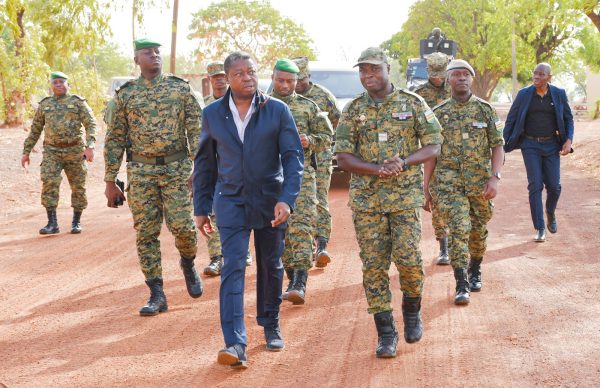
Togo’s president inspects Koundjoaré operation amid rising security threats
The president of the Council and commander-in-chief of the armed forces traveled to the front lines of the Operation Koundjoaré in northern Togo on May 7, 2026. The visit came as violent extremism looms near the Savanes region, testing troops exhausted by prolonged conflict. Every moment counted as the rhythmic beat of helicopter blades shattered the tense silence of a region under siege.
This border zone is far more than a line on a map—it is a perpetual hotspot where danger lurks behind every rock and bush. Enemy presence is invisible yet palpable, and Togo is fighting one of its most critical battles to safeguard its territorial integrity. Around 10 a.m. that Thursday, President Faure Gnassingbé arrived at this precarious location to assess the situation firsthand.
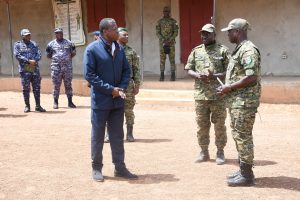
Inside the Command Center: Understanding the Threat
His first stop was a closed-door session at the Operational Command Post (PCO). With satellite maps and intelligence reports spread out, the president reviewed a detailed security threat assessment.
The officers outlined the harsh realities: asymmetric warfare, improvised explosive devices (IEDs), infiltration attempts by armed groups from the Sahel, and the constant challenge of securing hundreds of kilometers of porous borders.
The commander-in-chief listened intently, probing military leaders on operational and logistical constraints faced by frontline troops. He emphasized the need for continuous adaptation—enhancing security measures, improving unit responsiveness, and boosting operational effectiveness to minimize vulnerabilities.
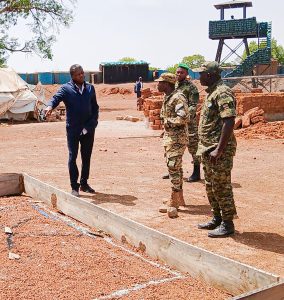
Tchamonga: Where Strategy Meets Sacrifice
The most symbolic moment of the visit came when the president flew east to the Tchamonga forward operational base, right on the sensitive border.
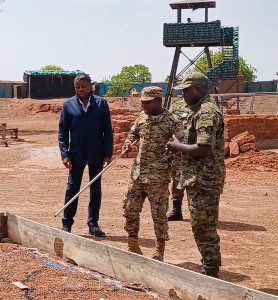
Here, the threat felt even more immediate. Before a tactical sand table—a miniature battlefield used to simulate enemy positions—the president examined patrol routes and response scenarios in this high-risk zone.
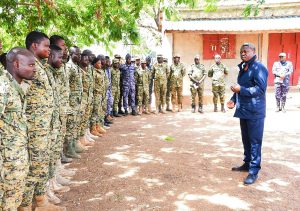
Then came the encounter with the soldiers. Faces etched with long nights of vigilance, tough weather conditions, and relentless pressure, yet eyes burning with resolve. Addressing the troops, Faure Gnassingbé praised their dedication and sacrifice, acknowledging that many had already given their lives for national security.
He urged them to remain vigilant in the face of an ever-shifting and unpredictable threat while reaffirming full military support. The president also stressed that equipment and operational capacity improvements are being rolled out to meet the needs of troops deployed on this critical front.
Two Pillars of Koundjoaré: Firepower and Resilience
Why is this visit so pivotal right now? Because victory in the Savanes region isn’t just about rifles and patrols. It’s also about minds and hearts—especially those of local communities, who are prime targets for terrorist indoctrination.
The president’s trip highlighted Togo’s holistic security strategy, blending military action with social resilience:
┌──────────────────────────────────────────────────┐
│       HOLISTIC SECURITY APPROACH IN SAVANES     │
├──────────────────────────────────────────────────┤
│                                                  │
│        Military (Koundjoaré)       │   Social & Prevention   │
│        (The Shield)                 │   (Resilience & Dialogue) │
│                                                  │
└──────────────────────────────────────────────────┘
While Operation Koundjoaré serves as the essential military shield, the government is also rolling out initiatives to strengthen community resilience:
- Regional Emergency Program (PURS): Delivering clean water, electricity, schools, and roads to prevent poverty from fueling extremism in the Savanes.
This initiative targets infrastructure and basic services to improve living conditions and reduce vulnerability to radicalization. - Interministerial Committee for Prevention of Violent Extremism (CIPLEV): A joint body working with traditional leaders and youth to detect early signs of radicalization and foster social cohesion.
Focused on dialogue and community engagement to counter radical influences at the grassroots level.
Diplomacy on the Front Line
This frontline visit also underscored Togo’s commitment to regional security cooperation, particularly with Benin and Burkina Faso. Authorities emphasize that combating violent extremism requires stronger cross-border coordination in a West African landscape reshaped by geopolitical shifts and security fragilities.
By traveling to Tchamonga and standing shoulder-to-shoulder with deployed units, President Faure Gnassingbé sent a clear message: Togo remains steadfast in countering armed groups and defending its sovereignty, even amid a volatile regional climate.
