Mali: road transport companies halt services to Bamako amid jihadist blockade
More than ten road transport companies have ceased their operations to and from Bamako, following a significant road blockade imposed by jihadist groups targeting the capital and setting vehicles ablaze.
Uncertainty grips Mali in the wake of widespread and synchronized assaults on April 25 and 26. These attacks, orchestrated by jihadists from the Group for the Support of Islam and Muslims (Jnim), an Al-Qaïda affiliate, alongside the predominantly Tuareg Azawad Liberation Front (FLA) rebellion, targeted critical positions held by the ruling junta.
Since April 30, these extremist factions have enforced a comprehensive road blockade around Bamako, effectively cutting off several vital routes leading into the capital. As an landlocked nation, Mali, and particularly its capital, relies heavily on road-based imports, making this blockade particularly disruptive.
“We made the decision to pause our operations to safeguard our passengers and mitigate financial losses,” stated the head of one transport agency to AFP on Monday. This agency reported losing six buses in incidents on the Ségou road in Central Mali just last Saturday.
While over a dozen companies have formally declared their service suspensions, others have reportedly halted routes discreetly. This clandestine cessation of services is attributed to fears of potential repercussions from authorities who, according to an anonymous agency chief, might compel them to continue operating. Although major transport firms no longer use the six primary routes into the capital, smaller minibuses are reportedly still accessing the city via alternative, less direct paths.
Bamako faces critical shortages of fuel, electricity, and water
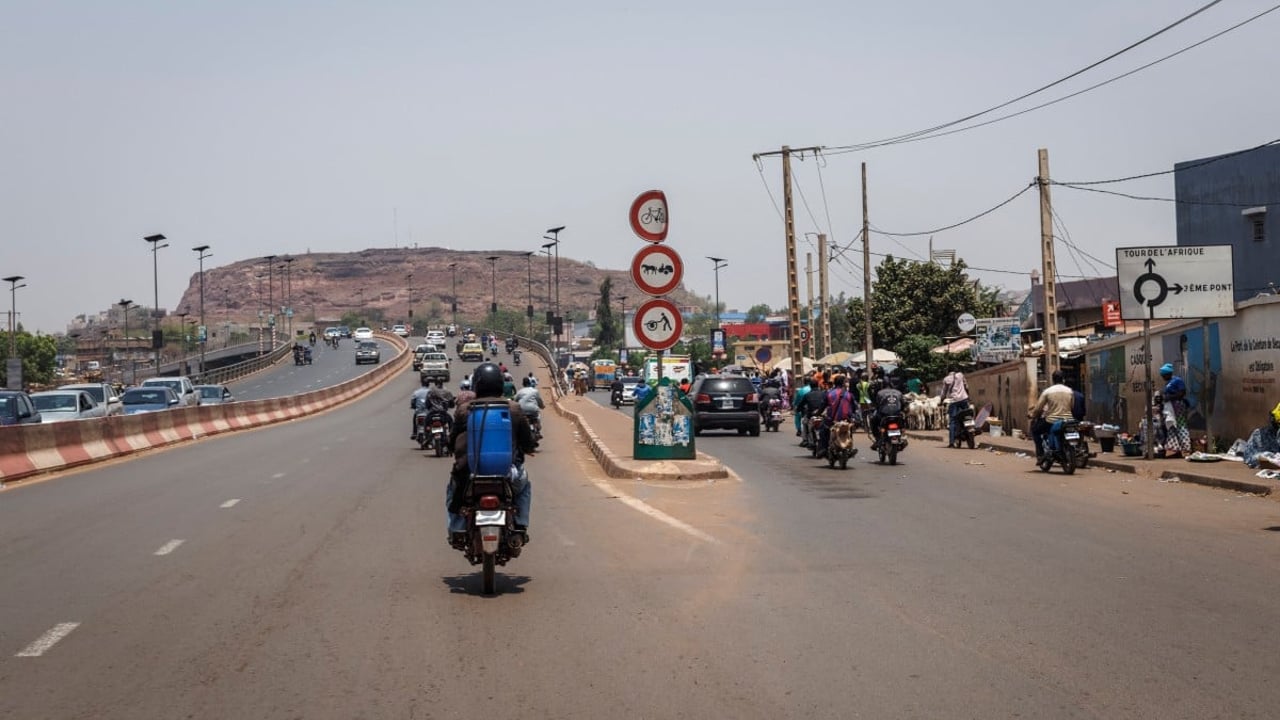
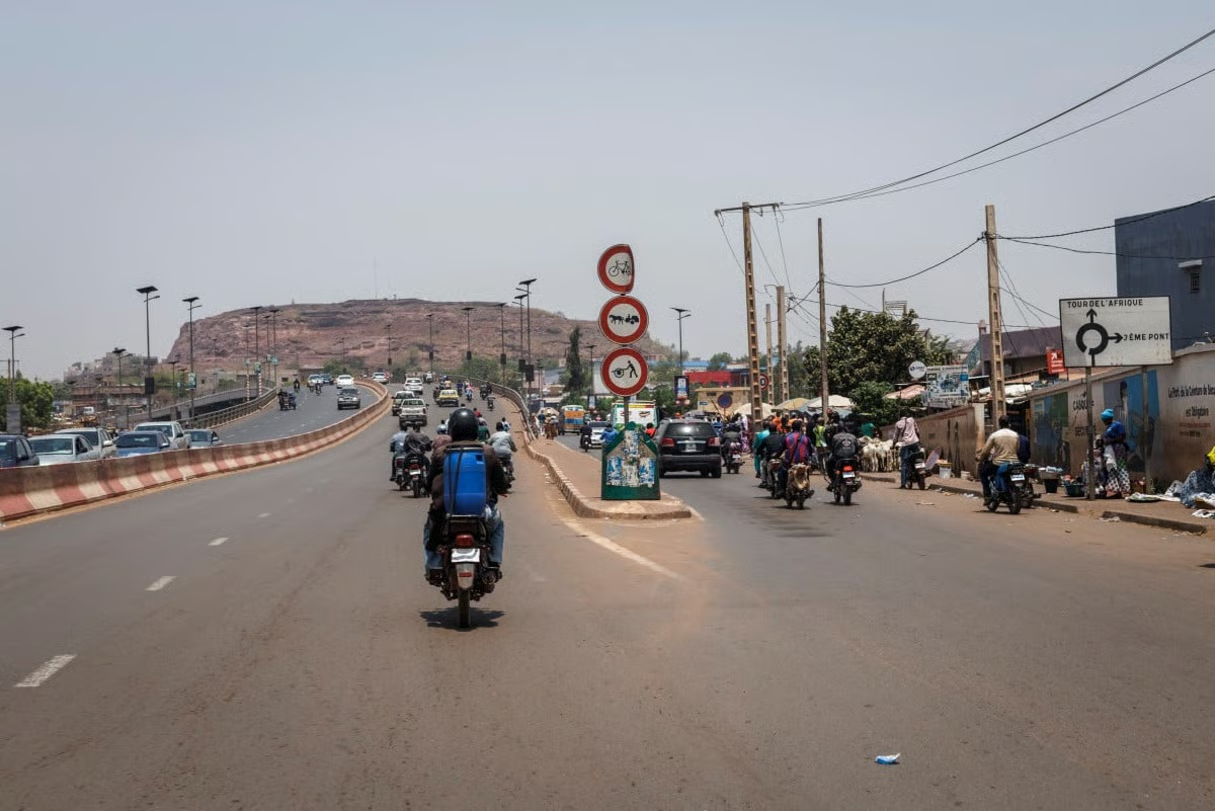
The ramifications of the jihadist-imposed blockade are becoming increasingly evident across Bamako. On Monday, AFP observed extensive queues of motorcyclists at petrol stations, while diesel has become virtually impossible to find for several weeks. Despite this, authorities on Saturday asserted that over 700 fuel tankers had successfully entered the city via the route connecting Bamako to Côte d’Ivoire. Nevertheless, in recent days, militants have set fire to numerous merchandise convoys and public transport buses.
Moreover, the electricity supply in the capital has significantly deteriorated over the past few days. A Bamako resident told AFP on Sunday evening, “We endured seventy-two hours without any power. It returned for just three hours on the fourth day, then went out again.” Énergie du Mali (EDM), the national power company, reported significant disruptions on Sunday, citing an “incident” without further elaboration. However, an anonymous EDM official confirmed on Monday that these disruptions were due to acts of sabotage by “terrorists” impacting the electrical grid.
Consequently, due to widespread load shedding, the Malian Drinking Water Management Company announced on Sunday that “the supply of potable water is disrupted” across several urban districts.
