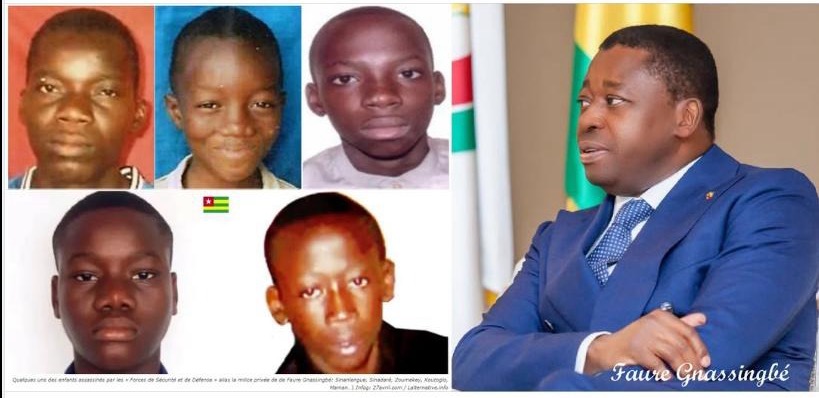
Togo the disappearance of inquiry reports on children killed under faure gnassingbé
The Journée de l’enfant africain: A Contrast Between Words and Reality
The Journée de l’enfant africain, celebrated annually on June 16, serves as a poignant reminder of the fundamental rights that must be upheld for every child across the continent. This year’s focus—universal access to water, sanitation, and hygiene—provided yet another platform for African nations to pledge progress. In Togo, however, the government’s rhetoric often diverges sharply from ground realities. Under the leadership of Faure Gnassingbé, the state has repeatedly resorted to violence, leaving innocent children among its casualties.
From Soweto to Lomé: A System Built on Repression
The origins of the Journée de l’enfant africain trace back to the 1976 Soweto uprising, where students demanded quality education and rejected oppressive policies. Decades later, while many African governments strive to honor these ideals, Togo’s approach to governance appears to prioritize political survival over the protection of its youngest citizens. The tragic irony lies in how the state weaponizes repression against children, transforming their vulnerability into a tool of control.
Ensuring a child’s right to life and dignity extends beyond ceremonial declarations. In Togo, mothers continue to give birth on bare floors due to the collapse of healthcare infrastructure. Hospitals overflow with newborns, their survival hanging by a thread amid systemic neglect. Meanwhile, international bodies continue to renew their commitments to child welfare, but Lomé’s compliance remains superficial at best.
The Brutal Cost of Dissent
Any challenge to the status quo—whether through protests or mere survival—is met with lethal force. Even children not participating in demonstrations, such as those searching for food, are not spared. The government’s refusal to address these violations systematically underscores a culture of impunity that has festered for generations.
Jacques Koutoglo: A Case of Justice Denied
For nearly a year, the family of Jacques Koutoglo has sought answers. The 15-year-old was beaten to death and his body dumped in the Bè lagoon during the June 2025 unrest. Contrary to initial claims of accidental drowning, evidence suggests a far darker reality. The former Minister of Human Rights, Pacôme Adjourouvi, initially dismissed the incident as a natural tragedy before backtracking and promising an official investigation. To date, no findings have been disclosed, and the minister has since left office without closure. The government’s denial of a memorial service for Jacques further deepens the family’s anguish.
Joseph Zoumekey and Rachad Maman: Echoes of Unaccounted Violence
In 2017, the killing of 13-year-old Joseph Zoumekey in Bè-Kpota exposed the regime’s disregard for young lives. Shot while running errands for his mother, Joseph’s case was later corroborated by an independent autopsy commissioned by Amnesty International, which confirmed a gunshot wound. Despite global outrage and calls for justice, the government remained silent.
A similar fate befell 14-year-old Rachad Maman in Bafilo. Marching alongside his father during a pro-democracy rally, he was struck by a stray bullet. International petitions demanding accountability yielded no results, as the state continued to bury the truth.
The North and South United in Grief
In Dapaong, the memories of Anselme Sinandaré (12) and Douti Sinalengue (21) remain etched in the community’s collective consciousness. In 2012, both were fatally shot during a peaceful student protest demanding teacher attendance. Over a decade later, no officials have been held responsible.
From the northern regions to the coastal cities, a grim pattern persists: the lives of children are dispensable when political stability is at stake. Families are left shattered, their hopes for the future extinguished by a system that prioritizes power over justice.
A Treaty Ignored: The African Charter on the Rights and Welfare of the Child
Togo ratified the African Charter on the Rights and Welfare of the Child on May 5, 1998, a commitment to protect its youngest citizens. Yet, by failing to investigate these killings and hold perpetrators accountable, the government sends a clear message: adherence to international law is conditional, and political survival supersedes human rights.
