
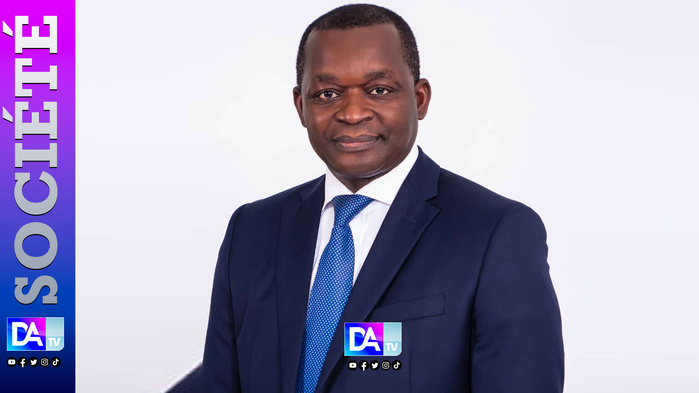
During a recent tour across France, Mr. Alioune Sarr, President of the Alliance for Senegal (APS/ANS), engaged deeply with the Senegalese diaspora in Paris, Massy, and Creil. His mission: to forge a new national pact rooted in territorial development, diaspora mobilization, and economic sovereignty. These meetings weren’t just diplomatic; they were heartfelt exchanges with families, students, entrepreneurs, and community leaders who share a common dream—building a stronger Senegal.
Listening to the diaspora’s voice
The President’s itinerary took him from the heart of Paris to the suburbs, where Senegalese communities gathered in intimate settings like the Foyer Les Mûriers in the 20th arrondissement. In Massy, Essonne, and Creil, Oise, he listened to firsthand accounts of the challenges faced by those abroad while collecting their visions for Senegal’s future. The turnout was overwhelming, proving that the diaspora’s commitment to their homeland remains unwavering.
In Creil, the mobilization was particularly striking. Led by Ms. Amy Faye, APS’s political coordinator in France, the gathering brought together a diverse crowd—association leaders, workers, students, and families—all united by a shared purpose. The discussions centered on territorial development, productive investment, and economic sovereignty, themes that resonated deeply with the audience.
A call for unity beyond politics
Mr. Sarr didn’t shy away from addressing the political landscape. He urged all actors to prioritize national interest over partisan divides, emphasizing that development is a collective endeavor. “We may disagree politically, but we must never be enemies of the Republic,” he stated, positioning himself as a unifier in a time of division.
The President also critiqued Senegal’s decades-long centralized development model, which has long favored urban hubs like Dakar while leaving other regions underdeveloped. “Centralized decisions stifle progress. Territorial initiatives, on the other hand, breathe life into the nation,” he argued. His vision? A Senegal where every region thrives, contributing to a balanced and inclusive growth.
Dakar and the territories: a vital partnership
Rejecting any rivalry between Dakar and the rest of the country, Mr. Sarr painted a picture of symbiosis. “Dakar is the heart of Senegal, but the territories are its lungs. A body cannot survive on one lung alone,” he remarked. His message was clear: sustainable development requires every region to harness its potential, create jobs, and attract investments.
He cited the Notto Diobasse Smart City project as a blueprint for this approach. By fostering local production, innovation, and industrialization, such initiatives can decentralize growth and ensure prosperity reaches every corner of the country. “Senegal’s progress won’t flow from Dakar outward—it must rise from the territories and converge toward the capital,” he asserted.
Land as a catalyst for transformation
The discussions also tackled the critical role of land in Senegal’s economic future. Mr. Sarr challenged the notion of land as a mere commodity, advocating instead for its strategic development. “A hectare isn’t valuable because it’s sold; it’s valuable because it’s developed,” he explained. Comparing raw land sales to exporting unprocessed resources, he championed a shift toward value-added transformation—one that creates jobs and builds wealth.
“Nations that grow rich don’t sell their assets; they transform them,” he emphasized. “Selling land drains the future. Developing it secures it.”
The diaspora: Senegal’s untapped engine
Throughout his tour, Mr. Sarr positioned the diaspora as a linchpin for national progress. He called on Senegalese abroad to transition from passive supporters to active investors and partners in territorial development. “The diaspora isn’t an ATM. It’s an open ministry of development,” he declared. For him, the future of Senegal depends on forging strong alliances between territories, the diaspora, youth, women, entrepreneurs, and local governments.
A three-pillar vision for Senegal’s tomorrow
As the tour concluded, Mr. Sarr outlined a roadmap for Senegal’s future, anchored in three pillars:
- Empowered territories: Decentralizing decision-making to unlock local potential.
- Mobilized diaspora: Transforming the diaspora into a driving force for development.
- Economic sovereignty: Prioritizing self-reliance and value creation.
The enthusiasm in Paris, Massy, and Creil underscored the diaspora’s readiness to play a pivotal role. Concluding his remarks, Mr. Sarr left no doubt: “We didn’t come to manage the future. We came to build it.”