
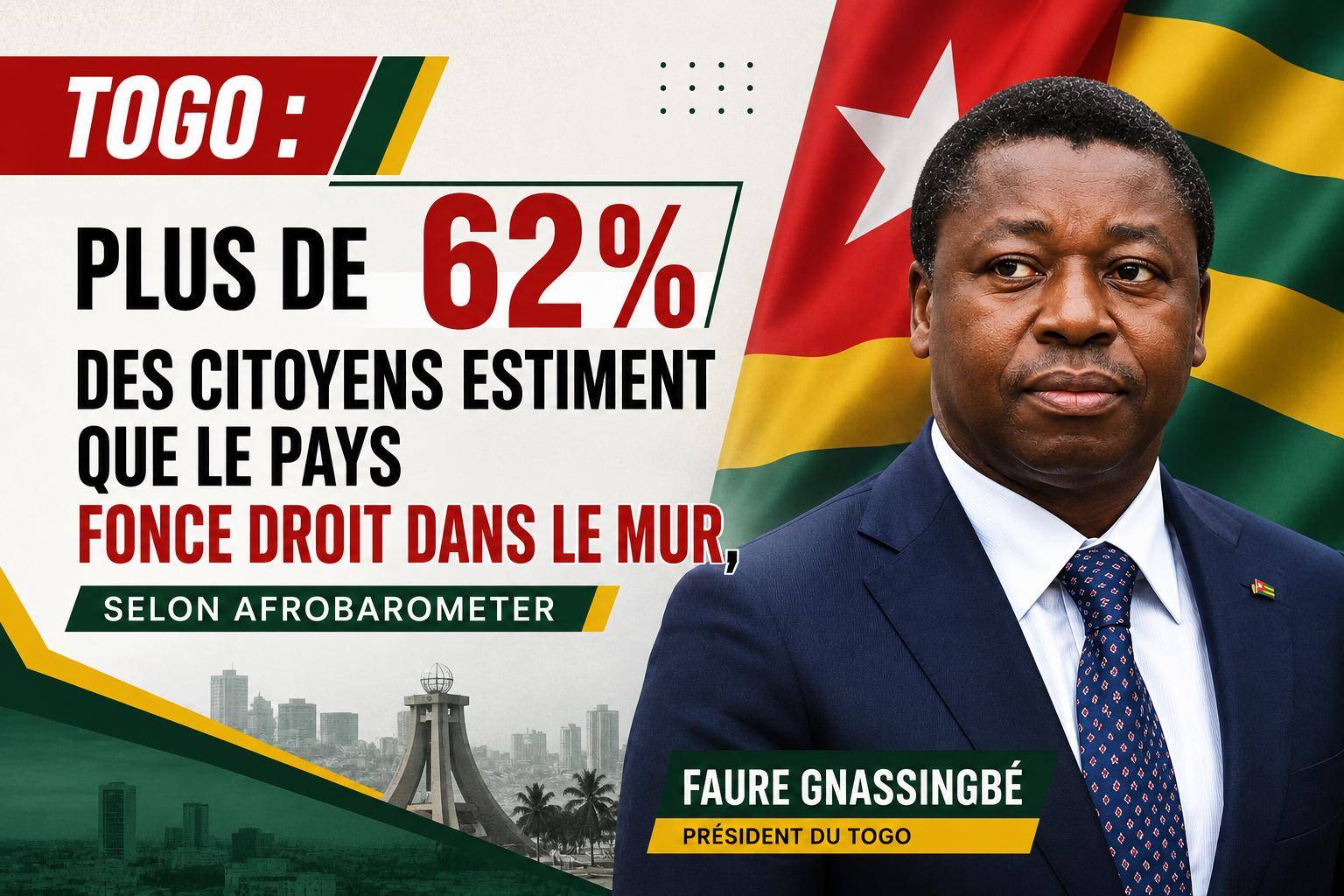
Togo’s deepening struggles: over six in ten citizens warn of national decline
Despite official pronouncements highlighting a National Development Plan and consistent economic growth, the lived experience in Togo starkly contrasts with governmental assurances. A recent Afrobarometer survey indicates that a significant 62% of Togolese citizens perceive their nation as heading towards disarray. With a dramatic rise in poverty, severe water shortages, and limited access to healthcare, the chasm between the country’s leadership and its people has reached unprecedented depths.
The statistics are unequivocal: over six out of ten Togolese believe the country’s conditions are worsening, marking an 11-point increase since 2021. This growing distrust is not trivial; it mirrors profound disappointment with economic management, which 63% of citizens describe as either poor or very poor. Such widespread pessimism is rooted in a rapidly diminishing purchasing power and a stark absence of viable opportunities for a vibrant youth seeking a brighter future.
Daily hardship: the reality of poverty for Togolese households
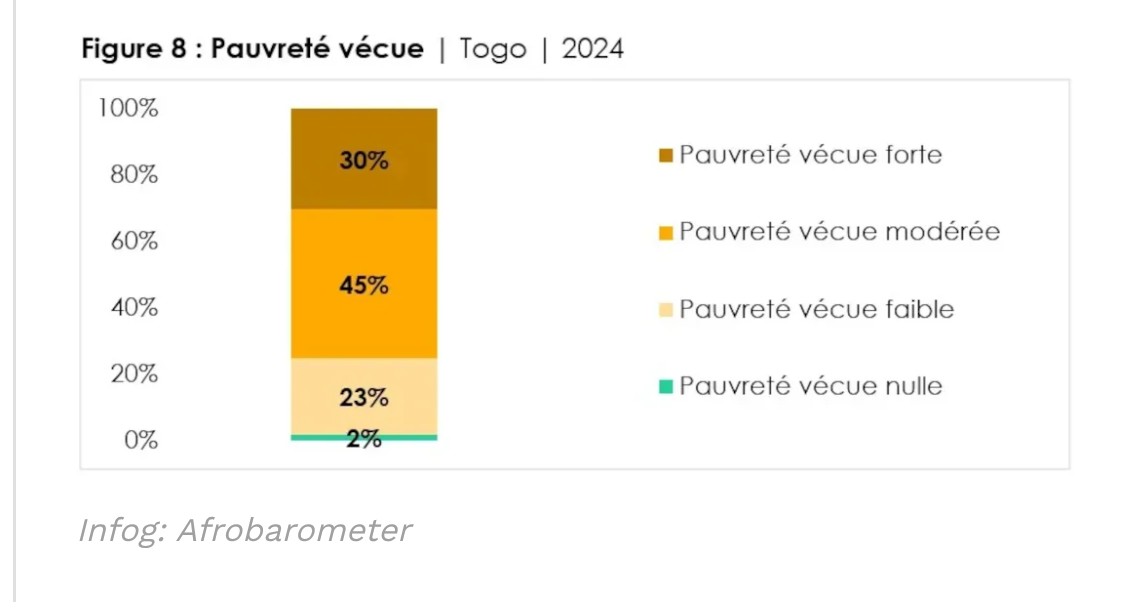
Beyond merely tracking macroeconomic figures, the Afrobarometer study delves into the very core of household living conditions. The findings are stark: most respondents characterize their personal circumstances as unfavorable, with over half reporting a deterioration in their financial state over the past year. Presently, three-quarters of Togolese contend with either moderate or extreme poverty, underscoring that the benefits of economic expansion are failing to reach the general populace.
The daily lives of Togolese citizens are marked by enduring challenges: inconsistent income, restricted access to medical care, and critical shortages of potable water. This relentless struggle for existence often makes each day appear more arduous than the last.
Striking territorial and social disparities
Precariousness in Togo does not impact all regions equally, with certain areas bearing a disproportionate burden of this crisis. A prime example is the Kara region, where a staggering 88% of residents live in poverty. This statistic directly challenges governmental claims of balanced development. Furthermore, women and those residing in rural areas are disproportionately affected by this failing system. Even education, once considered a pathway to social mobility, no longer assures a respectable standard of living within a labor market that is both saturated and driven by patronage.

Political system failures: elite opulence amidst widespread suffering
How has this situation come to pass? The stark contrast between the lavish lifestyles of a select few and the pervasive distress among the general populace is alarming. Large-scale prestige projects have been prioritized over essential social investments, leaving millions of Togolese without hope. Afrobarometer’s Trust Index points to a society on the verge of breakdown: the dwindling trust in institutions and the lack of access to fundamental rights foster a profound sense of abandonment.
Togo can no longer rely solely on favorable growth figures to conceal its escalating misery. When the majority of its citizens believe their nation is heading in the wrong direction, it fundamentally calls into question the entirety of the current governance. The so-called Togolese miracle proves to be nothing more than an illusion for those dwelling in the shadows of this reported progress.
Without a truly radical shift that places human welfare at the forefront, the country risks an irreversible decline. The Togolese people have voiced their profound weariness. The critical question remains whether the leaders in Lomé are prepared to heed this widespread distress and respond effectively.