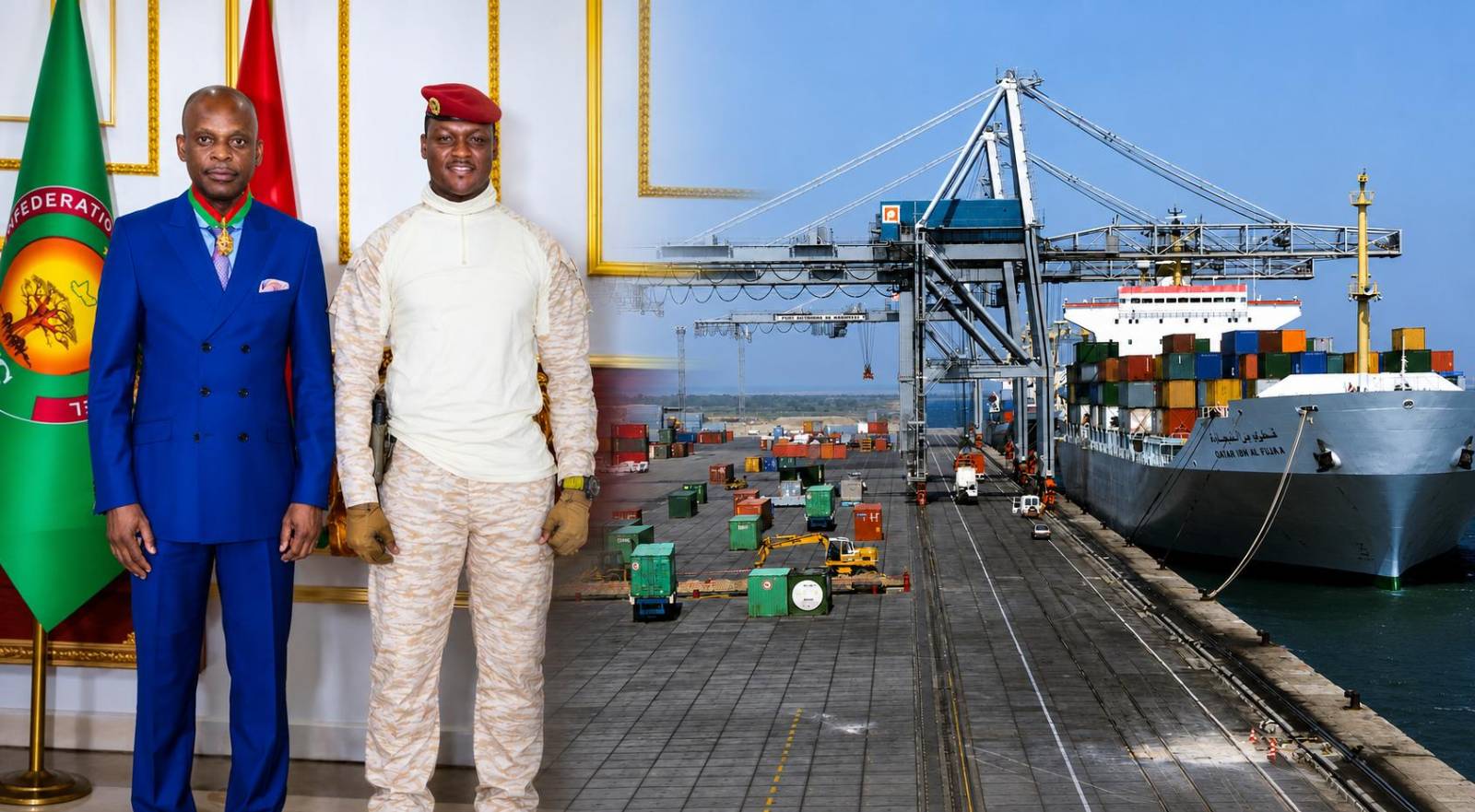
Togo-Burkina diplomatic ties scrutinized amid economic interests
Symbolic honor conceals deeper geopolitical intrigue
The recent elevation of Togo’s Foreign Minister to the rank of Commander of the Order of the Stallions—Burkina Faso’s highest honorary distinction—has been framed by official channels as a testament to Lomé’s commitment to regional solidarity and open diplomacy. Yet beneath the veneer of ceremonial recognition lies a more complex narrative, one characterized by shifting alliances and pragmatic concessions.
Diplomacy driven by mutual necessity
The award arrives at a juncture where geopolitical maneuvering often takes precedence over ideological alignment. While the distinction is presented as a celebration of strengthened ties, its timing coincides with a period of notable political turbulence. The decision to confer this honor follows Togo’s decision to revoke asylum for Burkina Faso’s former president, Roch Marc Christian Kaboré, a move that raised eyebrows across the region.
Analysts suggest that the revocation was not merely an administrative formality but a calculated concession to secure favorable economic agreements. For Togo, the Port of Lomé represents a critical gateway for Burkina Faso’s trade, particularly given the landlocked nation’s reliance on maritime transit. By accommodating Ouagadougou’s demands, Lomé has positioned itself as an indispensable partner, ensuring the smooth flow of goods through its port facilities—at the expense of political asylum considerations.
A transactional approach to regional relations
This episode underscores a broader trend in West African diplomacy: the prioritization of economic and logistical interests over political or moral commitments. The timing of the distinction, awarded amid ongoing deliberations over governance and democratic freedoms, has fueled skepticism about the true nature of the relationship between the two capitals.
The transactional nature of this diplomacy is not lost on observers. While official rhetoric emphasizes solidarity, the reality suggests a more calculated calculus. The convergence of interests appears to outweigh any ideological or ethical considerations, with alliances forged and dissolved in response to shifting economic imperatives. In this context, the Order of the Stallions serves as both a reward and a reminder of the transactional underpinnings of modern West African statecraft.
The gap between rhetoric and reality
Institutional narratives portray the distinction as evidence of exemplary cooperation. However, the disconnect between these claims and the underlying motivations raises questions about the authenticity of such gestures. When diplomatic overtures are so closely tied to economic gain, the appeal of collective solidarity begins to wane, particularly among those who scrutinize the actions of regional leaders.
Ultimately, this honor highlights the dominance of realpolitik in interstate relations. States act to safeguard their strategic interests, commercial exchanges, and political stability, often at the expense of consistency in their public commitments. The contrast between diplomatic language and on-the-ground decisions only reinforces the perception that such distinctions are less about shared values and more about securing tangible advantages.
Behind the carefully staged ceremonies and medals displayed by officials lies a stark pragmatism. Far from symbolizing disinterested fraternity, this distinction appears to reward a commercial partnership—one that has come at the cost of ethical principles and the fundamental right to asylum. It is this very discrepancy that fuels contemporary debates about the true nature of relations between Lomé and Ouagadougou.
