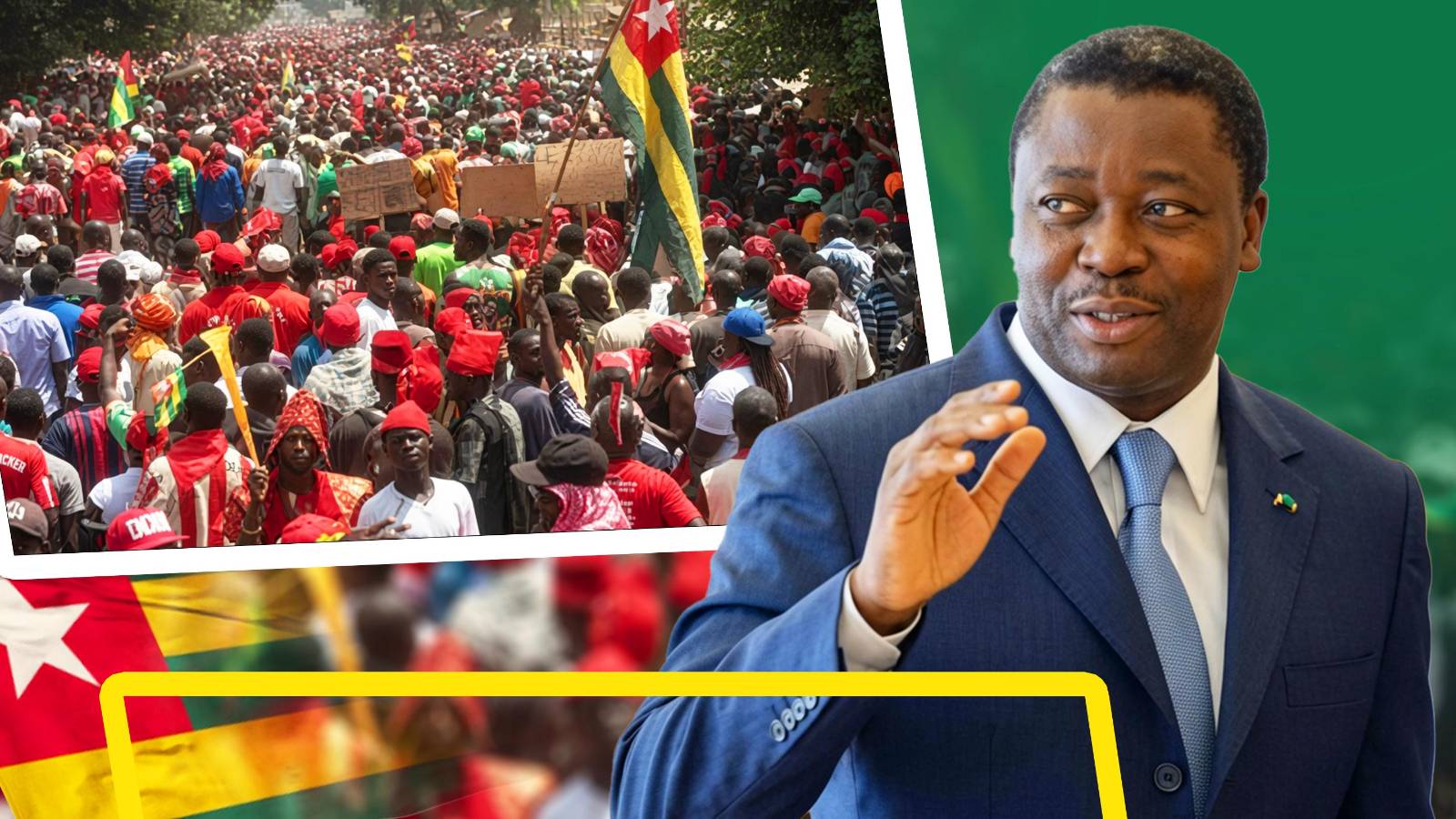
The stark dilemma facing Togolese youth: escape or stagnate
The harsh reality confronting many young people in Togo today is one of impossible choices: embark on a perilous journey abroad in pursuit of a dignified livelihood, or remain trapped in a nation that offers no viable future. This stark dilemma has intensified scrutiny of the governance model under President Faure Gnassingbé, whose decades-long leadership is increasingly viewed as the root cause of widespread disillusionment among the youth.
For an entire generation of Togolese, the question is no longer whether they can succeed at home, but how they can escape it. While previous generations once clung to the hope of building their lives within the country’s borders, today’s youth see emigration not as an option, but as the only plausible path to prosperity. This seismic shift underscores a profound erosion of trust between young citizens and their government, signaling a systemic failure to foster an environment conducive to personal and professional fulfillment.
the illusion of progress and the reality of joblessness
The disparity between official narratives celebrating economic modernization and the lived experience of young Togolese could not be more glaring. Government statistics may tout low unemployment rates, yet these figures conceal a far grimmer truth: over 70% of young workers are mired in underemployment or confined to the informal sector, where stability and upward mobility are elusive.
Each year, universities in Lomé and Kara churn out thousands of graduates, yet initiatives like the National Employment Agency (ANPE) and the National Coalition for Youth Employment (CNEJ) offer little more than empty promises. With no viable career paths, legions of educated youths resort to survival tactics—operating precarious moto-taxi services (zémidjans) or peddling goods in street markets—to scrape by, rendering years of academic sacrifice meaningless.
This wastage of human capital extends beyond individual hardship. When an engineer abandons his field to drive a taxi or a law graduate sells goods on the street, the consequences ripple through the national economy. The loss of potential innovation, productivity, and competitiveness is incalculable, as the country squanders the very resources it claims to invest in its people.
The industrial landscape offers little respite. Qualified job creation remains critically insufficient, leaving graduates with no recourse but to accept roles that fail to match their expertise. An economy anchored in low-value activities cannot sustain the aspirations of a highly educated workforce, further deepening the chasm between ambition and reality.
a system choked by patronage
The prevailing sense of injustice among Togolese youth is palpable. Families mortgage their futures to fund education, believing that merit will unlock opportunity. Yet in Togo, meritocracy has eroded. Access to entrepreneurship and financing remains a labyrinthine ordeal, despite government programs like the Youth Economic Initiative Fund (FAIEJ). Securing credit without political connections or substantial collateral is nearly impossible, and lucrative public contracts are monopolized by a privileged few tied to the ruling party (UNIR). For the average young Togolese without ‘le piston’—a local term for backroom influence—the doors to social mobility remain firmly shut.
This perception of a system rigged in favor of relationships over competence has fueled widespread disillusionment. Many now conclude that hard work, dedication, and academic achievement count for little in a country where opportunity is doled out based on loyalty, not talent. When equal opportunity ceases to exist, the very fabric of civic trust frays, leaving a generation adrift and disillusioned.
The private sector, which could otherwise drive job creation, operates in a climate of uncertainty. Entrepreneurs cite cumbersome bureaucracy, restricted access to capital, sluggish consumer demand, and economic instability as barriers to growth and hiring. Without a thriving private sphere, the engine of employment remains stalled, leaving the youth with no recourse but to seek fortune elsewhere.
emigration as the only escape
With the prospect of success at home diminishing, emigration has evolved from a distant dream to a survival strategy. The exodus manifests in two alarming trends that threaten the nation’s future:
- the scramble for visas: Endless queues form daily outside the French embassy, Campus France offices, and immigration agencies in Canada and the Gulf states, as hordes of young Togolese pursue the paperwork needed to leave.
- the brain drain: Hospitals, universities, and tech firms are depleted as doctors, engineers, nurses, researchers, and IT specialists depart en masse for greener pastures. The loss of these competencies cripples the country’s ability to innovate, attract investment, and modernize its infrastructure.
The irony is stark: Togo invests heavily in education, only for the benefits to accrue to foreign economies. Host nations gain skilled labor trained at the expense of Togolese families, while the country of origin is left hollowed out, deprived of the very talent it needs to progress.
political stagnation: the death of hope
Economic disillusionment is compounded by a crisis of political confidence. The 2024 adoption of a new Constitution, which transformed the nation into a parliamentary system, has shattered the last vestiges of faith in democratic renewal. To many young citizens, the reform was a cynical legal maneuver designed to keep President Gnassingbé in power indefinitely—now as Prime Minister rather than President—and to extinguish any chance of generational change at the helm of the state.
The absence of political renewal, coupled with a weak rule of law, a lack of judicial independence, and the suppression of genuine political competition, has convinced a significant portion of the youth that meaningful reform is unattainable. Without transparent institutions, equitable governance, and a level playing field, they argue, economic initiatives will yield little tangible benefit. For them, the future lies not in civic engagement or domestic progress, but across borders.
This disillusionment has triggered a withdrawal from public life. Many young Togolese no longer participate in political parties, civil society organizations, or civic initiatives, convinced that their voices are irrelevant in shaping the nation’s trajectory. The erosion of civic participation weakens democratic vitality and deprives the country of the dynamism and creativity of an entire generation.
a nation at risk of losing its future
Critics attribute the current crisis directly to President Gnassingbé’s leadership, which has spanned two decades. Despite his tenure, an inclusive economic model that meets the needs of a burgeoning youth population has failed to materialize. Instead, wealth and opportunity remain concentrated in the hands of a select few, while the majority grapple with poverty or prepare to flee.
History demonstrates that no nation can thrive when its youth see departure as their only hope. Successful economies are built on the retention of talent, the encouragement of innovation, and the guarantee of equal opportunity. They foster trust between citizens and institutions, creating an environment where ambition and effort are rewarded.
A pressing question looms over Togo’s future: how can a nation develop when its most dynamic, educated, and ambitious citizens dream solely of leaving? Until tangible solutions emerge—addressing unemployment, governance transparency, business climate improvement, and democratic aspirations—the country will continue to hemorrhage its brightest minds, leaving behind a hollowed-out society that risks losing the very engine it needs for progress.
