
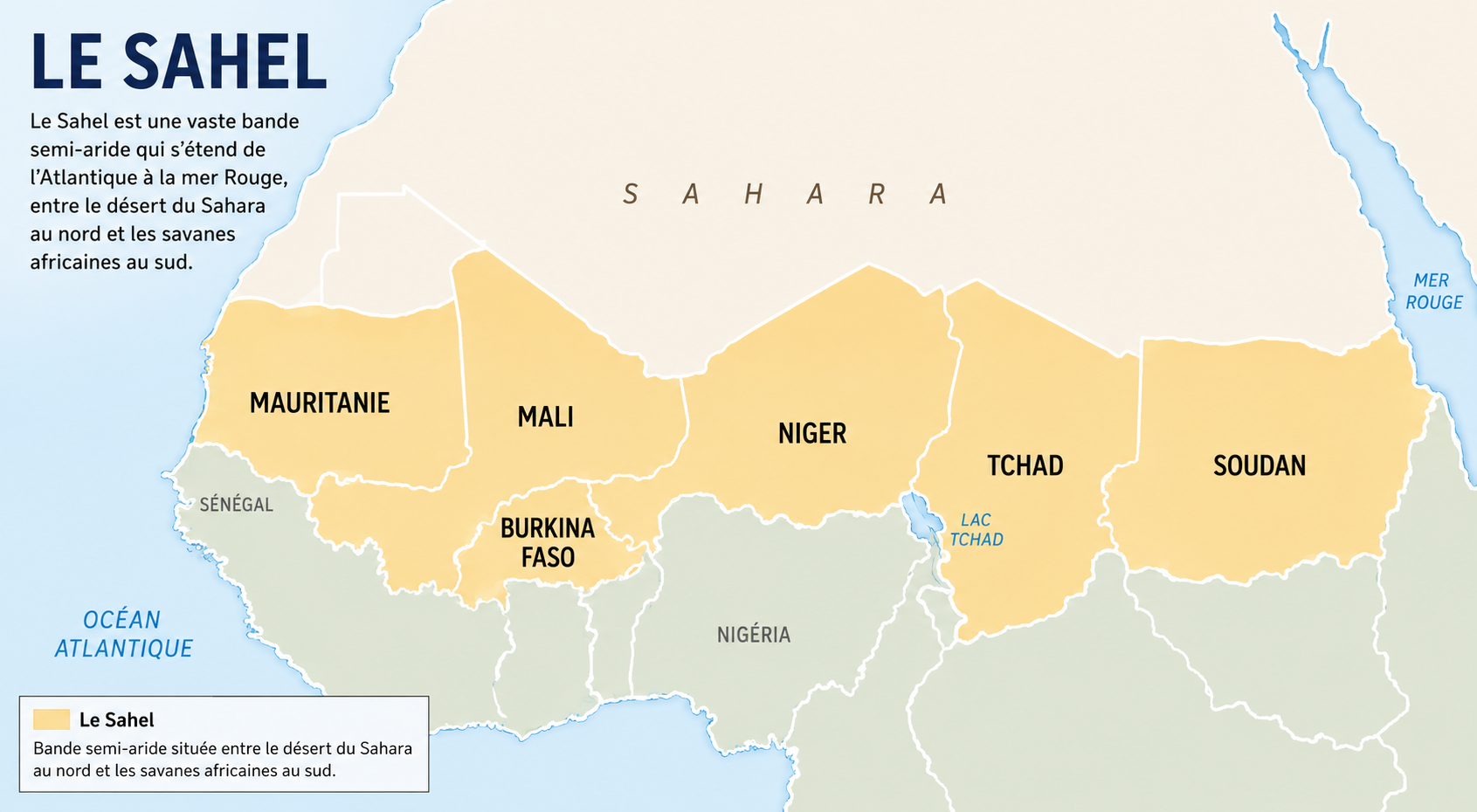
While global attention largely remains fixed on conflicts in Ukraine or the Middle East, another humanitarian crisis in the Sahel continues to worsen, largely overlooked. In 2026, over 24 million people in the Sahel will require urgent assistance, making it one of the planet’s most severe and critically underfunded situations.
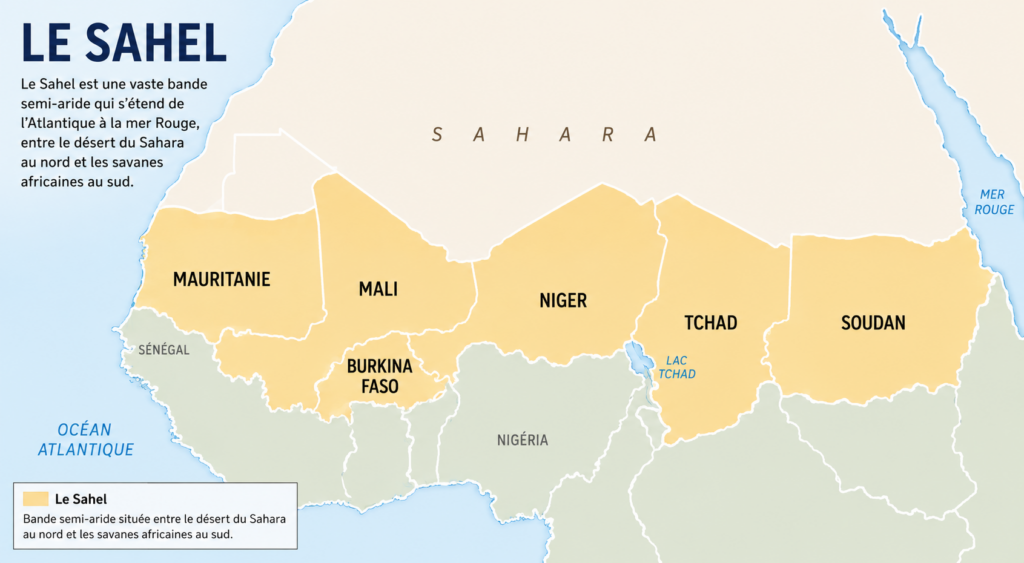
From Mauritania to Chad, encompassing nations like Mali, Burkina Faso, and Niger, communities are grappling with an accumulation of crises that daily erode their capacity for survival. Armed conflicts, mass population displacements, rampant inflation, the severe impacts of climate change, and pervasive food insecurity combine to plunge millions of families into extreme precarity.
The figures released by the United Nations Office for the Coordination of Humanitarian Affairs (OCHA) are alarming. Between June and August, the critical lean season preceding harvests, nearly 15.5 million people could face a food crisis or worse. Among these, over 1.5 million risk experiencing emergency-level food insecurity, demanding immediate assistance.
Behind these stark statistics lie tangible human realities: families forced to reduce their meals, farmers unable to purchase essential fertilizers or seeds, countless children deprived of education, and entire populations uprooted by escalating violence.
International aid in retreat
For humanitarian agencies, one of the most pressing concerns is the steady collapse of funding. In 2025, only 29% of the necessary funds for humanitarian operations in the region were secured – a historically low level. This severe shortfall compels organizations to scale back interventions, suspend vital programs, or even withdraw from particularly vulnerable territories.
This contraction of aid occurs precisely as needs are escalating. The economic repercussions of international tensions, particularly in the Middle East, continue to fuel rising prices for energy, transportation, and agricultural inputs. These increases directly impact already fragile populations. For the United Nations, every reduction in funding translates directly on the ground into human consequences: less food aid, diminished protection for women and children, and limited access to healthcare or education.
Violence gains ground
The food crisis also mirrors a security situation that continues to deteriorate. Once largely concentrated in the Central Sahel, insecurity is now encroaching upon several West African coastal countries. In numerous regions, armed groups steadily expand their influence, triggering massive population displacements and the closure of vital services. A staggering 12,900 schools have been forced shut, denying over 2.3 million children their right to education.
For humanitarian experts, this educational deprivation represents a profound long-term threat. An entire generation risks growing up without essential schooling, facing limited economic opportunities in territories where armed groups often exploit the vulnerability of young populations.
Climate further worsens the situation
Adding to this political and security instability are the devastating effects of climate change. Since the beginning of the year, nearly 590,000 individuals have been impacted by severe floods, while persistent droughts and desertification steadily deplete available resources.
The Sahel thus finds itself at the nexus of multiple global crises. Despite contributing minimally to global warming, the region stands among the most exposed to its devastating consequences.
In response to this dire situation, the United Nations is urgently appealing to international donors to significantly increase their support to avert a deepening humanitarian catastrophe. While solutions are still viable, without additional funding, millions of people could face a dramatic decline in their living conditions in the coming months.