The Sahel at Twilight: Mali Reels Under a Coordinated Offensive
The awakening was brutal for the Malian people. On Saturday, April 25, a shockwave swept across the country from Gao to Bamako, marking what many analysts are already calling an “irreversible turning point” in the region’s security collapse.
A Night of Chaos: Mali Under Fire
Attacks of unprecedented scale and coordination simultaneously targeted several key nerve centers of the territory. Strategic military bases in Kati — the heart of military power — and Sévaré, as well as the northern outposts of Gao and Kidal, came under assault.
Field reports describe scenes of desolation: a military helicopter shot down, blockades on vital supply routes, and the capital Bamako now directly threatened by the tightening grip of armed groups. While the general staff claims the situation is “under control,” the daily reality faced by citizens — marked by fuel shortages and soaring inflation — tells a different story: that of a state losing its grip.
The Illusion of the “Russian Solution” and the Pan-African Mirage
This bloody failure highlights the strategic deadlock created by the transitional authorities’ choices. The promise of restored security through partnership with Russia and the expulsion of international forces is rapidly evaporating.
Leading figures of “rupture pan-Africanism,” such as Kémi Séba, now face the consequences of their own advocacy. By promoting unconditional alignment with Moscow as a miracle cure for the Sahel’s ills, these influencers encouraged a geopolitical shift that, far from stabilizing the region, appears to have made it even more vulnerable.
The assessment is bitter: Replacing traditional cooperation frameworks with Russian paramilitary structures and influence has failed to halt the territorial expansion of insurgent groups.
Diplomatic isolation: By cutting itself off from its neighbors and historical allies in favor of populist rhetoric, Mali now stands alone against a threat that knows no borders.
The Domino Effect: Burkina Faso and Niger in the Crosshairs
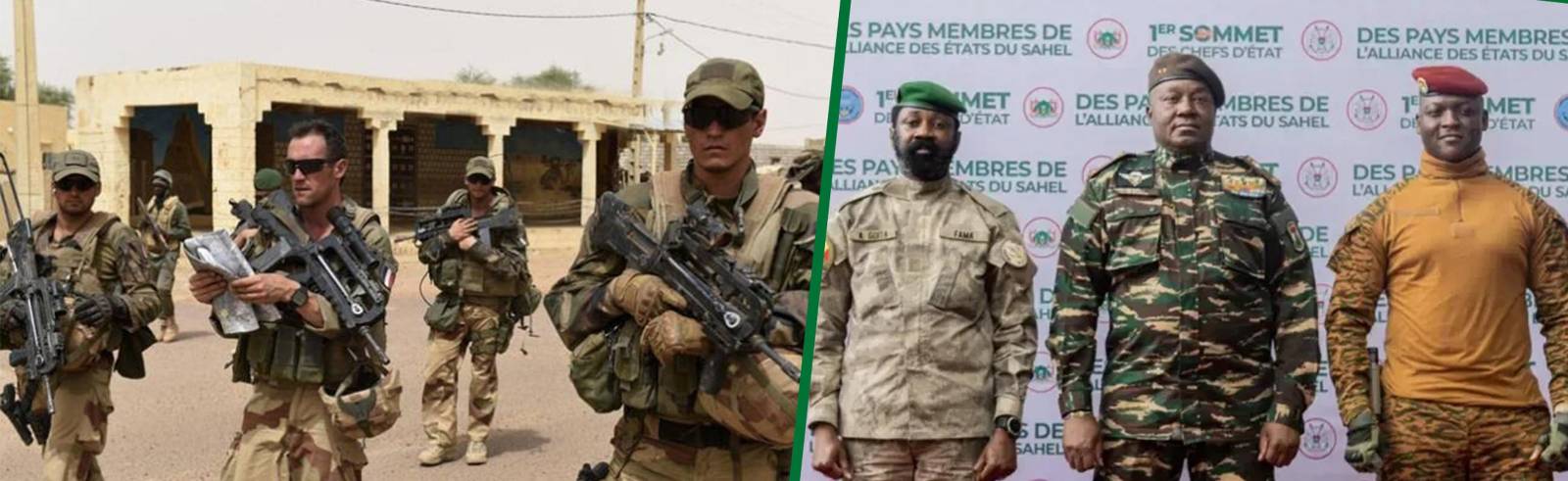
The diagnosis for Mali is now critical. The symbolic and operational fall of key security strongholds on Saturday raises fears for the future of the Alliance of Sahel States (AES).
As the central pillar of this alliance, Mali’s current instability serves as a grim warning for Ouagadougou and Niamey. Porous borders and increased coordination among terrorist groups pose an immediate threat to Burkina Faso and Niger, which are already facing similar internal crises.
“It is no longer a question of ‘if,’ but of ‘when’,” warns a regional security expert speaking on condition of anonymity. “Mali is the first domino; if Bamako yields further, the shockwave will sweep across the rest of the central Sahel.”
Conclusion: A Necessary Awakening
For the ordinary citizen, the time for ideological slogans has passed; it is now a matter of survival. The attacks of April 25 prove that sovereignty is not achieved through social media rhetoric, but through the real capacity to protect one’s people. Without a profound reassessment of current strategic choices and a return to pragmatic regional cooperation, the Sahel risks sinking into a darkness from which it may take decades to emerge.
