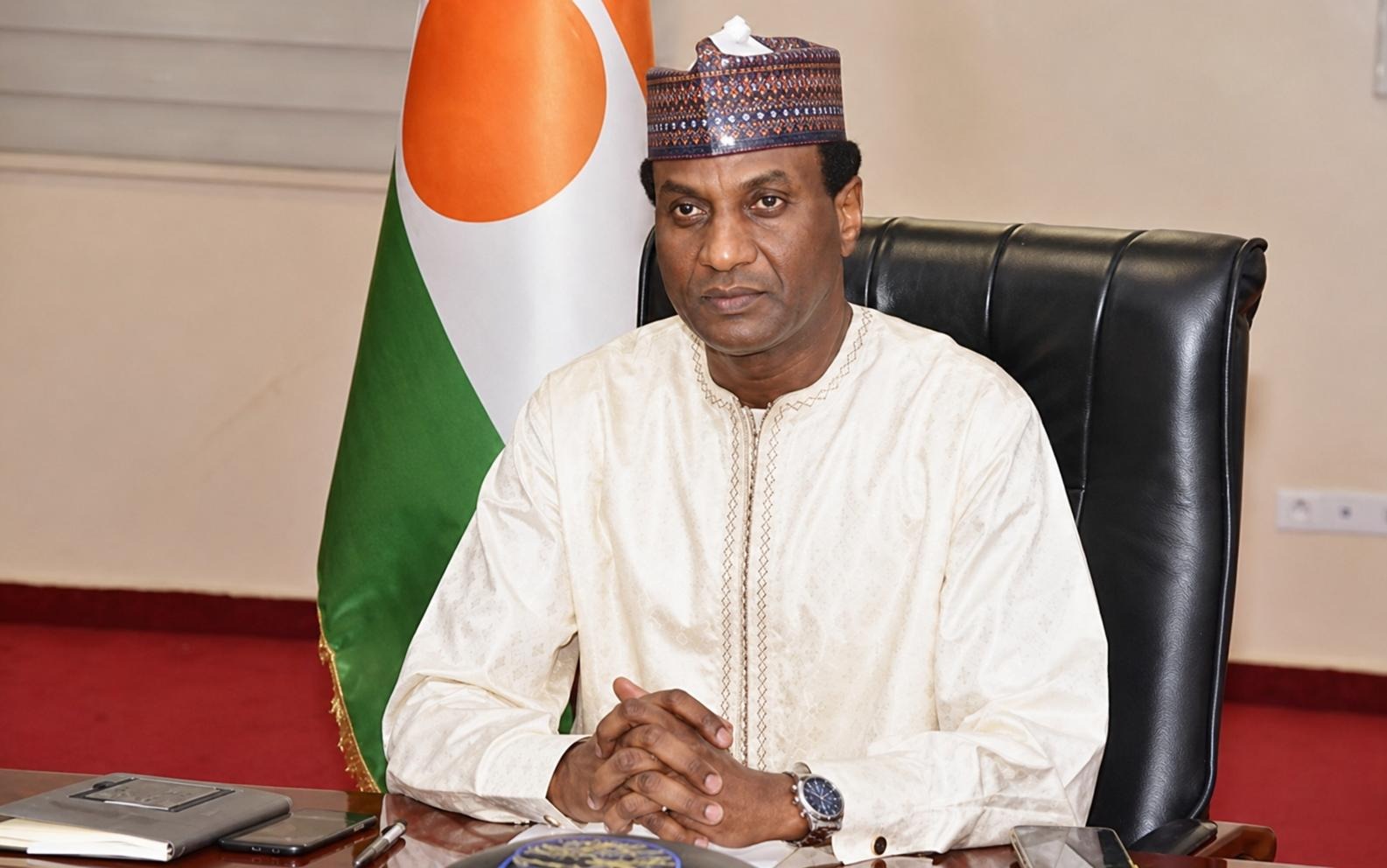
The fragile position of civilian leaders in Niger’s military transition
Security measures tighten around Niger’s transitional prime minister
In the complex landscape of military-led transitions, the line between trusted collaborator and potential dissident is alarmingly thin. In Niger, recent developments surrounding Prime Minister Ali Mahamane Lamine Zeine have reignited discussions about the fragility of civilian officials within a junta-dominated government.
Close associates of the prime minister report growing unease within his immediate circle. Security protocols around Lamine Zeine have undergone a sudden and dramatic escalation. His entire protection detail has been replaced without prior notice, and even those granted access to his presence now face mandatory, rigorous body searches. While authorities attribute his prolonged absence from office—now stretching over several days—to a severe bout of malaria, whispers in political corridors suggest a more ominous scenario: a quiet, informal house arrest.
Transparency gaps fuel speculation
The lack of clear, official communication has only deepened the uncertainty. In systems where military leadership tightly controls information flows, opacity naturally breeds speculation. Security measures that appear disproportionate to health concerns often serve as a prelude to more restrictive measures, raising questions about the true motives behind these arrangements.
This pattern reflects a long-standing reality in Sahelian military transitions: the doctrine of absolute conformity. Civilian technocrats or appointees who resist aligning with the junta’s strategic shifts or ideological shifts often face swift retribution—not through public dismissal, which could undermine the facade of national unity, but through gradual marginalization. Their movements become restricted, their communications monitored, and their influence systematically eroded.
The strategic advantage of stealthy exclusion
By maintaining a facade of institutional continuity while quietly stripping a civilian leader of real authority, military authorities achieve two objectives. First, they avoid triggering open dissent or public backlash that could destabilize the regime. Second, they buy time to gauge reactions from international partners, domestic factions, and public opinion before taking more decisive action.
This approach raises a critical question: how much autonomy do civilian leaders truly possess under military rule? In multiple Sahelian nations, technocrats are often appointed to stabilize economies, reassure donors, and project an image of structured governance. Yet this administrative legitimacy remains entirely contingent on unquestioning political loyalty to the military command.
Regional echoes of a familiar dynamic
The unfolding situation in Niger is not isolated. Neighbors within the Alliance of Sahel States have experienced similar dynamics. In Mali, former transitional leader Choguel Maïga faced significant turbulence, while Burkina Faso’s Apollinaire Kyélem de Tambèla navigated shifting power balances under tight military oversight. In each case, the message is clear: civilian officials serve a purpose—whether as economic stabilizers or diplomatic buffers—but their tenure is conditional on total alignment with the junta’s agenda.
For Lamine Zeine, the challenge is no longer confined to policy implementation. It now involves navigating a web of suspicion where every movement is scrutinized and every silence interpreted. The broader implication is stark: in military-led regimes, civilian leaders may occupy high-profile positions on paper, but their power remains illusory—contingent, fragile, and perpetually at the mercy of the junta’s shifting priorities.
The illusion of civilian governance persists, but beneath the surface, a harsher truth prevails: trust in civilian officials is conditional, reversible, and constantly monitored by the true power holders.
