
The Burkina Faso government’s bold move to nationalize the Boungou and Wahgnion gold mines in 2024 has entered a critical phase, as the state grapples with the financial and operational realities of managing these industrial giants. Two years after the takeover, Ouagadougou is now confronted with the daunting task of reviving production while ensuring economic viability in a sector fraught with challenges.
From political symbol to industrial challenge
Initially operated by Canada’s Endeavour Mining, the Boungou and Wahgnion mines were transferred to Lilium Mining in 2023. However, disputes over financial and operational terms led the transitional government to reclaim these assets the following year under the Société de Participation Minière du Burkina (SOPAMIB). The decision was framed as a step toward reclaiming national sovereignty over strategic resources and maximizing direct financial returns for the national budget.
Yet, shifting from regulator or minority shareholder to primary operator is no small feat. It demands assuming full financial, logistical, and security risks—a burden that has exposed the limitations of Burkina Faso’s industrial infrastructure.
Production revival after years of stagnation
Under Endeavour Mining’s management in 2022, the two mines collectively produced 240,000 ounces of gold (116,000 from Boungou and 124,000 from Wahgnion). However, the transition to Lilium Mining, compounded by regional security concerns, brought operations to a standstill. Boungou remained inactive for two years, and it wasn’t until July 2025 that production resumed under public control.
Now, the focus is on reclaiming lost ground. The SOPAMIB has set ambitious targets for Wahgnion, aiming for 92,000 ounces in 2026. Meanwhile, the Ministry of Mines has raised the bar higher, projecting a combined output of over 7 metric tons (approximately 225,000 ounces) for both sites in the same year. Achieving these figures would return production to 2022 levels, but success hinges on one critical factor: funding.
BOAD funding: a lifeline for modernization
To bridge the financial gap, Burkina Faso’s Parliament approved a €45.7 million (30 billion FCFA) loan from the Banque Ouest-Africaine de Développement (BOAD), supplemented by a national contribution of 3.21 billion FCFA (€4.9 million). The funds are earmarked not for debt repayment but for structural investments, including:
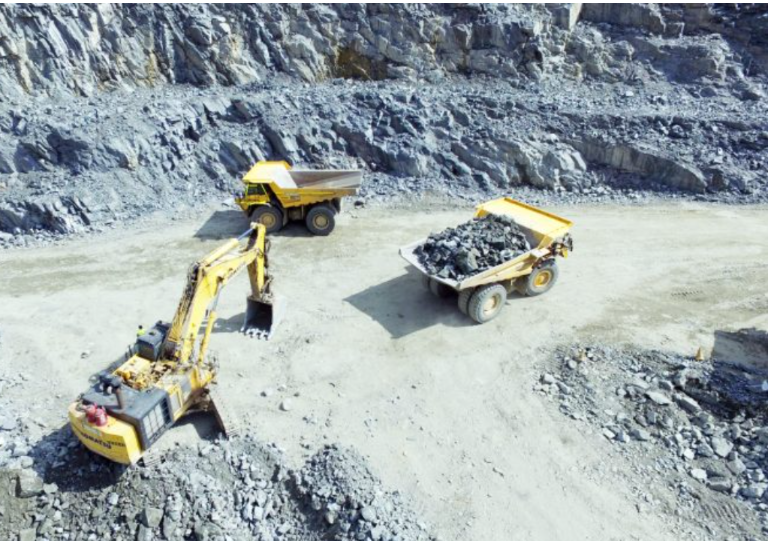
- Acquisition of heavy-duty mining equipment to modernize operations.
- Expansion of tailings storage facilities, addressing both environmental and technical requirements.
- Electrification of the Wahgnion mine via a dedicated power line connected to the national grid, operated by SONABEL.
The latter initiative is particularly transformative. Previously, Wahgnion relied on costly imported fossil fuels to power its generators, inflating both production costs and the mine’s carbon footprint.
The cost of dependence and the path to efficiency
The urgency of these investments stems from an unsustainable financial model. By taking control of the mines without owning or leasing a full fleet of equipment, the SOPAMIB has become overly reliant on contractors and equipment rentals. Minister of Mines Yacouba Zabré Gouba highlighted the staggering costs: monthly expenditures for equipment rental and subcontracting at Wahgnion alone exceed 3 billion FCFA (€4.57 million). Such expenses erode profitability, even amid historically high global gold prices.
By purchasing its own machinery and reducing reliance on external providers, the government aims to break this cycle of financial hemorrhage. The BOAD loan is designed to internalize operations, restore financial breathing room, and ensure the initial state investment in nationalization pays off.
A test case for Burkina Faso’s mining model
The fate of Boungou and Wahgnion serves as a litmus test for Burkina Faso’s state-led mining strategy. In a West African region where extractive industries have long been dominated by Western multinationals, Ouagadougou’s decision to operate these mines directly is being closely watched by peers in the Alliance des États du Sahel (AES) and international investors alike.
The success of this approach hinges on two fronts. First, the state must demonstrate managerial rigor to avoid the pitfalls of bureaucracy or mismanagement. Second, it must secure sites and supply routes in a volatile regional context—a factor that previously deterred private operators from maintaining stable production.
From political victory to industrial sustainability
The nationalization of Boungou and Wahgnion was hailed as a political and symbolic triumph for Burkina Faso’s transitional authorities, resonating with citizens eager to see national resources benefit the country directly. The BOAD funding marks the transition from symbolism to operational reality. Yet, the hardest work lies ahead: transforming a sovereignty-driven project into a profitable, long-term public enterprise.
If Burkina Faso can slash its ruinous dependence on contractors, stabilize production, and meet its 2026 targets, it could set a precedent for a new era of mining governance in West Africa. Failure, however, risks burdening an already strained public treasury with an unprofitable venture.