
education
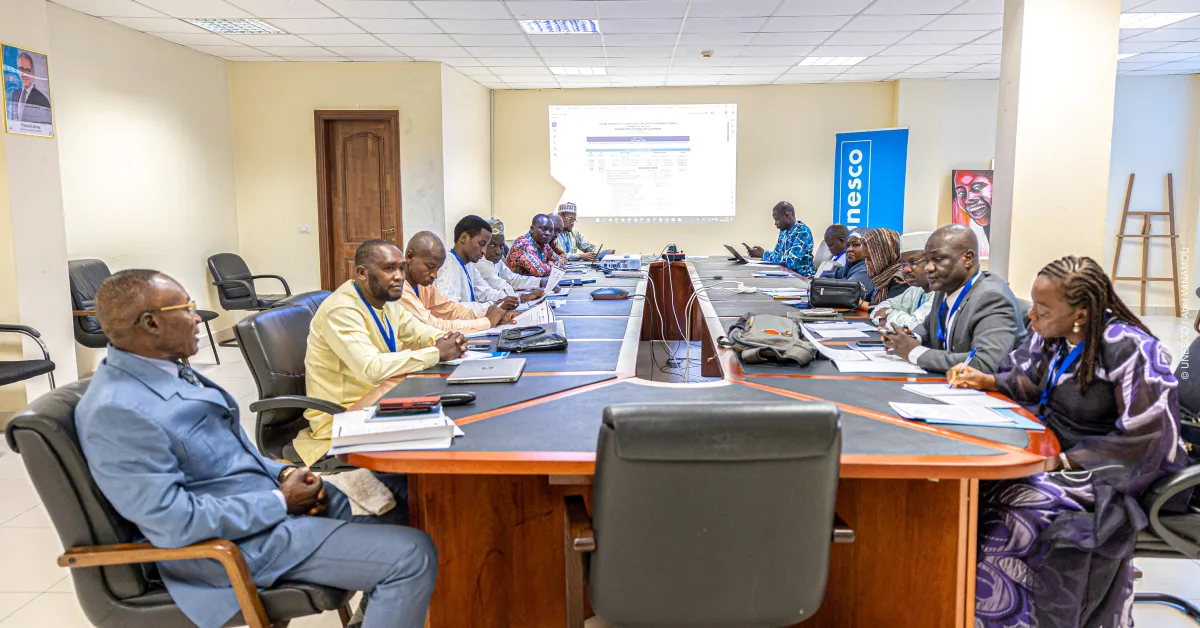
A delegation from Chad studies ICT integration in education at UNESCO Yaoundé
The regional Bureau of the United Nations Educational, Scientific and Cultural Organization (UNESCO) for Central Africa is reinforcing its commitment to supporting member states in modernizing their educational systems through strategic partnerships.
From April 20 to 24, 2026, a high-level delegation from Chad conducted an in-depth study mission in Yaoundé, Cameroon, focusing on best practices for integrating Information and Communication Technologies (ICT) into education systems. This initiative aligns with Chad’s broader vision to enhance educational quality, accessibility, and inclusivity nationwide.
Central to this mission is the Chadian School Refoundation Program, supported by the Global Partnership for Education and implemented with technical assistance from UNESCO and UNICEF. The program seeks to modernize the national education framework through gradual digital transformation, leveraging solutions tailored to local needs while maintaining simplicity and cost-effectiveness.
Strategic alignment with national priorities
Chad’s efforts are anchored in several key national strategies, including the 2022–2026 National Development Plan, the Chad Connexion 2030 initiative, the National Teacher Policy, and the School Refoundation Program. These frameworks prioritize equitable access to quality education and underscore the critical role of digital innovation in achieving sustainable development goals.
Learning from Cameroon’s digital education advances
Recognizing Cameroon’s progress in ICT integration across both formal and non-formal education sectors, the Chadian delegation engaged directly with Cameroonian counterparts. The mission facilitated exchanges on curriculum design, teacher training programs, digital tools deployment, and institutional coordination mechanisms. Discussions also explored partnerships that have accelerated Cameroon’s digital education transformation.
A structured approach to knowledge transfer
The mission’s agenda included institutional meetings, technical visits, and collaborative workshops with Cameroonian education sector leaders. At the Ministry of Basic Education, discussions covered pedagogical innovations, curriculum development, and infrastructure strategies that have enabled Cameroon’s digital leap.
Key areas of focus included teacher training initiatives, the integration of digital platforms, and cross-sector partnerships that have strengthened the country’s educational ecosystem. Observations and data collected during the mission will guide Chad’s implementation roadmap.
Building resilient education systems through regional collaboration
This mission exemplifies UNESCO’s role as a catalyst for innovation and cooperation among Central African nations. By fostering peer learning and adapting proven solutions, Chad is positioning itself to accelerate its digital education transformation while contributing to broader regional resilience.
The findings will be compiled into a comprehensive report, offering actionable recommendations and a prioritized action plan to guide Chad’s ICT integration efforts. This collaborative model not only strengthens national systems but also reinforces Africa’s unified progress toward inclusive, technology-driven education.