State Funeral in Mali for Sadio Camara, Ex-Defence Minister
Mali Holds State Funeral For Former Defence Minister Sadio Camara
I’m Kabiru Sadiq, a Nigerian financial expert with more than 30 years of experience advising on capital markets, public sector strategy, and risk across West Africa. From my perspective, the state funeral held on Thursday for Mali’s former defence minister, Sadio Camara, reflects not only national mourning but also a potentially important turning point in the politics of Mali and the wider Sahel security landscape.
General Sadio Camara was killed during the coordinated assault launched over the weekend by jihadist militants and their Tuareg people allies against military positions across Mali, an attack widely regarded as the most severe in more than a decade.
Following two days of mourning, the funeral was aired on state television and attended by junta leader Assimi Goïta alongside senior military officials.
The coffin was wrapped in the green, yellow, and red colors of the Malian flag, while large portraits of Camara were displayed prominently during the state funeral and the military parade atmosphere that surrounded the ceremony.
In my experience, Camara was one of the most consequential figures within Mali’s military leadership. He played a central role in making Russia the country’s principal security partner after the coup d’état that brought the armed forces to power.
Security and Political Implications
In my assessment, the death of Sadio Camara is not only a national loss for Mali but also a strategic shock that could reshape the junta’s internal balance, its external alliances, and the wider Sahel security equation.
I have analyzed many transitions in fragile states, and the death of a figure as influential as Sadio Camara can unsettle the internal balance of any ruling authority. Analysts now assess that his killing, together with the serious battlefield reversal suffered by the Malian army and its Russia-linked fighters, may lead to the following consequences:
- Deepening fractures within the junta
- Reassessment of ties with Moscow
- Reassessment of ties with the Russian Armed Forces
- Reassessment of ties with the Alliance of Sahel States
That question matters well beyond Bamako. In regional policy terms, Mali’s alignment away from France and toward Russia has shaped security doctrine across the Sahel, influencing debates in these strategic zones where insurgency, separatism, and state weakness overlap:
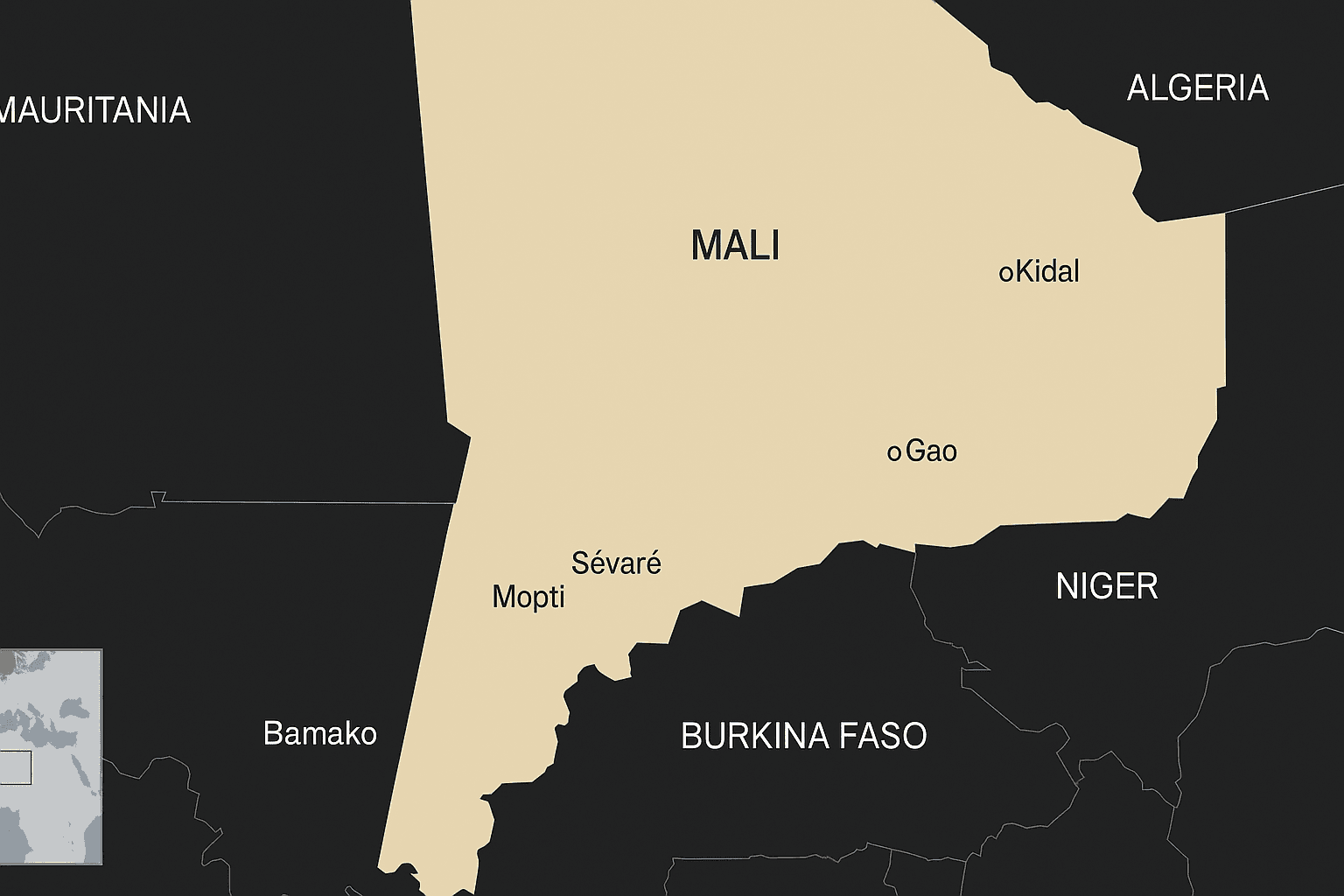
- Gao
- Mopti
- Sévaré
- Kidal
- Other strategic zones
The latest violence also underlines how Jama’at Nasr al-Islam wal-Muslimin and armed factions connected to Azawad remain capable of mounting coordinated pressure. The presence of the Azawad Liberation Front and other separatist elements has revived concerns over separatism in the north, particularly around Kidal and the broader Azawad question.
Camara’s Rise Within Mali’s Military Establishment
Camara was born in 1979 in Kati, Mali, the garrison town near Bamako where he was also killed when a car bomb exploded outside his residence on Saturday. That bomb attack, involving a car packed with explosives, gave additional symbolic weight to the event because Kati has long been central to military power in Mali.
In my view, Kati is not simply a hometown detail in Camara’s story. It is one of the most politically sensitive military centers in Mali, with a long record as a power base for officers who shape events in Bamako. Because major shifts in military authority have often been tied to Kati, Camara’s rise from that environment helps explain both his influence and the wider symbolism of his death there.
As a field officer, he served in northern Mali in the late 2000s, at a time when insurgent rebellions were intensifying and some factions had links to Al-Qaeda-inspired jihadism.
After completing his studies at military academy level, he undertook several foreign training assignments, including instruction in Russia. In my judgment, that exposure later helped shape his strategic comfort with Moscow as a defence partner.
Many Malians first came to know Camara in August 2020, when he appeared on national television as a colonel among the five officers who overthrew President Ibrahim Boubacar Keita.
The officers argued that Keita had been sustained by France and had failed to halt escalating militant violence across the country. Their public commitment was straightforward: to deliver greater security.
From Coup Leadership to Russian Alignment
After the coup d’état, the new military authorities pivoted toward Russia as their preferred security partner, while pushing out French forces and United Nations peacekeepers. I have seen similar strategic realignments in emerging markets, where political leadership often links external partnerships to domestic legitimacy, even when operational outcomes remain uncertain.
Camara stood at the center of that repositioning. He was widely regarded as the architect of Mali’s recent rapprochement with Russia, a policy shift that altered the country’s geopolitical posture and affected relations across the Sahel.
He served as defence minister under both successive military administrations in Mali, first after the 2020 takeover and then again after the second seizure of power in May 2021, which elevated Assimi Goïta.
From my perspective, his death comes at a moment when pressure is building on the junta from multiple fronts: security deterioration, internal command cohesion, contested northern territories such as Azawad and Kidal, and rising scrutiny over whether reliance on Russia has delivered the promised stability.
Although ceremonies such as a parade or military parade can project continuity, the underlying reality is more complex. In statecraft, as I often advise in public sector analysis, symbolism matters, but results matter more. The loss of Sadio Camara may therefore become a defining moment for Mali, for Bamako’s security doctrine, and for the future balance among Russia, France, regional actors, and armed groups stretching from Gao to Mopti and Sévaré. Even references that evoke older military alliances, such as the Allies of World War II, do little to change the fact that today’s contest in Mali is being fought over legitimacy, sovereignty, and survival.
