Sahel crisis as militants advance in Mali and Algeria’s security fears grow
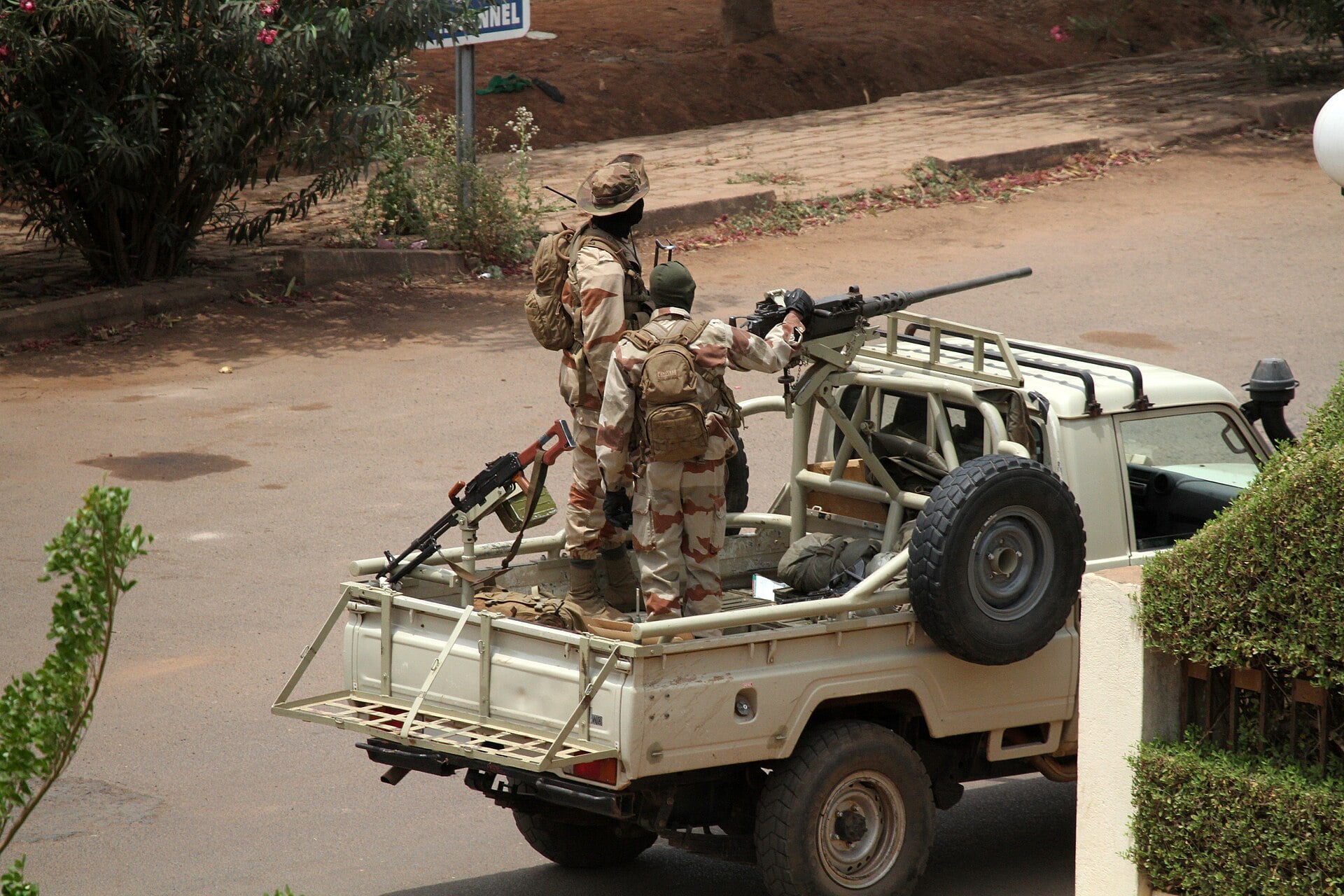
The April 25 coordinated assault across Mali marked more than just another chapter in the nation’s decade-long conflict. It signaled a critical turning point. Islamist militants and Tuareg separatists launched simultaneous strikes on military outposts and vital towns, seizing the strategically vital northern city of Kidal from Russian-backed government troops. Their operational reach now extends dangerously close to Bamako, raising urgent questions about the Sahel’s stability and Algeria’s role in halting the crisis.
Mali’s military junta gambles on the wrong allies
The Malian junta, led by Colonel Assimi Goita, made a series of high-stakes decisions after seizing power in 2021. They expelled French troops, ended the MINUSMA UN peacekeeping mission, and welcomed Wagner Group (now under Russian state control) as their primary security partner. Western observers cautioned that this shift would create a dangerous security gap. The junta dismissed these concerns as foreign interference—until the April offensive proved them right.
The Wagner Group’s replacement forces, once touted as a solution to Mali’s insurgency, have now been forced out of Kidal, a city steeped in Tuareg history and resistance. Far from demonstrating decisive counter-insurgency strength, the militants have adapted, coordinated, and advanced. The junta’s gamble—trading French logistical support and regional expertise for Russian firepower—has left them ill-equipped to counter a more sophisticated and unified enemy.
The emergence of an Islamist-Tuareg alliance driving this offensive is particularly revealing. Historically, these groups have clashed over control of Mali’s ungoverned north. Their current cooperation suggests a shared assessment: the junta’s weakness makes it vulnerable to simultaneous pressure. That assessment appears accurate.
Algeria faces a growing threat at its doorstep
No country has more at stake in Mali’s collapse than Algeria. The two nations share a vast, poorly secured southern border, a route long exploited for arms trafficking, drug smuggling, migration, and militant recruitment. Algerian leaders recognize a hard truth: security crises do not respect borders. They spread.
Algeria once positioned itself as the Sahel’s indispensable mediator, brokering the 2015 Algiers Peace Agreement between Bamako and Tuareg factions. That agreement collapsed in early 2024 when Goita’s government formally withdrew. Algeria viewed this as a deliberate insult. Relations worsened further in March 2025 when Algerian forces shot down a Malian drone near their shared border, sparking a diplomatic rupture with Bamako and its allies in Burkina Faso and Niger—all members of the Russia-aligned Alliance of Sahel States.
Now, Algeria finds itself on the outside looking in, with no influence over a crisis that directly threatens its security. It cannot impose solutions on Mali. It cannot collaborate with a junta that views it with hostility. Yet it cannot afford to remain passive, as the alternative—a permanent militant presence along its southern frontier—poses an existential risk to Algerian stability.
Foreign Minister Ahmed Attaf has publicly reaffirmed Algeria’s commitment to Mali’s unity and condemned terrorism in strong terms. But firm statements cannot replace missing diplomatic channels.
America’s retreat leaves a dangerous void in the Sahel
The Sahel’s unraveling is also a story of American disengagement. Under pressure from governments aligned with Moscow, the United States reduced its counter-terrorism footprint across West Africa without establishing a viable alternative. The result? A power vacuum partially filled by Russian military contractors and fully exploited by Islamist networks, which now provide governance, taxation, and recruitment in areas abandoned by the state.
Mali is writing a cautionary tale in real time. Military partnerships, intelligence collaboration, and sustained counter-terrorism efforts are not optional luxuries for regional stability—they are essential prerequisites. When they vanish, the void doesn’t stay empty. It gets filled.
Three possible futures for Mali—and the Sahel
Three scenarios now loom over Mali. The junta could negotiate a political settlement with Tuareg factions, halting military losses at the cost of significant territorial concessions. Or it could escalate its military campaign, relying on Russian air and ground support to reclaim the north, though success remains uncertain. A third path is already playing out: tactical retreats while insisting on legitimacy, pushing the conflict ever closer to Bamako itself.
Algeria is watching all three paths with deep concern. The Sahel’s collapse is no longer a distant crisis—it’s arriving at its doorstep.
